
Comparing Gold Export Markets in Ghana and South Africa
Ghana and South Africa represent Africa’s two most structured gold export markets, yet they operate under distinct regulatory frameworks and supply dynamics. Understanding these differences helps international buyers select appropriate sourcing channels based on volume requirements, compliance priorities, and destination markets.

Regulatory Frameworks
Ghana’s export system centers on the Precious Minerals Marketing Company (PMMC), which oversees assay certification and export permit issuance for material sourced from Minerals Commission-licensed miners. South Africa employs a dual oversight model: the South African Diamond and Precious Metals Regulator (SADPMR) approves exports, while the South African Bureau of Standards (SABS) accredits assay laboratories. Both systems mandate chain of custody documentation, but South Africa’s century-old regulatory infrastructure offers more standardized processes, while Ghana’s framework has evolved rapidly to formalize its significant small-scale sector.

Supply Characteristics
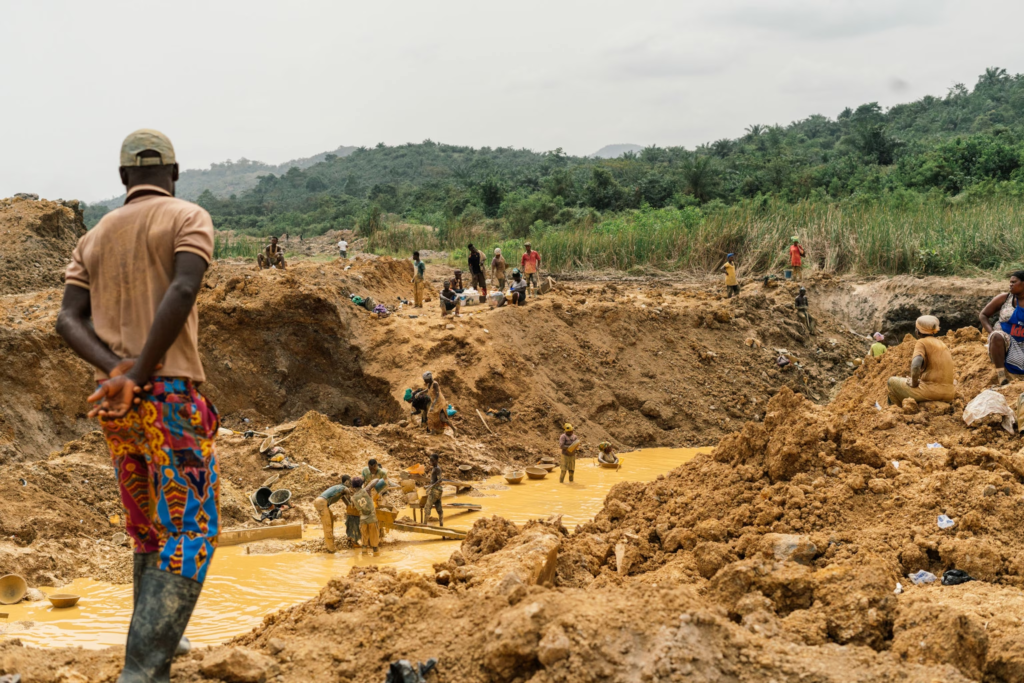
Ghana’s output derives heavily from licensed small-scale operations concentrated in Ashanti, Western North, and Eastern regions. Material typically moves in smaller consignments (5 to 20 kilograms) requiring aggregation before export. South Africa maintains a dual structure: large-scale industrial mines dominate volume, supplemented by accredited small-scale cooperatives operating under the Mine Health and Safety Act. This yields larger, more consistent shipment sizes suitable for refinery-scale requirements.
Export Corridors and Market Access
Ghanaian gold primarily flows to the United States and United Arab Emirates via Accra’s Kotoka International Airport, with documentation aligned to LBMA and OECD standards. South African exports favor Asian destinations—particularly China and India—through OR Tambo International Airport in Johannesburg, leveraging established trade relationships and South Africa’s historical export infrastructure.

Documentation Requirements
Both jurisdictions require miner licensing verification, accredited assay certificates, and government export permits. Ghana mandates PMMC certification; South Africa requires SABS fire assay results and SADPMR approval. South African shipments typically include additional SARS customs documentation, reflecting the country’s integrated tax and customs systems.
AFRICA GOLD’s Integrated Operations
Founded in South Africa in 2015, AFRICA GOLD maintains permanent teams in both countries. In Ghana, field officers verify miner licenses across three producing regions and coordinate PMMC-approved assays. In South Africa, the Johannesburg headquarters manages SABS laboratory coordination and SADPMR permit processing. This dual presence enables buyers to access compliant supply from either jurisdiction through a single partner with localized expertise.

Buyers seeking West African supply with strong small-scale formalization should evaluate Ghana’s framework. Those requiring larger volumes with mature regulatory infrastructure may prioritize South Africa. AFRICA GOLD’s operational presence across both markets provides flexibility to source compliant gold aligned with specific buyer requirements.
africa-gold.com
sales@africa-gold.com