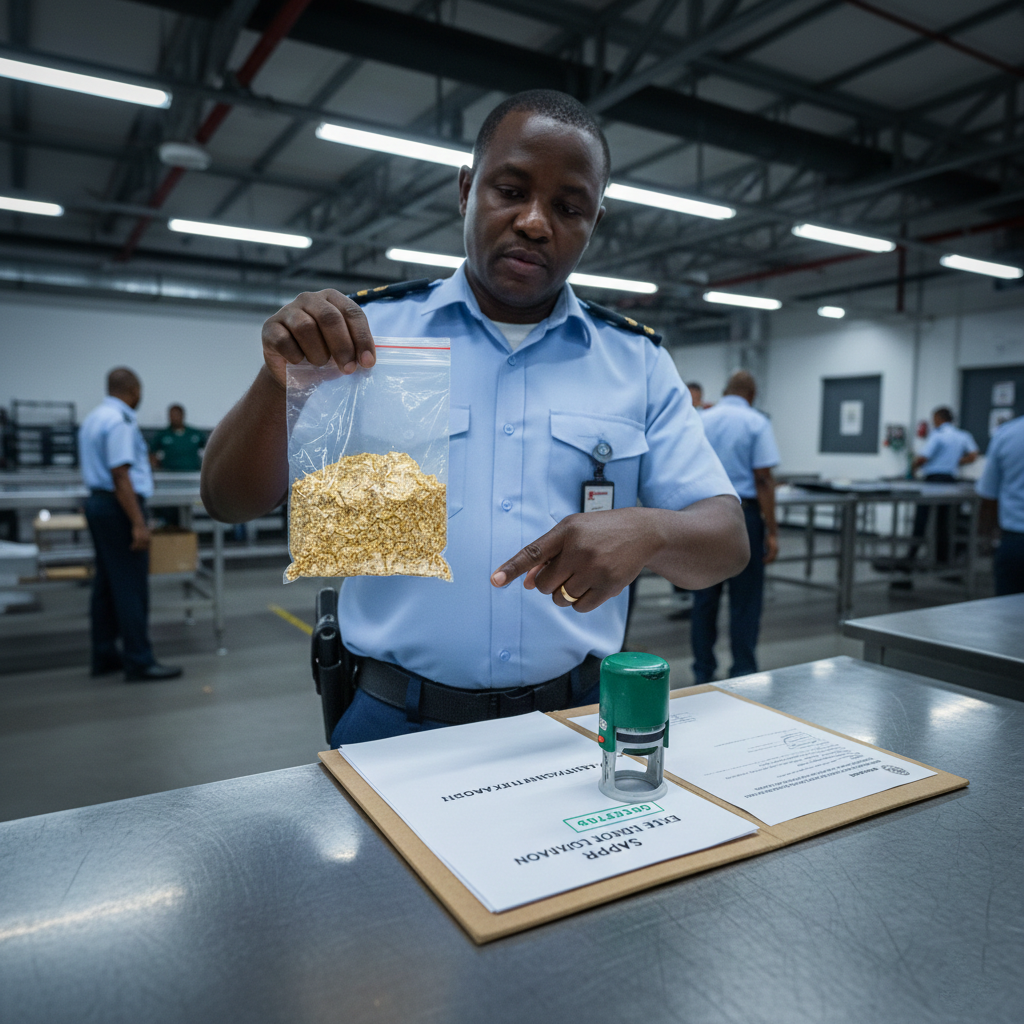


Step 1: Confirm Valid National Licenses
Every legitimate exporter must hold active licenses from national authorities. In Ghana, this means a Precious Minerals Buyer’s License from the Minerals Commission and registration with the Precious Minerals Marketing Company (PMMC). In South Africa, it requires SADPMR registration and SARS compliance. In South Sudan, dual permits from the Ministry of Mining and Ministry of Trade are mandatory.
Buyers should request copies of these licenses and verify them directly with issuing authorities. Many governments now offer online portals for real-time validation. Never accept scanned documents without cross-checking—fraudulent licenses are common among brokers.

Step 2: Validate Physical Presence and Operational History
A license alone is not enough. Buyers must confirm the supplier has boots on the ground. Ask for:
- Photos or videos from recent mine site visits
- Proof of collection points in producing regions
- References from past international buyers
- Evidence of recent export permits or air waybills
Reputable suppliers welcome site visits and provide transparent access to operations. Brokers who operate remotely cannot show physical infrastructure and often refuse verification requests. Since 2015, AFRICA GOLD has maintained offices in Accra, Johannesburg, and Juba—enabling direct oversight across all three jurisdictions.
Step 3: Test Documentation and Communication Protocols
Before any transaction, request a sample documentation package: assay certificate, export permit draft, chain of custody form, and commercial invoice. Assess whether these align with refinery requirements in your destination market. Equally important is communication responsiveness. During business hours, a professional supplier should reply within hours not days. Delays in documentation or replies often signal disorganization or absence.
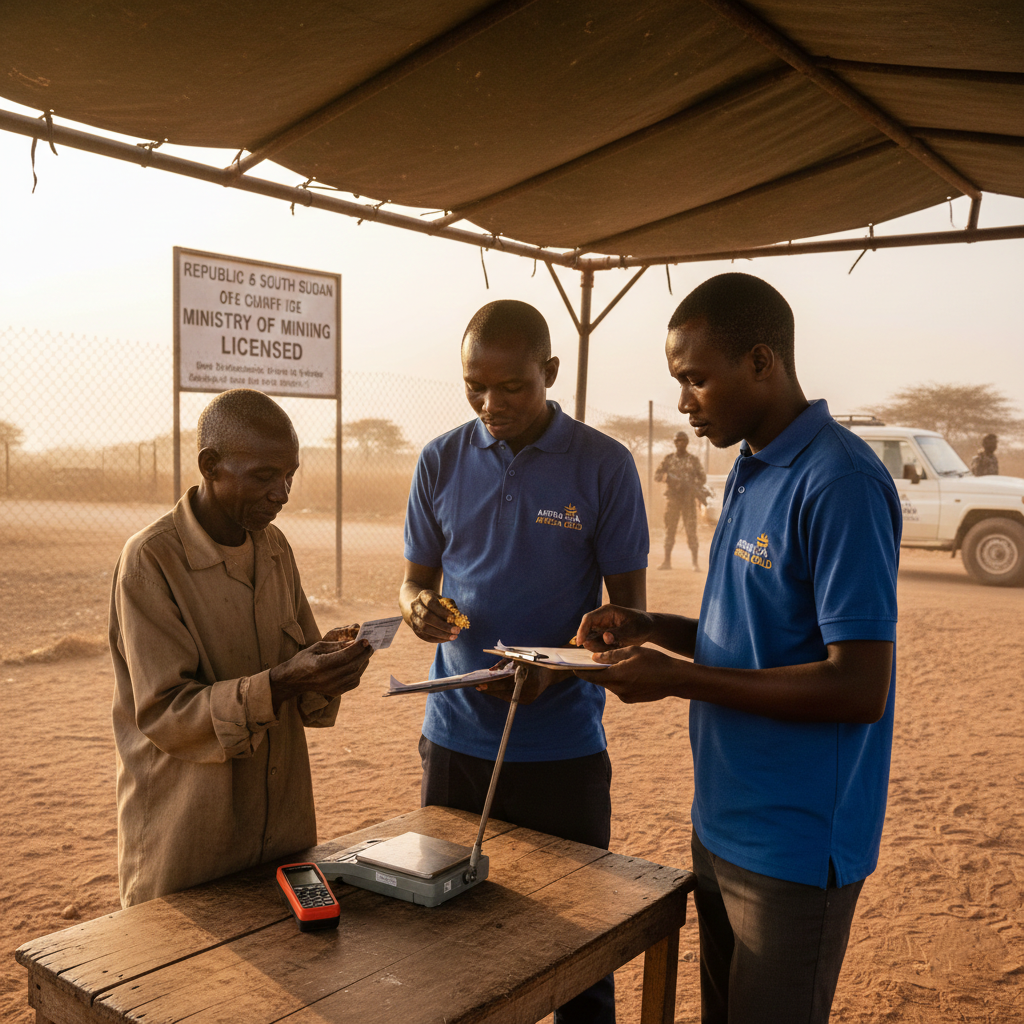
Step 4: Conduct a Trial Shipment
The ultimate test is a small trial shipment. Start with 1–5 kilograms to evaluate:
- Accuracy of assay results
- Speed of permit processing
- Quality of documentation
- Real-time shipment updates
- Post-delivery support
Professional exporters treat trials as trust-building opportunities. They provide full transparency and resolve issues immediately. If a supplier resists a trial or demands full advance payment, walk away.
Why Verification Prevents Costly Failures
One unverified shipment can cost more than months of due diligence. Refineries reject non-compliant material. Customs seizes undocumented cargo. Brokers vanish after payment. By verifying licenses, presence, processes, and performance, buyers eliminate these risks. In Africa, trust is not given—it is proven through verifiable action.
Conclusion
Verifying a gold supplier in Africa requires diligence but delivers peace of mind. Buyers who follow these four steps license validation, presence confirmation, documentation review, and trial execution build partnerships with professional exporters who deliver compliant, bankable gold. In a market where reputation is everything, verification is the price of reliable supply.
africa-gold.com
sales@africa-gold.com