

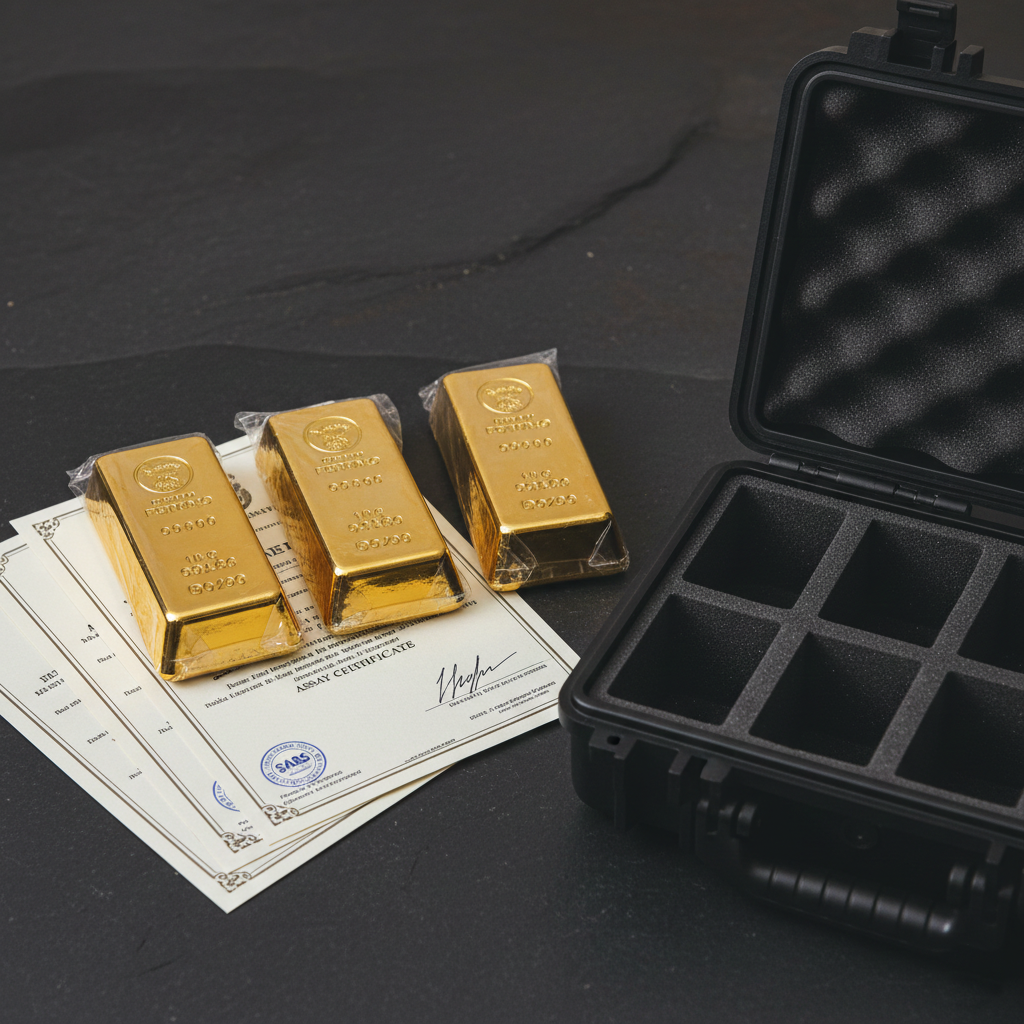
Refineries across Asia, the Middle East, Europe, and North America increasingly source gold directly from Africa not out of charity, but because African supply meets their core requirements: consistent purity, documented provenance, and reliable delivery. While paper markets dominate headlines, physical refineries need real metal that clears customs, passes intake assays, and aligns with responsible sourcing frameworks. Africa, when sourced correctly, delivers exactly that.
Meeting Global Purity Standards
Modern refineries demand gold of at least 999.5 fineness, with many requiring 999.9 for premium processing. African exporters in Ghana, South Africa, and South Sudan now routinely deliver material meeting these standards through accredited fire assay testing. In South Africa, SABS-registered labs provide definitive verification. In Ghana, PMMC-approved facilities ensure consistency. Even in emerging South Sudan, mobile or Dubai-linked accredited units produce refinery-acceptable reports. When documentation matches physical quality, African gold flows seamlessly into global refining networks.

Documented Provenance for Responsible Sourcing
Refineries face mounting pressure to prove their gold is conflict-free and legally sourced. Initiatives like the LBMA’s Responsible Gold Guidance and OECD Due Diligence require full chain of custody—from mine to intake. African exporters who maintain direct relationships with licensed miners provide this transparency. In Ghana, miner registration cards and GPS coordinates are standard. In South Sudan, dual ministry permits validate origin. This documentation allows refineries to comply with ESG mandates and avoid blacklisting. Brokers cannot offer this; professional African exporters do it daily.
Reliable Logistics on Established Corridors
African gold reaches refineries faster and more predictably than many assume. Direct air freight routes connect key hubs: Accra to New York, Juba to Dubai, Johannesburg to Shanghai. Professional exporters manage end-to-end logistics—sealing containers under supervision, providing real-time tracking, and ensuring customs clearance. Refineries value this reliability because production schedules cannot tolerate delays. A shipment that arrives on time with complete paperwork earns repeat business.

Cost Efficiency Without Hidden Risk
While African gold may trade at a slight discount to spot, the real value lies in risk reduction. Material with full documentation avoids costly intake rejections. Direct partnerships eliminate unknown intermediaries. Compliance with national regulations prevents customs seizures. For refineries, this predictability outweighs minor price differences. They pay not for the lowest quote, but for the highest certainty.
AFRICA GOLD’s Role in Refinery Supply Chains
Since 2015, AFRICA GOLD has supplied refineries in the UAE, USA, China, and Europe with consistent, compliant gold from Ghana, South Africa, and South Sudan. The company’s model Direct acquisition, accredited assay, government permits, and secure transit aligns precisely with refinery intake requirements. Zero rejections over a decade prove the model works.
Conclusion
Refineries buy gold from Africa because it is bankable: pure, legal, traceable, and reliably delivered. The continent is no longer a frontier of risk but a source of structured supply. As African exporters professionalize and governments formalize, this trend will only grow. For refineries, African gold isn’t a compromise it’s a strategic advantage.
africa-gold.com
sales@africa-gold.com