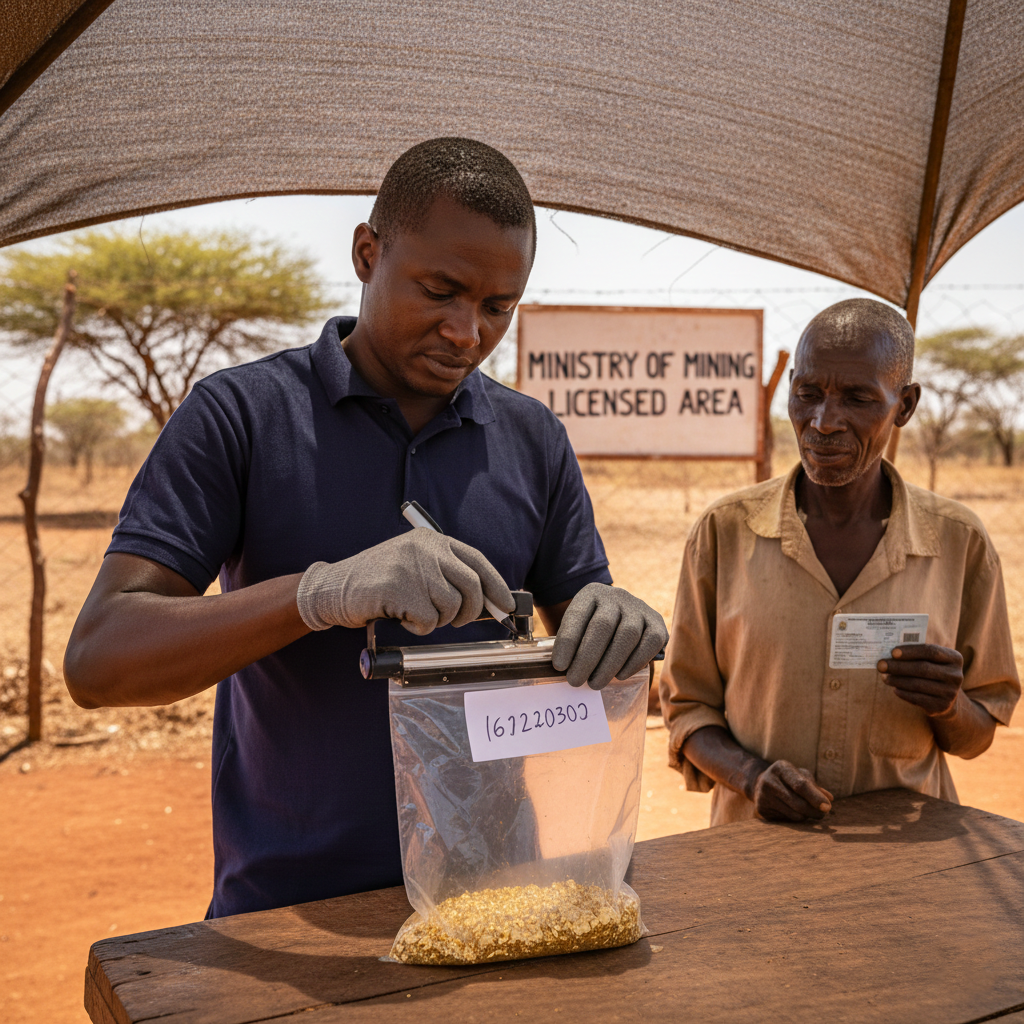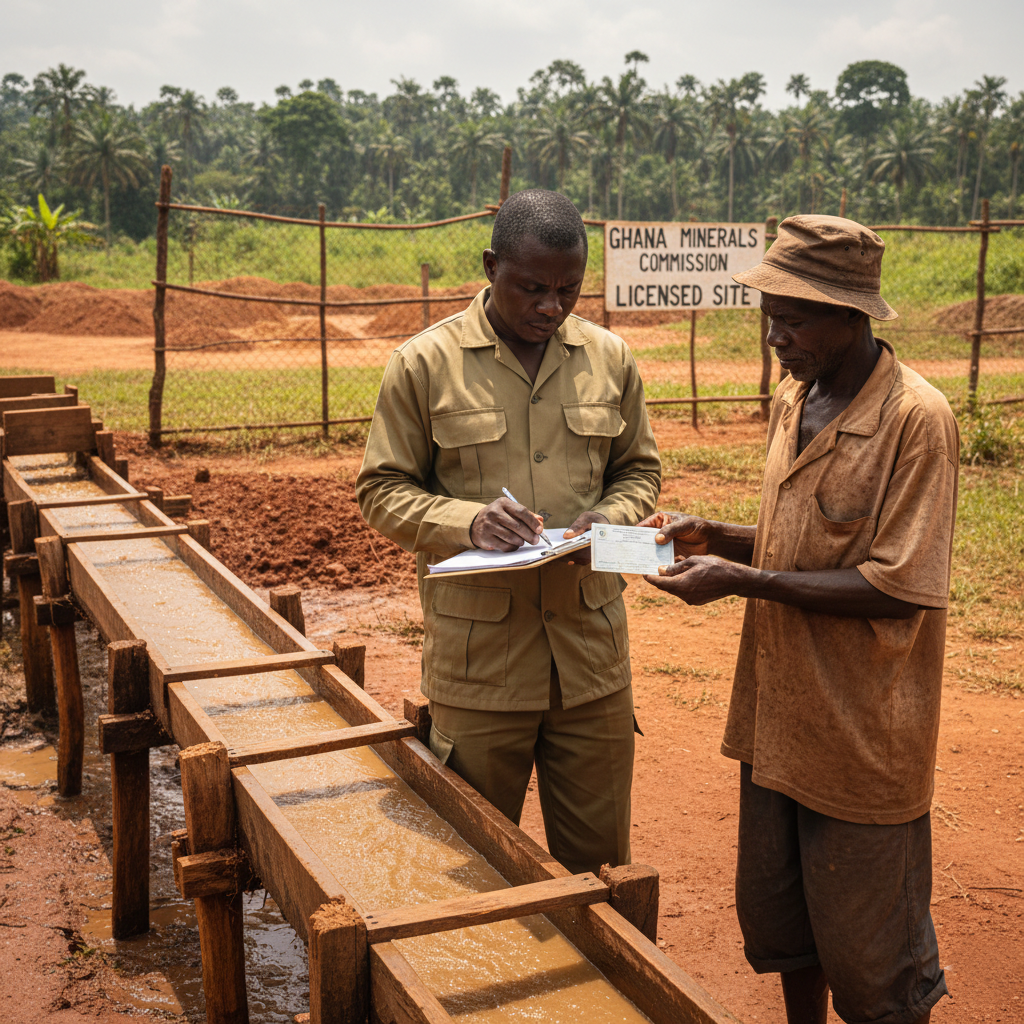

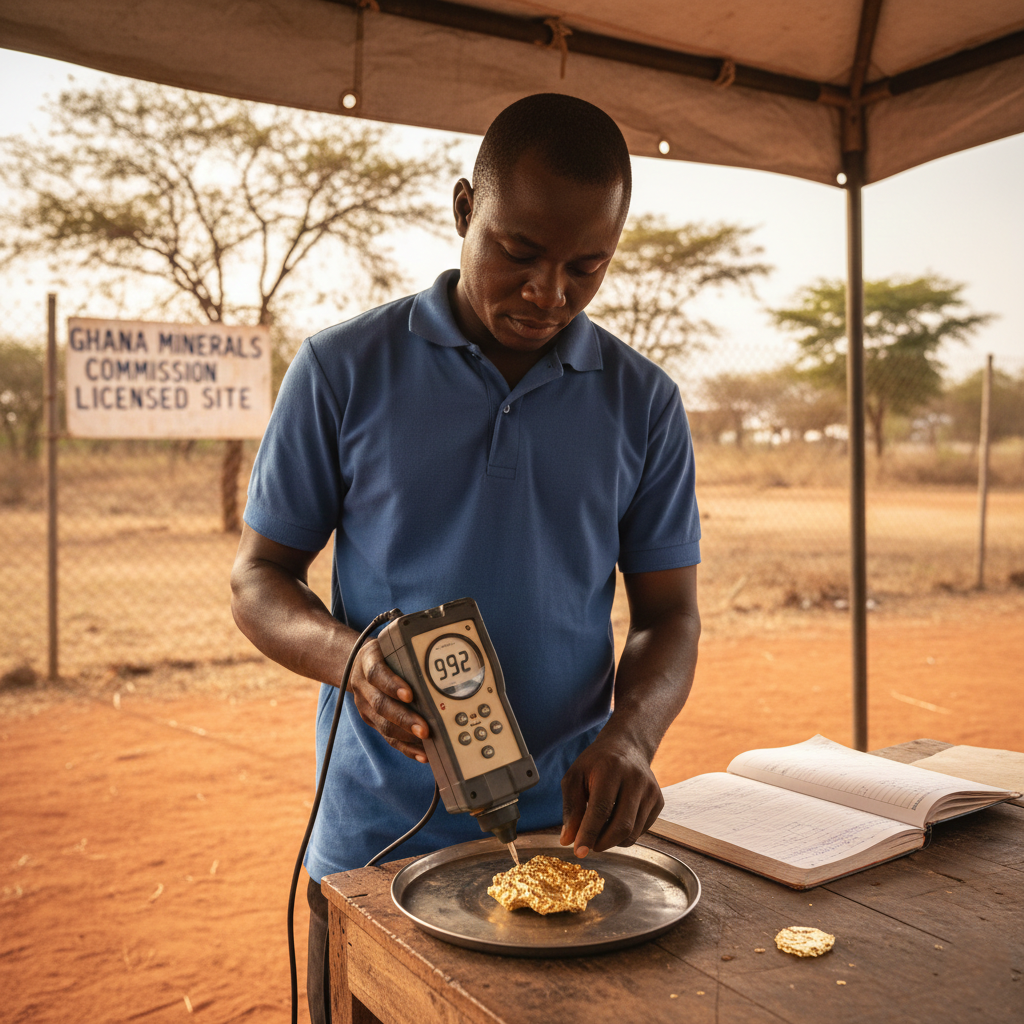
Evaluating gold purity in the field is a critical first step in African gold trade but it requires realism, not hype. While laboratory fire assay remains the definitive standard, preliminary field testing helps exporters filter out substandard material before costly lab submission. However, many buyers overestimate what field tools can do. Understanding their capabilities and limits is essential to avoiding costly misjudgments.
XRF Analyzers: Useful but Limited
Handheld XRF (X-ray fluorescence) devices are widely used across Ghana, South Africa, and South Sudan for rapid screening. They measure surface composition by emitting X-rays and analyzing reflected energy. But they have key limitations:
- Surface-only reading: Cannot detect plating or internal impurities
- Calibration dependency: Accuracy drifts without regular recalibration
- Sample prep matters: Dirty or uneven surfaces skew results
Professional exporters use XRF only for initial triage never for final valuation. A reading below 990 typically triggers rejection; above 995 warrants lab confirmation. Crucially, reputable operators use analog-dial or basic-display models not flashy touchscreens to avoid distraction and ensure durability in dusty environments
Acid Testing: Old-School but Still Relevant
In remote areas with no power, acid test kits remain in use. A small scratch on a touchstone is treated with nitric and aqua regia solutions; color change indicates approximate purity. While subjective and destructive, this method works when electronics fail. Professional field teams carry kits as backup but never rely on them alone. They’re a last resort, not a primary tool.
Visual and Physical Cues: The Human Sensor
Experienced officers also use sensory judgment:
- Color: Pure gold has a deep yellow-red hue; paler tones suggest silver or copper
- Malleability: Real gold dents, not shatters, when tapped
- Weight: High density feels heavier than look-alike metals
These cues don’t replace testing
but they flag anomalies worth investigating.

Why Lab Confirmation Is Non-Negotiable
No field method replaces accredited fire assay. XRF may say 999.5, but only lab melting reveals true bulk composition. Professional exporters send all export-bound material to PMMC-approved, SABS-registered, or ISO 17025 labs regardless of field results. Buyers should never pay final price based on field tests alone.
Conclusion
Field purity evaluation is about risk reduction, not precision. It helps exporters avoid obvious fraud and prioritize viable samples for lab testing. But its real value lies in humility: knowing what you can’t know in the field. With disciplined use of XRF, reference standards, and human judgment followed by lab confirmation African exporters deliver purity that global markets trust. In gold, confidence comes not from gadgets, but from verification.
africa-gold.com
sales@africa-gold.com