

The Importance of Verified Gold Suppliers
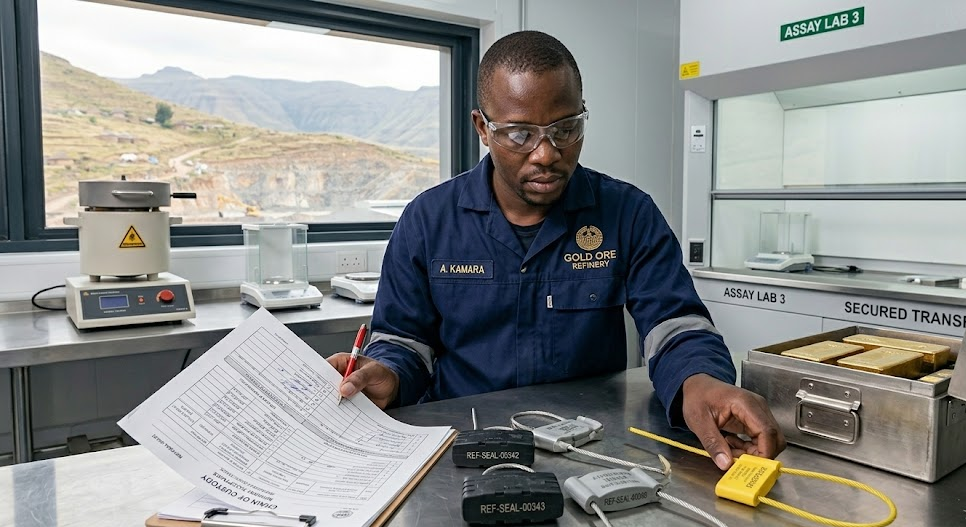
Gold’s market value depends as much on documented provenance as on purity. International refineries reject shipments lacking verifiable chain of custody—regardless of fineness. Verified suppliers bridge this gap by transforming locally sourced material into bankable assets through rigorous documentation protocols.
The Verification Imperative
LBMA and OECD standards require refineries to confirm:
- Valid miner licenses from national authorities
- GPS coordinates of acquisition points
- Tamper-evident seal records with unique identifiers
- Fire assay certificates from accredited laboratories
- Government export permits matching physical material
Shipments missing any element face rejection. Verification is not optional—it is the threshold for market access.

Consequences of Unverified Supply
Buyers sourcing through unverified channels encounter three critical risks:
- Refinery rejection triggering costly return logistics
- Compliance exposure under OECD due diligence guidance
- Reputational damage from association with undocumented supply
These risks intensify during market volatility when refineries tighten acceptance criteria. Verified suppliers provide stability precisely when it matters most.
What Verification Requires in Practice
True verification occurs at source—not retrofitted after acquisition. It demands:
- On-site confirmation of miner licenses before payment
- GPS-tagged documentation of material at collection points
- Direct coordination with nationally accredited laboratories
- Physical presence during government permit inspections
Remote brokers without field teams cannot execute these steps reliably, creating dependency on unverified intermediaries that break chain of custody.
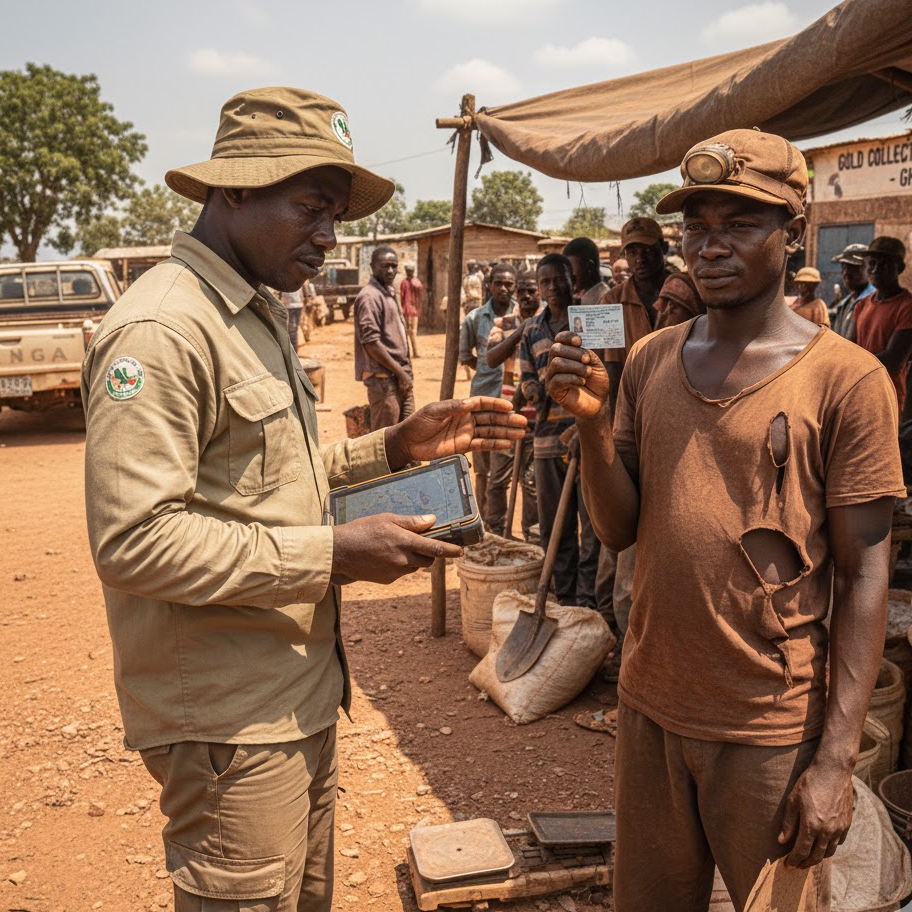
Image: Field officer verifying miner license with GPS device at Western North Ghana collection point
Regional Verification Standards
Ghana requires PMMC-approved assay certification and Minerals Commission licensing verification. South Africa mandates SABS fire assay results with SADPMR permits. South Sudan enforces dual ministry approval from Mining and Finance departments. Verified suppliers navigate these distinct frameworks without compromising documentation integrity.

Why AFRICA GOLD Maintains Verification Infrastructure
Since 2015, AFRICA GOLD has operated permanent field teams across Ghana, South Africa, and South Sudan from its South African headquarters, with coordination support from the United Kingdom. This presence enables direct execution of every verification step—from miner credential checks through airport handover—ensuring unbroken chain of custody for consignments destined for UAE, United States, China, and European refineries.
Verification separates marketable gold from stranded inventory. Partner only with suppliers who demonstrate physical presence at source and transparent documentation sharing—not promises alone.
africa-gold.com
sales@africa-gold.com