

Transparency Starts at Source
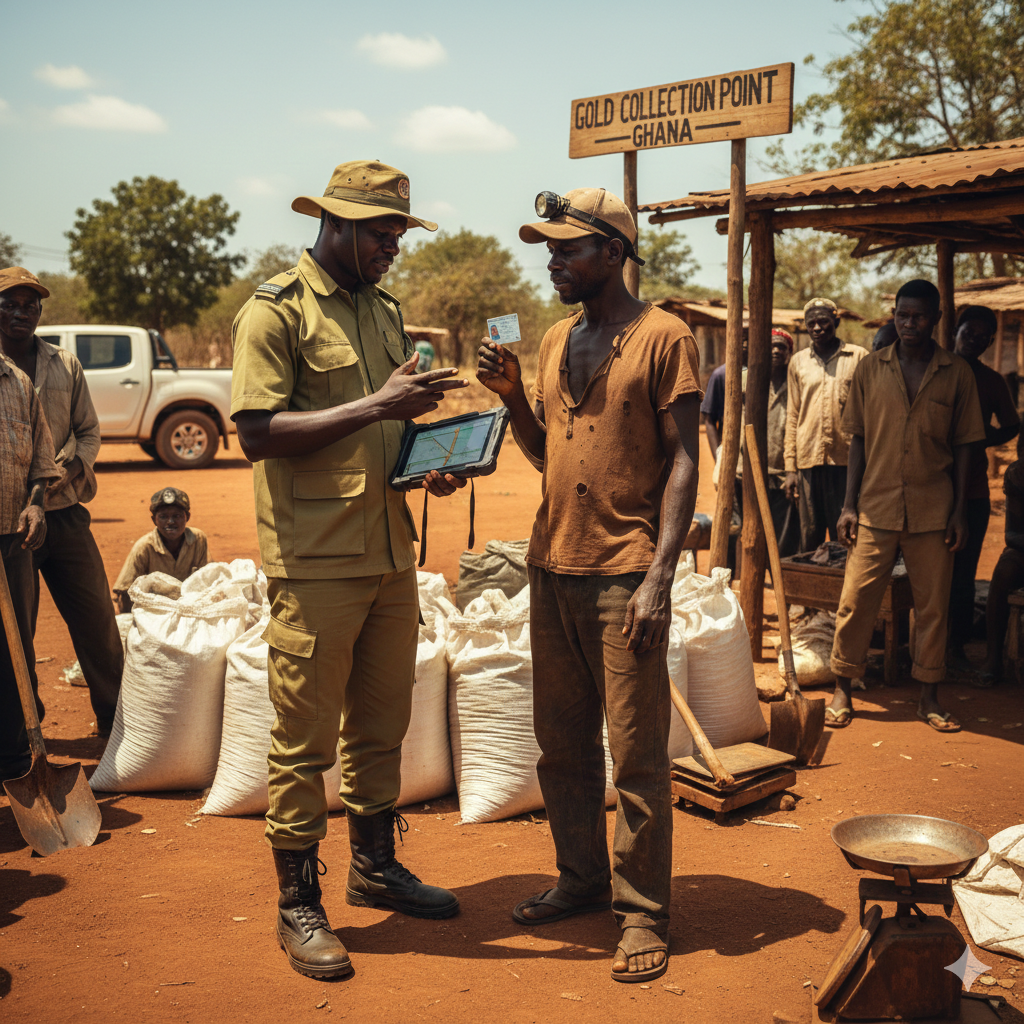
At collection points in Ghana, South Africa, and South Sudan, field officers:
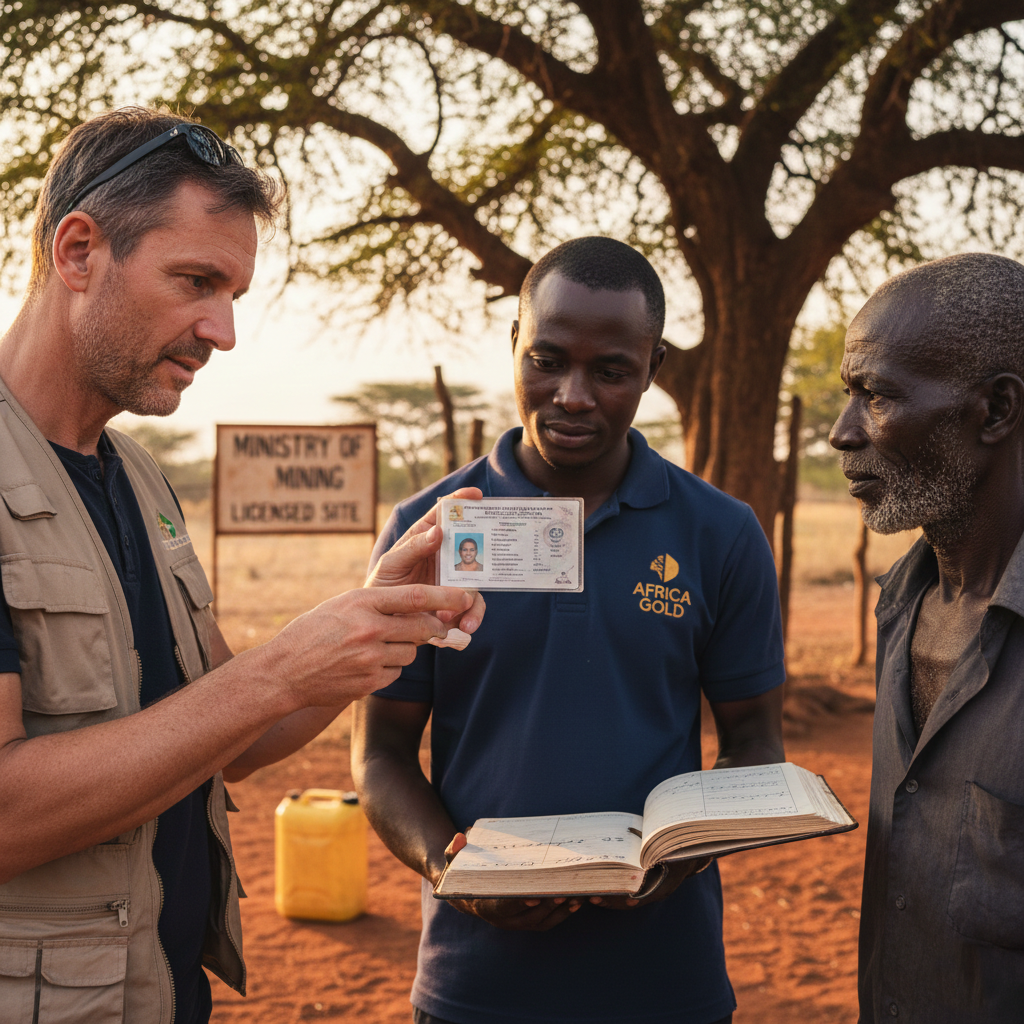
- Show buyers the miner’s government-issued license
- Demonstrate GPS recording in bound logbooks
- Allow inspection of weighing on calibrated mechanical scales
- Apply tamper-evident seals in real time
No step is hidden. No document is digital-only.
Paper Trails Over Digital Promises
AFRICA GOLD uses no blockchain, apps, or cloud dashboards. Instead, it relies on:
- Handwritten chain-of-custody forms signed by miners and officers
- Original export permits with wet-ink government stamps
- Printed assay certificates with lab accreditation numbers
- Photographs of seals taken at each custody transfer
These physical records travel with the gold and satisfy even the strictest refinery intake teams.
Open Access to Operations
Buyers are invited and encouraged to:
- Visit active mining sites unannounced
- Review logbooks and permits on-site
- Witness sealing and weighing firsthand
- Attend government permit submissions
AFRICA GOLD’s offices in Accra, Johannesburg, and Juba have no “back rooms”—only open desks, filing cabinets, and bound ledgers.

Why Transparency Builds Long-Term Trust
In an industry where opacity enables fraud, AFRICA GOLD’s openness is its strongest asset. Buyers don’t need to “trust” claims they can verify them. This eliminates speculation and replaces it with certainty.
Conclusion
Transparency at AFRICA GOLD means showing the work not just describing it. By keeping every process visible, physical, and verifiable, the company turns African gold into a trusted global commodity. For buyers, this isn’t convenience it’s confidence.
africa-gold.com
sales@africa-gold.com