

How Gold Deals Are Structured in African Markets
Legitimate gold transactions in African markets follow a standardized structure designed to ensure regulatory compliance and refinery acceptance. This framework—rooted in LBMA pricing benchmarks, sequential documentation verification, and permit-first payment protocols—protects both buyers and sellers from rejection risk and financial exposure.
Pricing Architecture
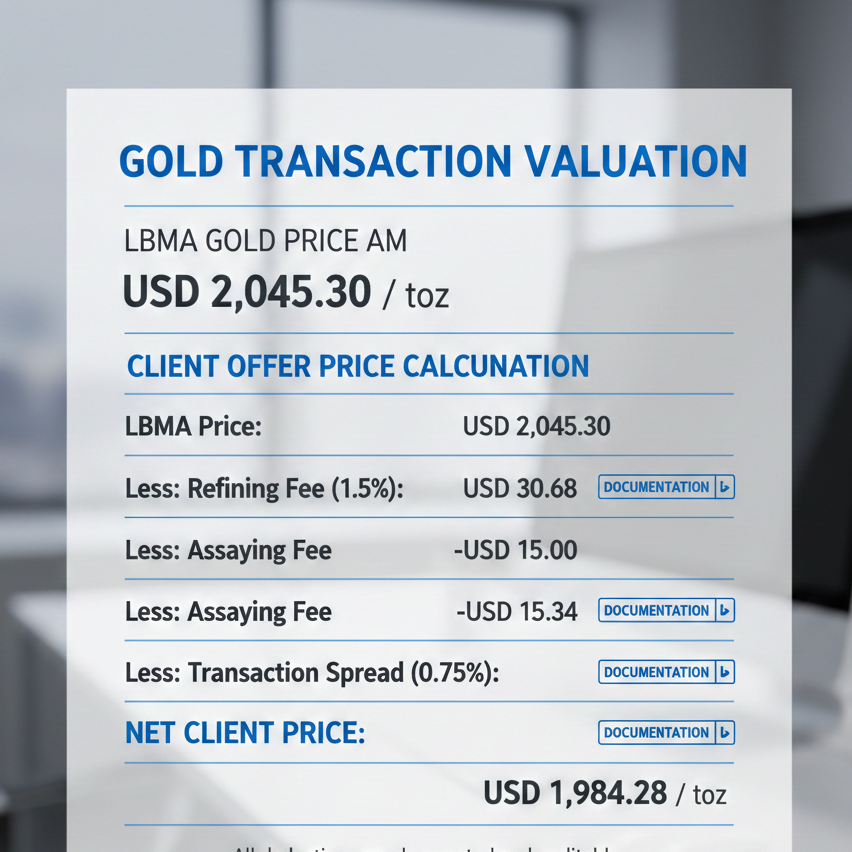
African gold deals price against the LBMA spot rate with transparent, itemized deductions:
- Refining allowance based on precise fire assay results (typically 1 to 2 percent)
- Accredited laboratory certification costs
- Government export permit fees
- Secure logistics and insurance
Reputable exporters provide written pricing formulas before engagement. Material priced significantly below LBMA rates without documented justification typically lacks proper licensing or assay certification—rendering it non-exportable.
Documentation Sequencing
Successful transactions follow strict sequencing:
- Miner license verification at source with GPS coordinates recorded
- Material sealed in tamper-evident containers with photographed identifiers
- Fire assay certification from nationally accredited laboratories
- Government export permit issuance after physical inspection
- Buyer payment against complete documentation package
- Air freight booking and shipment execution
Reversing this order—particularly requesting payment before permit issuance—creates non-delivery risk and signals elevated fraud potential.

Regional Structural Variations
While core principles remain consistent, jurisdictional frameworks differ:
- Ghana: PMMC requires physical verification against assay certificates before permit issuance; typical processing time 5 to 7 business days
- South Africa: SADPMR mandates SABS fire assay results with SARS customs endorsement at OR Tambo Airport
- South Sudan: Dual ministry approval (Mining and Finance) creates longer processing cycles of 7 to 10 days but provides fiscal verification
Professional exporters adapt to these timelines rather than promising unrealistic delivery dates.
Payment Security Protocols
Legitimate exporters absorb acquisition and permit processing costs independently—never requesting buyer funds to “secure permits.” Payment occurs only after:
- Accredited assay certificates are received and shared
- Government export permits are physically issued and copied
- Chain of custody documentation is complete
First-time buyers may use neutral escrow services holding funds until air waybill confirmation—reputable exporters accept this arrangement without resistance.
Since 2015, AFRICA GOLD has maintained this disciplined structure across operations in Ghana, South Africa, and South Sudan from its South African headquarters, with coordination support from the United Kingdom. The company funds all acquisitions independently, shares documentation proactively before payment requests, and maintains uniform chain of custody standards across jurisdictions—enabling buyers to access compliant supply without navigating fragmented local systems.

Structured deals protect capital and compliance standing. Partner only with exporters who follow documentation-first sequencing, transparent LBMA-based pricing, and permit completion before payment requests.
africa-gold.com
sales@africa-gold.com