


What Determines the Price of African Gold
African gold prices derive from the LBMA international benchmark with transparent, verifiable deductions—not arbitrary discounts below market rates. Material priced significantly below LBMA spot rates typically lacks proper licensing or assay certification, rendering it non-exportable. Understanding legitimate pricing structures protects buyers from compliance exposure and non-delivery risk.
The LBMA Benchmark Foundation
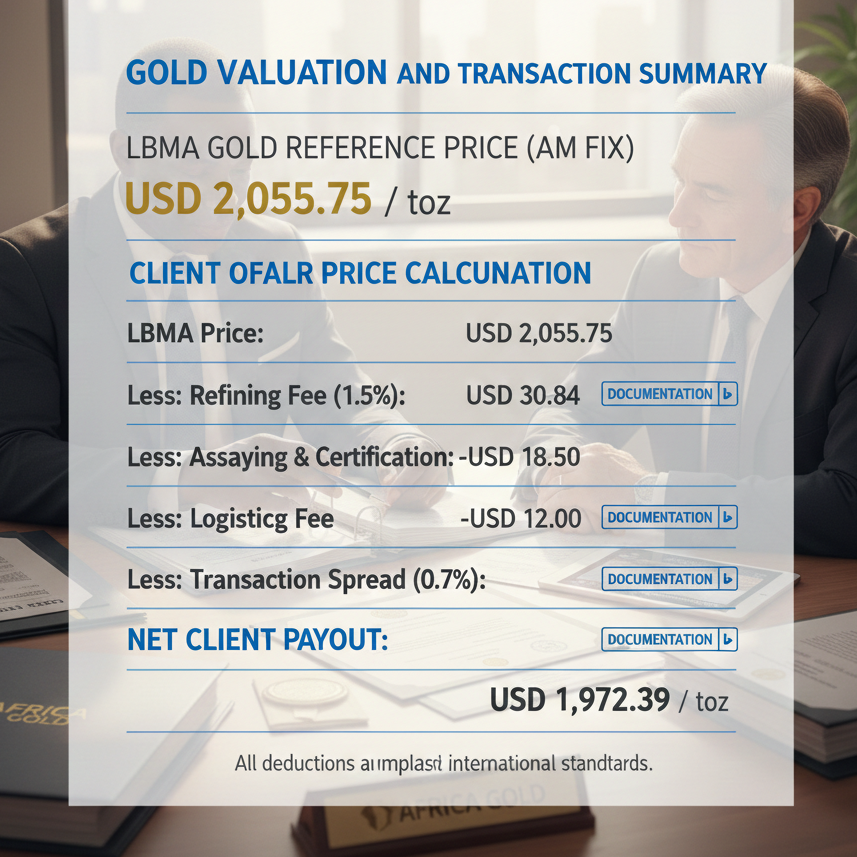
All legitimate African gold transactions price against the LBMA gold spot rate per troy ounce. This global benchmark provides the reference point before any adjustments. Exporters calculate value using the LBMA rate effective on the day of assay certification or permit issuance—never an outdated or manipulated figure.

Purity-Based Refining Allowances
The primary price adjustment correlates directly with fire assay results. Material assaying 92.45 percent purity receives a larger refining allowance than 98.12 percent material. These allowances—typically 1 to 2 percent based on precise fineness—compensate refineries for processing costs to achieve 99.99 percent purity. Reputable exporters never price against XRF readings alone; they wait for accredited laboratory certification before finalizing transaction value.

Documented Cost Deductions
Legitimate pricing includes transparent, itemized deductions for:
- Accredited assay certification fees (PMMC in Ghana, SABS in South Africa)
- Government export permit processing charges
- Secure logistics and insurance to origin airport
- Operational overhead for chain of custody management
These costs are documented and disclosed upfront—not hidden within a single opaque figure. Buyers should receive written pricing formulas showing the LBMA reference rate and itemized adjustments before engagement.
Regional Cost Variations
Logistics expenses create minor pricing differences across jurisdictions:
- Ghanaian exports to New York incur West African freight costs
- South African shipments to Shanghai reflect Southern African logistics structures
- South Sudanese material requires additional security protocols affecting cost
These variations reflect genuine operational factors—not arbitrary markups or unexplained discounts.
Red Flags in Pricing Structures
Buyers should reject offers featuring:
- Pricing 5 percent or more below LBMA benchmarks without documented justification
- Vague explanations of deductions
- Pressure to accept “special rates” for undocumented material
- Refusal to disclose the pricing formula
Such practices often indicate material lacking proper licensing or chain of custody—creating rejection risk at refineries and potential OECD due diligence violations.
Why Transparent Pricing Matters
Refineries in Dubai, Shanghai, and Zurich reject shipments with documentation gaps regardless of purity. Transparent pricing tied to LBMA rates with documented deductions signals exporter integrity and regulatory compliance. Buyers who accept unexplained discounts often discover the material cannot legally export—stranding capital in non-deliverable transactions.
Since 2015, AFRICA GOLD has applied consistent LBMA-based pricing across operations in Ghana, South Africa, and South Sudan from its South African headquarters, with coordination support from the United Kingdom. The company provides buyers with written pricing formulas before engagement, shares assay certificates prior to payment requests, and maintains uniform deduction structures across jurisdictions—ensuring predictable, compliant transactions.
Sustainable gold sourcing requires pricing integrity tied to global benchmarks with documented, justifiable adjustments. Partner with an exporter who discloses pricing formulas transparently—not one offering unexplained discounts that signal compliance risk.
africa-gold.com
sales@africa-gold.com