


The Economics of Gold Mining in Africa
African gold production operates across two distinct economic models: industrial-scale operations with mechanized extraction and small-scale artisanal mining conducted by licensed individuals and cooperatives. Understanding these economic structures explains why compliant export supply requires professional intermediaries who absorb verification costs—transforming fragmented local production into refinery-ready material.
Small-Scale Mining Economics
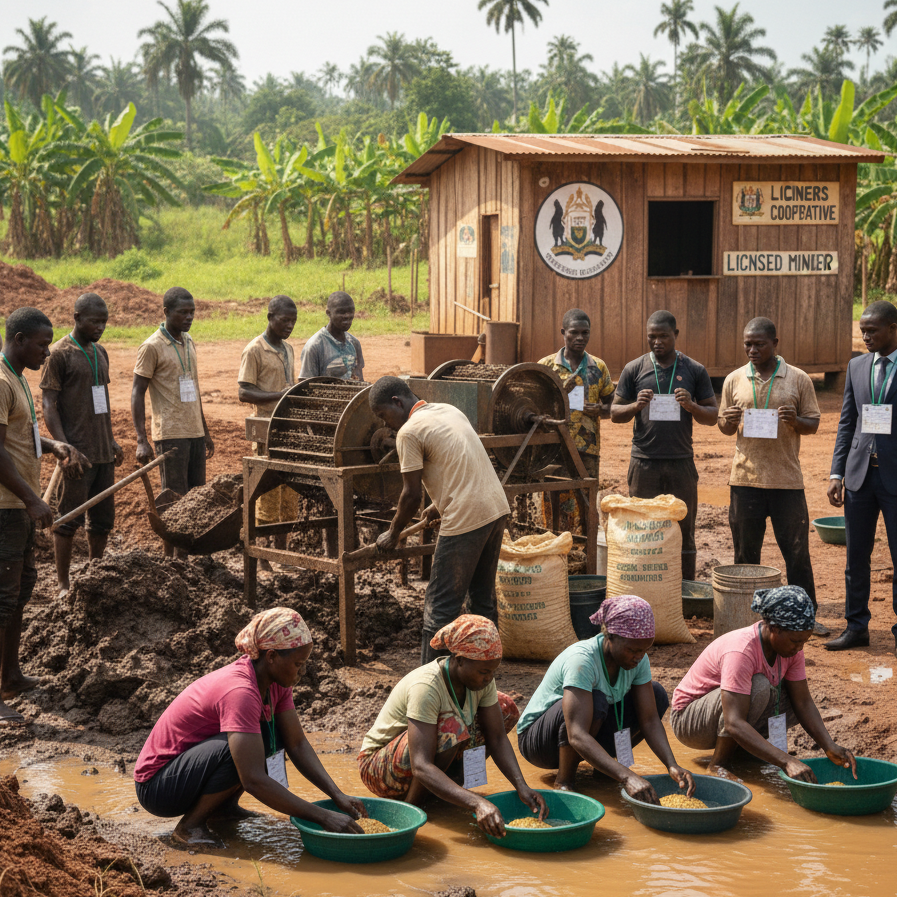
Artisanal miners in Ghana’s Ashanti Region, South Africa’s North West province, and South Sudan’s Equatoria states operate with minimal capital investment—basic hand tools, rudimentary processing equipment, and manual labor. Production costs remain low, but margins fluctuate with:
- Local buying prices set by licensed aggregators
- Seasonal accessibility to mining sites during rainy periods
- Fuel and mercury costs for rudimentary processing
- Licensing fees paid to national mining authorities
Miners typically sell directly to licensed aggregators or exporters at prices discounted 3 to 5 percent below LBMA rates—reflecting immediate cash needs and limited market access. This discount does not represent “cheap gold” but rather the economic reality of producers lacking export infrastructure.
Industrial Mining Cost Structure
Large-scale operations in South Africa and Ghana maintain significantly higher cost bases:
- Capital expenditure for mechanized equipment and underground infrastructure
- Labor costs under formal employment contracts
- Environmental compliance and rehabilitation obligations
- Corporate taxation and mineral royalties (5 to 7 percent in most jurisdictions)
These operations sell refined doré bars directly to international markets or national refineries, bypassing the small-scale export channels that supply companies like AFRICA GOLD. Their economics operate on entirely different scales and time horizons.
The Exporter’s Economic Role
Professional exporters absorb costs that individual miners cannot manage:
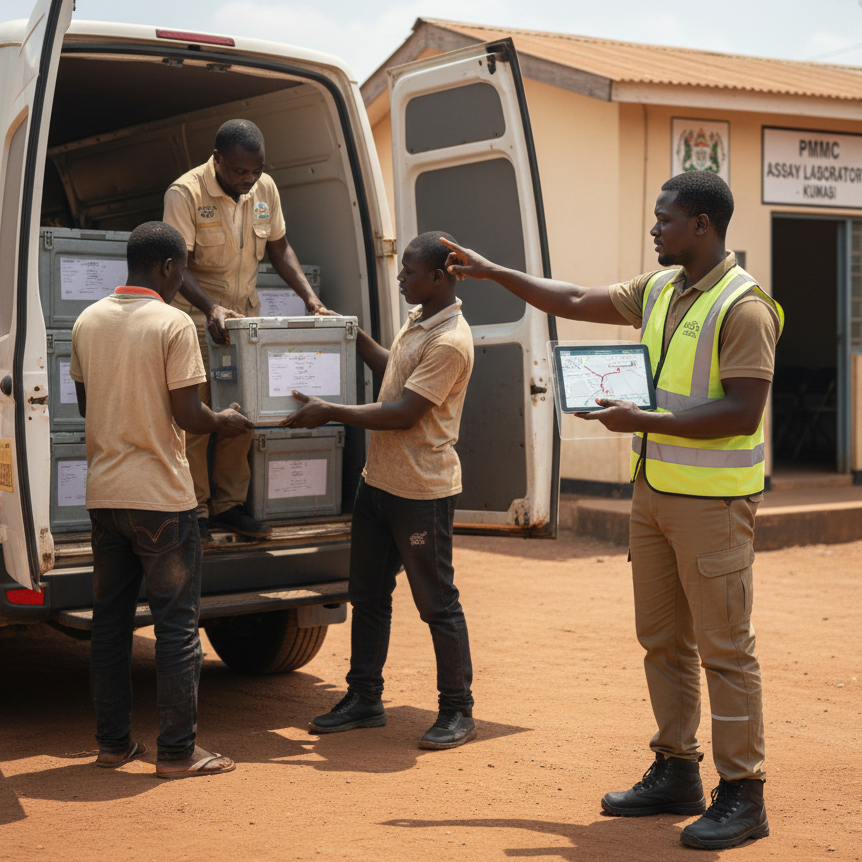
- Transportation to accredited assay laboratories
- Fire assay certification fees (typically $150 to $400 per batch)
- Government permit processing and inspection fees
- Secure storage and logistics to international airports
- Documentation management and compliance verification
These costs—typically 2 to 4 percent of LBMA value—explain why exporters cannot offer material at miner acquisition prices. Buyers who demand such pricing either receive undocumented material or encounter non-delivery when permits are denied.
Currency Volatility Impact
African gold economics face additional pressure from local currency fluctuations. When the Ghanaian cedi or South African rand depreciates against the dollar, miners receiving local currency payments effectively earn less despite stable LBMA rates. This dynamic creates supply volatility as miners withhold material during sharp depreciations—expecting higher future payouts. Professional exporters manage this cycle through transparent, real-time LBMA-based pricing rather than fixed local currency rates.
Regulatory Cost Integration
Export compliance carries mandatory fiscal obligations:
- Ghana: 5 percent mineral royalty on gross export value
- South Africa: Sliding-scale royalty of 0.5 to 7 percent based on profitability
- South Sudan: 3 percent export duty plus processing fees
These levies are non-negotiable and paid directly to government authorities before permit issuance. Legitimate exporters incorporate these costs transparently into pricing structures—never suggesting they can be avoided through “special arrangements.”
Since 2015, AFRICA GOLD has operated within these economic realities across Ghana, South Africa, and South Sudan from its South African headquarters, with coordination support from the United Kingdom. The company maintains permanent field teams who understand local mining economics while absorbing verification and compliance costs that transform fragmented production into documented supply. This integrated model enables buyers to access African gold without navigating the economic complexities of fragmented local markets.

Image: AFRICA GOLD field officer reviewing transparent pricing sheet with licensed miner
The economics of African gold mining favor professional intermediation—not exploitation. Buyers seeking sustainable supply should partner with exporters who transparently manage verification costs and regulatory obligations while maintaining fair pricing aligned with LBMA benchmarks.
africa-gold.com
sales@africa-gold.com