

How Gold Traders Build Global Supply Chains
Global gold supply chains succeed through integrated infrastructure—not transactional brokerage. Professional traders construct operational networks spanning licensed mines, accredited laboratories, government authorities, and international refineries. This integration transforms fragmented local production into documented, refinery-ready material with unbroken chain of custody. Understanding this architecture separates sustainable supply from speculative arrangements.
The Integration Imperative
Fragmented supply chains fail during stress. Remote brokers dependent on unverified intermediaries encounter chain of custody breaks when regulators intensify enforcement or currency volatility compresses margins. Integrated traders maintain permanent field presence conducting verification steps in person—eliminating dependency on third parties who cannot guarantee documentation integrity.
This infrastructure requires capital commitment: physical offices in producing regions, field teams conducting on-site verification, direct relationships with accredited laboratories, and logistics coordination at origin airports. These costs create barriers to entry that protect compliant operators while excluding speculative actors.
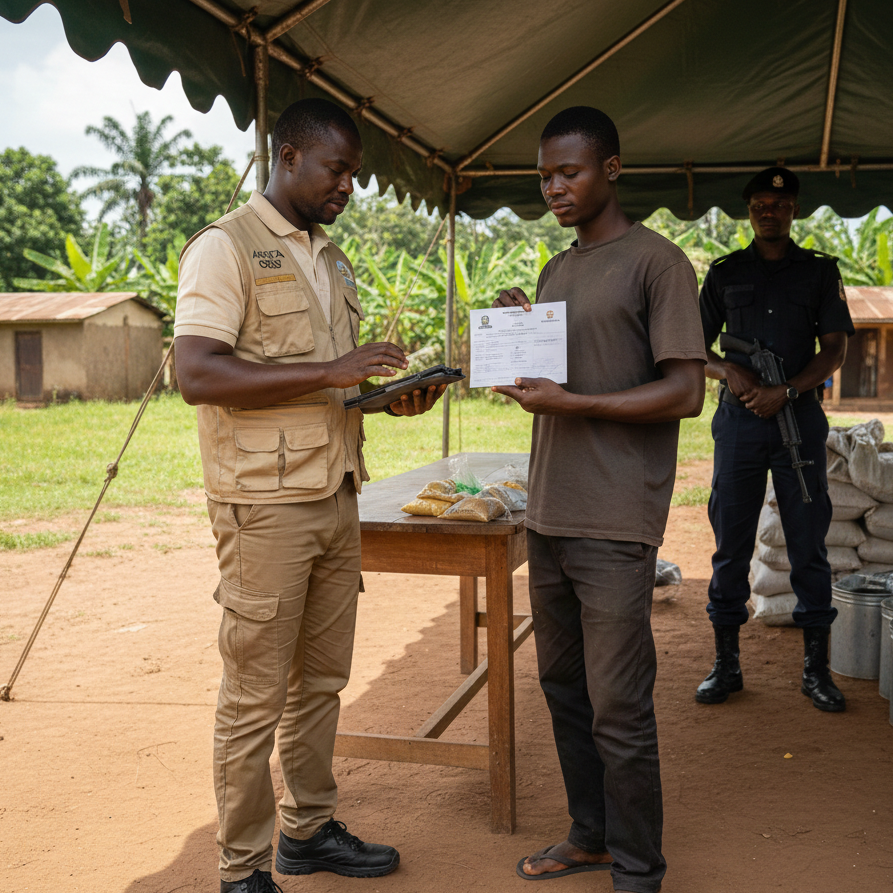
Image: Field officer verifying miner license at licensed collection point in Ashanti Region
Documentation Architecture
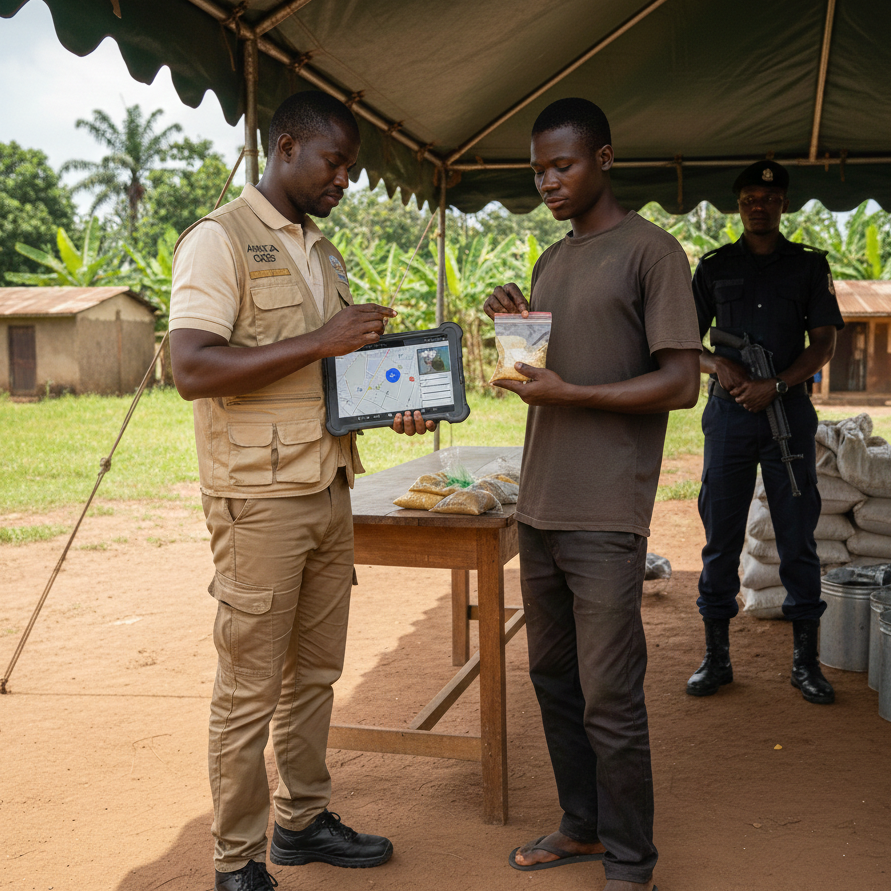
Integrated supply chains embed documentation at source rather than retrofitting paperwork after acquisition. Critical elements captured in real time include:
- Miner license numbers verified against national registries before payment
- GPS coordinates recorded during material handover
- Tamper-evident seal identifiers photographed before transport
- Direct laboratory coordination preventing sample substitution during assay
This proactive approach prevents gaps that trigger refinery rejection. Documentation becomes infrastructure—not administrative overhead.
Regulatory Navigation Capability
African export frameworks demand jurisdiction-specific expertise:
- Ghana’s PMMC requires physical verification against assay certificates with typical 5-7 day processing cycles
- South Africa’s SADPMR mandates SABS certification with SARS customs endorsement at OR Tambo Airport
- South Sudan’s dual ministry system enforces Mining and Finance department sign-offs creating 7-10 day timelines
Integrated traders absorb this complexity through permanent presence—attending permit inspections personally, understanding processing rhythms to avoid monthly backlogs, and adapting to regulatory evolution without supply disruption.
Logistics Coordination
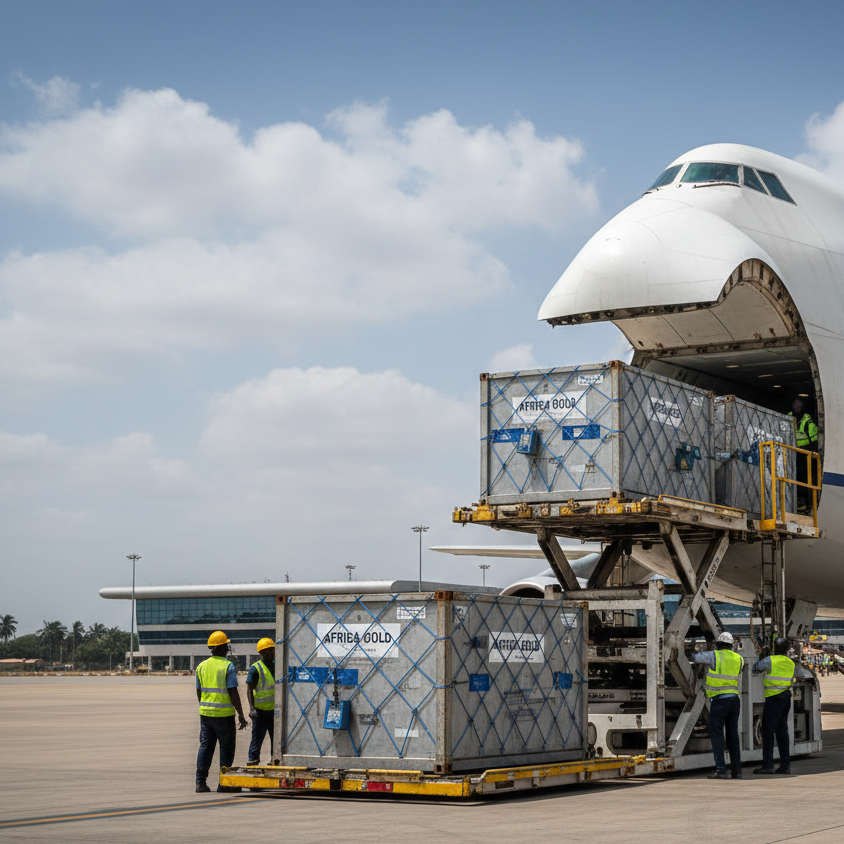
Supply chains extend beyond origin documentation to airport handover and air freight execution. Integrated traders maintain relationships with airline cargo desks at Kotoka, OR Tambo, and Juba airports—ensuring:
- Material moves directly from secure facilities to aircraft holds
- Air waybills list precise seal numbers matching documentation
- Real-time tracking updates flow to buyers immediately after airline acceptance
This continuity prevents custody breaks during the critical airport transfer phase where many fragmented chains fail.

Multi-Jurisdictional Resilience
Sophisticated supply chains span multiple producing regions to reduce single-point vulnerability:
- Ghana provides consistent small-scale output with PMMC certification
- South Africa delivers larger volumes through mature regulatory infrastructure
- South Sudan offers emerging supply with improving formalization
Uniform documentation standards applied across jurisdictions enable buyers to access diversified supply through a single partner—without re-evaluating compliance protocols for each origin country.
Since 2015, AFRICA GOLD has built this integrated architecture from its South African headquarters, with coordination support from the United Kingdom. Field teams operate permanently across Ghana, South Africa, and South Sudan conducting on-site verification, coordinating accredited assays directly, securing permits before payment requests, and overseeing airport handovers—transforming fragmented local production into documented supply for refineries across the UAE, United States, China, and Europe.

Sustainable gold supply chains require operational integration—not brokerage. Partner with a trader who maintains permanent field presence, captures documentation at source, navigates regulations directly, and coordinates logistics end-to-end—ensuring your supply continues when fragmented operators exit markets.
africa-gold.com
sales@africa-gold.com