
How Much Gold Is in Africa? Reserves, Production, and Strategic Significance
Africa holds a substantial portion of the world’s gold—both in terms of annual production and remaining underground reserves. As of 2026, the continent accounts for approximately 25% of global gold output, producing an estimated 900–950 tonnes per year. More importantly, it is home to some of the largest known undeveloped and remaining reserves, particularly in South Africa and Ghana.
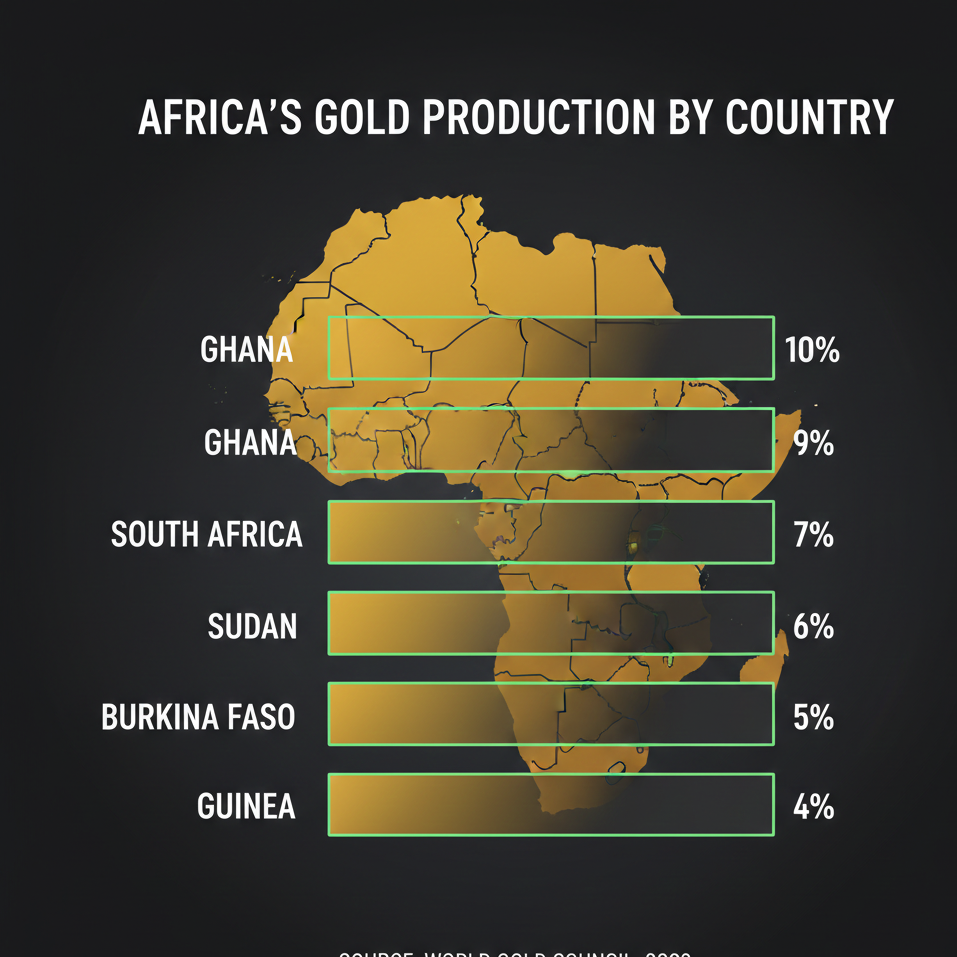
1. Annual Gold Production (2026 Estimates)
| Country | Annual Output (Tonnes) |
|---|---|
| Ghana | ~190 |
| South Africa | ~150 |
| Mali | ~120 |
| Burkina Faso | ~115 |
| Tanzania | ~50 |
| Côte d’Ivoire | ~45 |
| DRC | ~35–80* |
| Zimbabwe | ~30 |
| Sudan | ~25–30 |
| South Sudan | ~5–10 |
*DRC figures vary due to significant informal mining and smuggling.
Total Africa: ~900–950 tonnes/year
Global Total: ~3,600 tonnes/year
2. Known Gold Reserves (Underground)
Reserves refer to economically recoverable gold still in the ground:
- South Africa: ~2,000+ tonnes – the largest national reserve globally, primarily in the Witwatersrand Basin
- Ghana: ~400+ tonnes – concentrated in the Birimian Greenstone Belt
- Mali & Burkina Faso: ~300–350 tonnes combined – high-grade open-pit potential
- Tanzania, DRC, Sudan: Significant but less quantified due to exploration gaps
Historically, Africa has produced over 25,000 tonnes since the 19th century—more than any other continent.
3. Geological Endowment
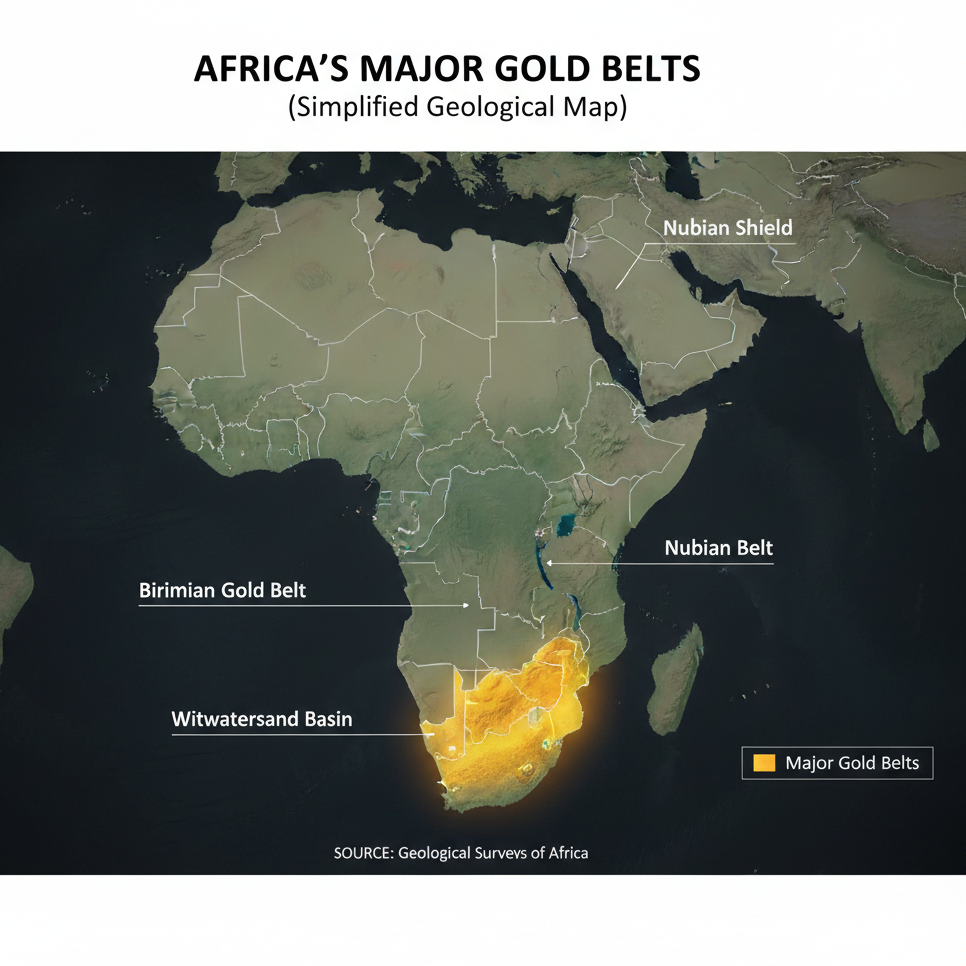
Africa’s gold is concentrated in three key geological provinces:
- Witwatersrand Basin (South Africa): Paleoplacer deposit—the richest ever discovered
- Birimian Greenstone Belt (West Africa): Hosts high-grade, near-surface deposits ideal for modern mining
- Nubian Shield (Northeast Africa): Extends through Sudan, Egypt, and Ethiopia; underexplored but promising
These regions continue to attract billions in exploration investment annually.
4. Formal vs. Informal Supply
- Industrial Mines: Account for ~65% of output (e.g., Gold Fields, AngloGold Ashanti)
- Formalized Small-Scale Miners: ~30–35% (registered cooperatives in Ghana, South Africa)
- Informal/Illicit Mining: Estimated 5–10%—excluded from compliant supply chains
Governments are actively formalizing artisanal sectors to improve revenue capture and reduce environmental harm.
5. Africa Gold Reserve’s Role
Founded in 2015 and headquartered in South Africa, Africa Gold Reserve sources gold exclusively from:
- Licensed local mines
- Registered small-scale miners
- Government-authorized sellers
Operating in Ghana, South Africa, and South Sudan, the company ensures all material is ethically verified and aligned with OECD Due Diligence Guidance and LBMA Responsible Gold standards.
Conclusion
Africa holds vast quantities of gold—both above ground in annual production and below ground in proven reserves. While South Africa remains the reserve leader, West Africa drives current output growth. For institutional buyers, the opportunity lies not just in volume, but in verified, ethical sourcing. Partnering with a professional exporter like Africa Gold Reserve ensures secure access to this strategic resource.
Website: africa-gold.com
Email: sales@africa-gold.com