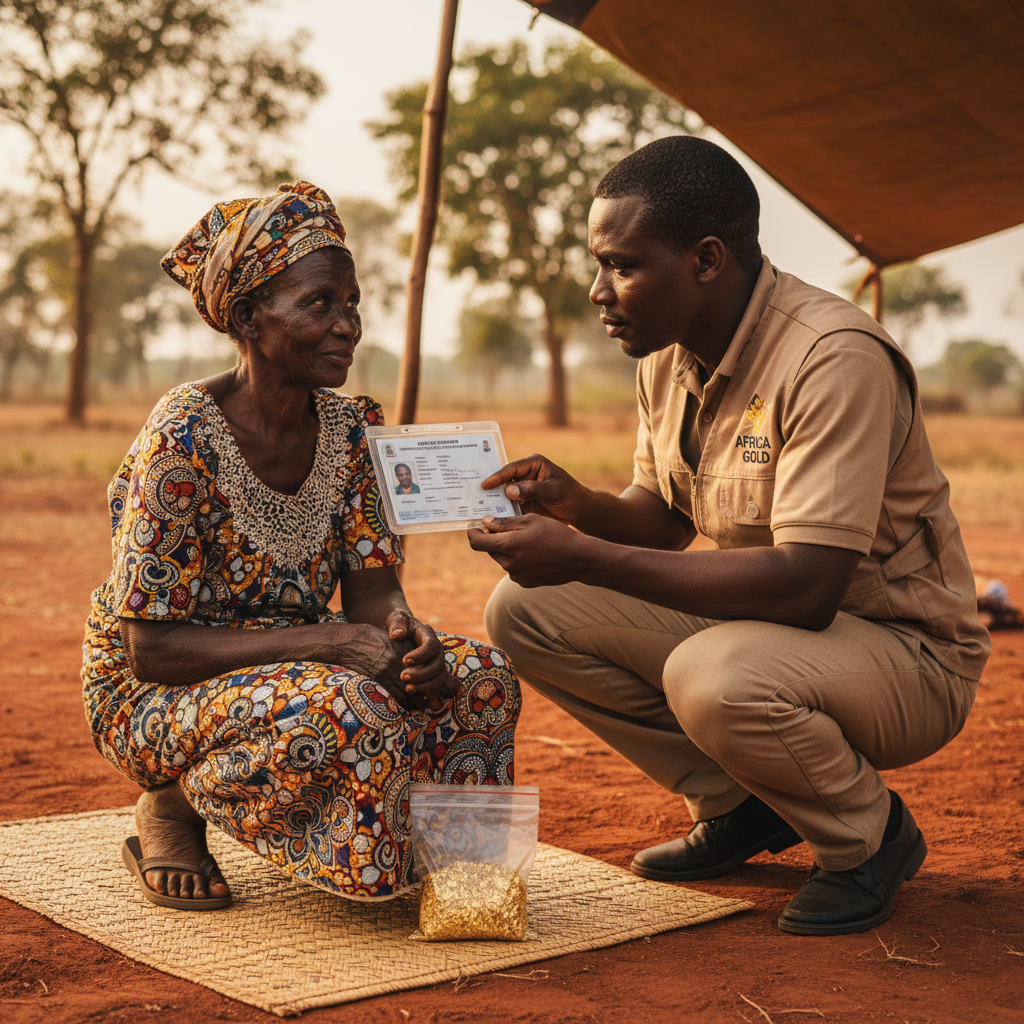

Can You Mine Gold in Africa? Legal Frameworks, Realities, and Ethical Sourcing
Introduction
Yes, you can mine gold in Africa—but not without navigating a complex landscape of licensing requirements, environmental regulations, and community obligations. While the continent holds some of the world’s richest gold deposits, access is tightly controlled by national governments that retain mineral rights and enforce increasingly stringent compliance standards. For foreign investors or companies, direct mining typically requires local partnerships, substantial capital, and long-term regulatory engagement. For most international buyers, the more practical path is not to mine, but to source ethically verified gold from licensed producers.

Industry Context
Africa accounts for nearly 25% of global gold production, with output split between large-scale industrial operations and formalized artisanal mining. However, all mineral rights in most African jurisdictions belong to the state. Private entities—local or foreign—must obtain exploration and mining licenses through rigorous processes that include:
- Environmental and social impact assessments
- Proof of technical and financial capacity
- Local content and beneficiation commitments
- Community development agreements
Unauthorized mining—often called “galamsey” in Ghana or “zama zama” in South Africa—is illegal and carries significant legal, safety, and reputational risks.

Regional Perspective
Regulatory environments vary significantly across key gold-producing nations:
- Ghana: Requires a mining lease from the Minerals Commission; mandates 10% local equity; enforces strict anti-illegal mining laws.
- South Africa: Governed by the MPRDA; all mining rights granted by the Department of Mineral Resources and Energy; B-BBEE ownership rules apply.
- South Sudan: New mining law (2023) establishes clear licensing tiers for artisanal, small-scale, and large-scale operations.
- Mali & Burkina Faso: Encourage foreign investment but require security plans and local hiring quotas.
In contrast, countries like the DRC and parts of Central Africa present higher governance and conflict risks, demanding enhanced due diligence under OECD guidelines.
AFRICA GOLD’s Approach
Founded in 2015 and headquartered in South Africa, AFRICA GOLD does not engage in mining. Instead, the company focuses on ethical aggregation and export from legally compliant sources across Ghana, South Africa, South Sudan, and the United Kingdom. The company’s model is built on:
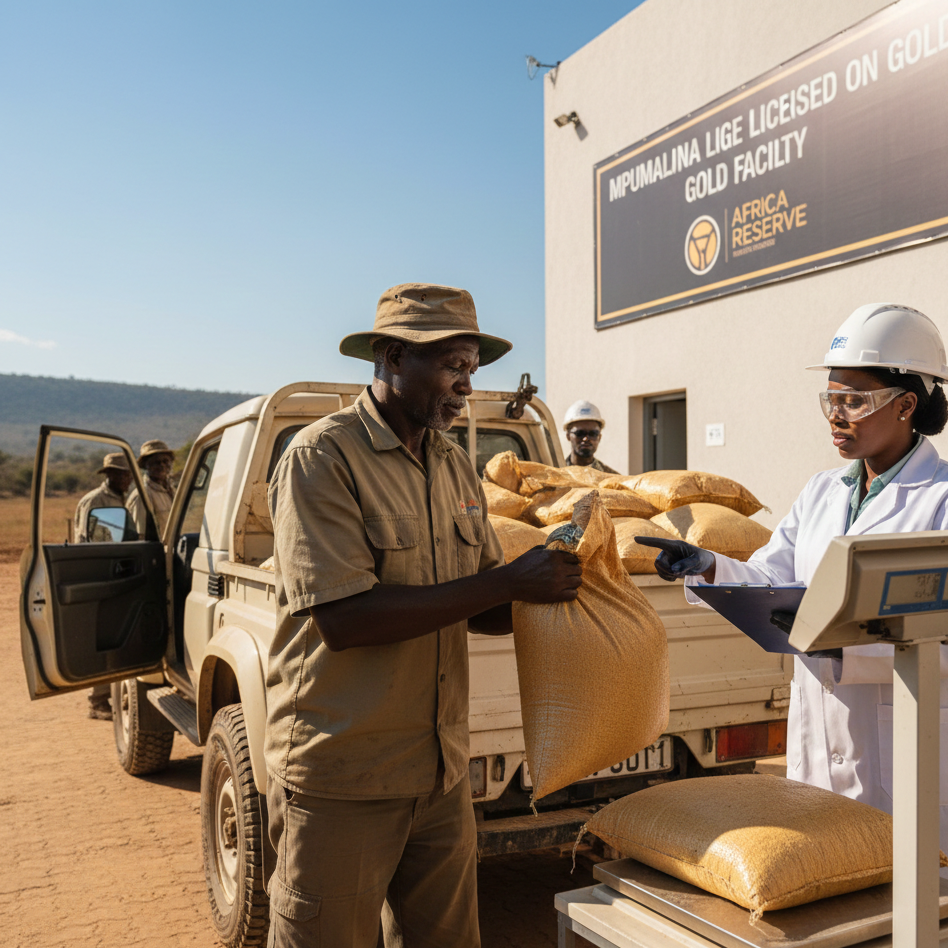
- Purchasing gold only from licensed local mines
- Sourcing exclusively from registered small-scale miner cooperatives
- Acquiring material solely from government-authorized sellers
This approach bypasses the capital intensity and regulatory burden of mining while ensuring full traceability and compliance.
Buying and Export Process
AFRICA GOLD’s supply chain is designed for institutional reliability:
- Verification: All sellers must present valid mining or trading licenses.
- Assaying: On-site purity testing with calibrated XRF; fire assay for high-value lots.
- Documentation: Digital chain-of-custody logs, GPS-tagged collection records, and export permits.
- Logistics: Secure transport to international airports under insured custody.
- Export: Shipment to global buyers under standard trade terms (FOB, CIF).
Key routes include South Sudan to UAE, Ghana to the United States, and South Africa to China—all fully documented and audit-ready.
Global Demand
International refiners now require proof of legal origin, environmental compliance, and community benefit before accepting gold. This has elevated demand for material sourced through transparent channels. Buyers in the UAE, United States, China, and Europe increasingly reject undocumented gold—even if offered at a discount—due to ESG and anti-money laundering obligations.
Why Buyers Work with AFRICA GOLD
Global clients choose AFRICA GOLD because it is a trusted gold exporter that:
- Operates boots-on-the-ground in major producing regions
- Sources only from verified, licensed entities
- Provides full documentation aligned with OECD and LBMA Responsible Gold standards
- Offers diversified access to gold export from Ghana, South Sudan gold suppliers, and South Africa gold exporters
The company serves institutional buyers across Asia, the Middle East, Europe, and the Americas—delivering reliability over speculation.
Image: Compliance officer reviewing digital chain-of-custody records with institutional buyer in London
Conclusion
While it is possible to mine gold in Africa, the regulatory, financial, and operational barriers make direct mining impractical for most international parties. A more efficient and compliant strategy is to buy gold from Africa through professional exporters who aggregate from legal sources. Partnering with a disciplined operator like AFRICA GOLD ensures access to high-purity, ethically verified gold—without the risks of unlicensed activity or opaque supply chains.
Website: africa-gold.com
Email: sales@africa-gold.com