

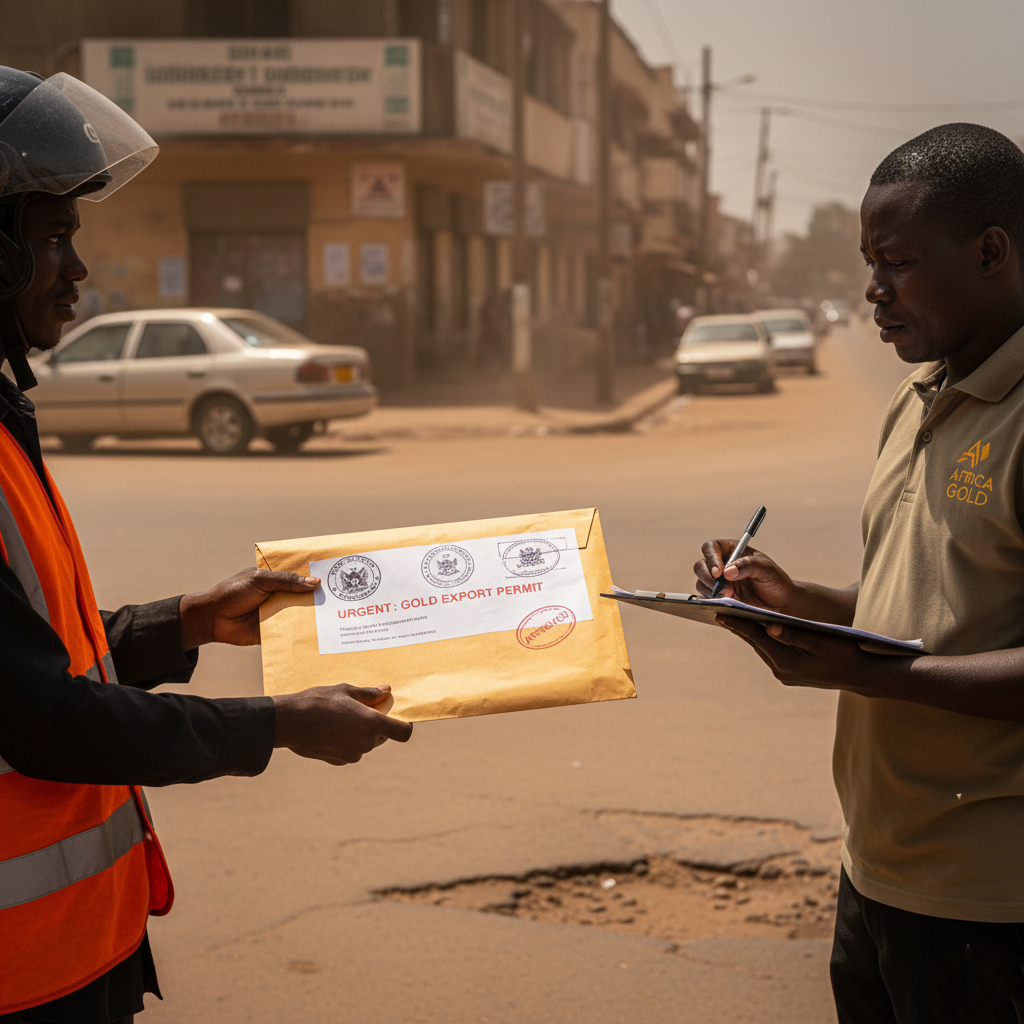
Gold export from Africa lives or dies by paperwork. Unlike paper markets, physical shipments require tangible proof of legality at every checkpoint from mine site to refinery gate. Missing, mismatched, or uncertified documents trigger immediate rejection by customs or refineries. This guide details the exact documents required in Ghana, South Africa, and South Sudan and why each one matters.
The Core Document Set
Every compliant export package includes seven non-negotiable items:
- National Export Permit (issued by PMMC, SADPMR, or dual ministries)
- Accredited Assay Certificate (with fineness, weight, serial number, lab accreditation)
- Certificate of Origin (signed by chamber of commerce)
- Commercial Invoice (matching assay weight and buyer details)
- Bill of Lading or Air Waybill (with seal numbers and consignee info)
- Customs Declaration Forms (SARS DA 182, Ghana GRA forms, etc.)
- Tax Clearance Certificates (proof of corporate tax compliance)
Omit anyone, and the shipment halts.

Country-Specific Variations
While the core set is universal, execution differs:
- Ghana: PMMC requires original stamped permits; photocopies rejected.
- South Africa: SARS mandates DA 182 forms with SADPMR reference numbers.
- South Sudan: Dual ministry stamps must appear on same page—separate approvals cause delays.
Professional exporters maintain country-specific templates and pre-check all documents before submission.

Why Digital Copies Aren’t Enough
Buyers often request PDFs for pre-shipment review and reputable exporters provide them. But original stamped documents must accompany the cargo. Refineries and customs agencies reject digital-only submissions. AFRICA GOLD scans originals post-clearance for buyer records but ensures physical copies travel with the gold.
Common Document Failures
- Mismatched weights between invoice and assay
- Missing lab accreditation numbers
- Unsigned certificates of origin
- Photocopies instead of originals
These seem minor but they stop shipments cold.
Conclusion
In African gold trade, documents are as valuable as the metal itself. They transform raw gold into a legal, bankable commodity. Buyers who understand these requirements and partner with exporters who master them—avoid costly delays. When paperwork is perfect, gold flows freely. When it’s not, even the purest bar sits stranded.
africa-gold.com
sales@africa-gold.com