

Gold Export Compliance for Global Buyers
Global buyers sourcing African gold must satisfy three compliance pillars: OECD due diligence guidance, LBMA responsible sourcing standards, and destination country import regulations. Material lacking documented provenance faces rejection at refineries and potential regulatory penalties. Understanding these requirements protects buyers from supply chain exposure.

OECD Due Diligence Requirements
The OECD Due Diligence Guidance for Responsible Supply Chains mandates verifiable chain of custody from mine to export. Buyers must obtain:
- Valid miner licensing documentation
- GPS coordinates of acquisition points
- Tamper-evident seal records with unique identifiers
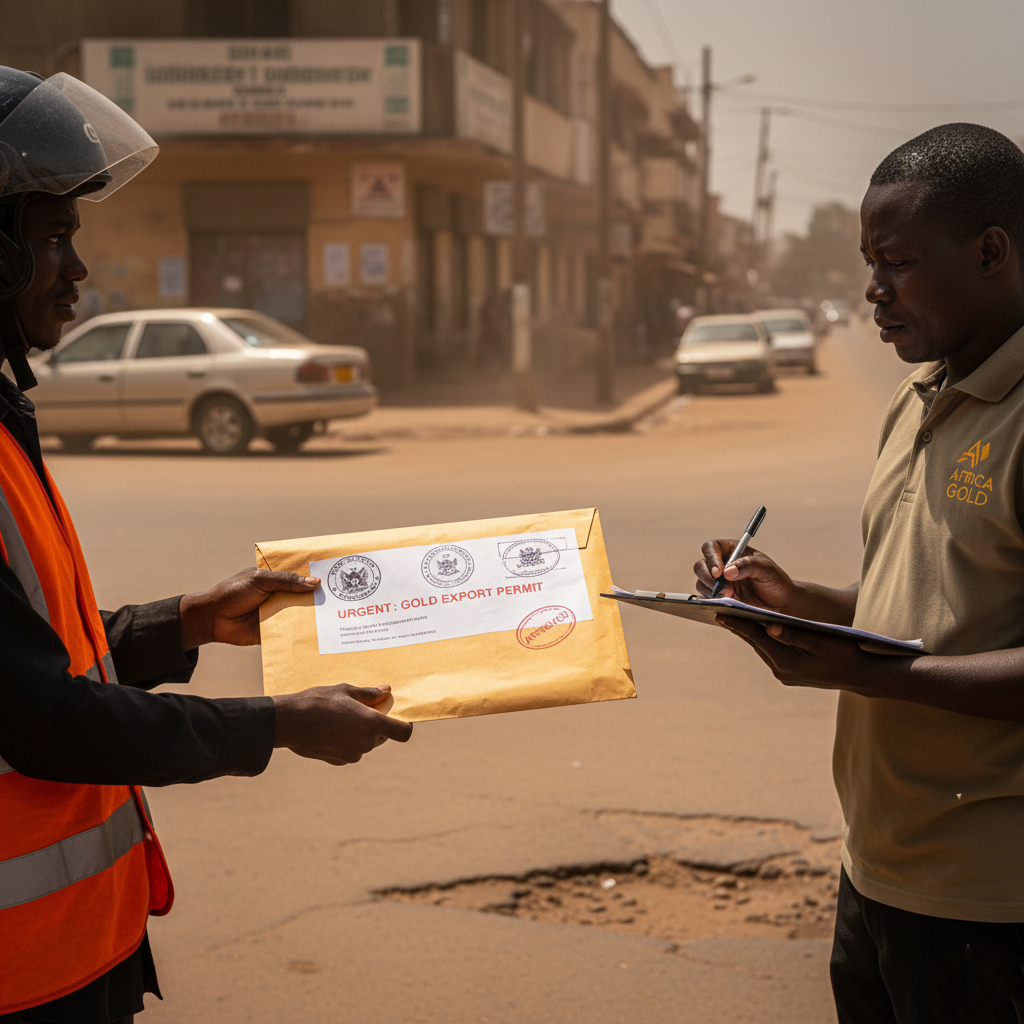
- Government export permits matching physical material
- Accredited assay certificates from recognized laboratories
Refineries increasingly require this documentation package before accepting shipments.
LBMA Responsible Gold Guidance
LBMA-accredited refineries enforce strict acceptance criteria aligned with the Responsible Gold Guidance. Shipments must demonstrate:
- Absence of conflict financing links
- Compliance with national mining laws at origin
- Transparent transaction records
- No association with sanctioned entities
Professional exporters maintain these records systematically—not as optional extras but as prerequisites for market access.

Jurisdictional Export Frameworks
Ghana requires PMMC-approved assay certification and Minerals Commission licensing verification. South Africa mandates SABS fire assay results and SADPMR permits with SARS customs endorsement. South Sudan enforces dual ministry approval from Mining and Finance departments. Buyers must understand these distinct requirements rather than applying a single checklist across jurisdictions.
Risk Mitigation Through Partnership
Direct engagement with individual mines introduces fragmentation and documentation gaps. Buyers mitigate risk by partnering with exporters who maintain permanent operational presence in producing regions. These partners conduct on-site verification, coordinate accredited assays, secure permits directly, and manage secure logistics—transforming fragmented local production into refinery-ready consignments.
Since 2015, AFRICA GOLD has maintained field teams across Ghana, South Africa, and South Sudan from its South African headquarters, with coordination support from the United Kingdom. The company provides buyers complete documentation packages for every shipment, ensuring compliance with OECD, LBMA, and destination market requirements.

Source African gold only through partners who deliver complete compliance documentation—not promises. AFRICA GOLD provides transparent chain of custody and regulatory verification for every consignment destined for global refineries.
africa-gold.com
sales@africa-gold.com