
How Gold Is Tested and Certified Before Export
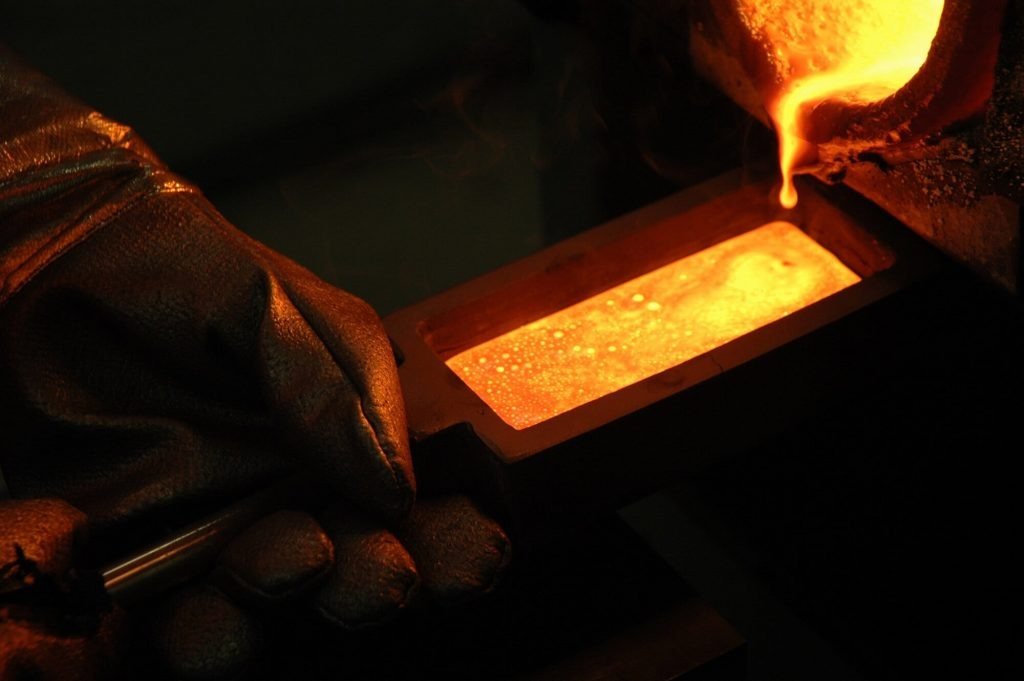
African gold cannot legally export without precise purity verification from nationally accredited laboratories. This certification—conducted through fire assay, not preliminary screening tools—forms the foundation of chain of custody and determines refinery acceptance. Understanding this process separates compliant supply from material destined for rejection.
Fire Assay: The Export Standard
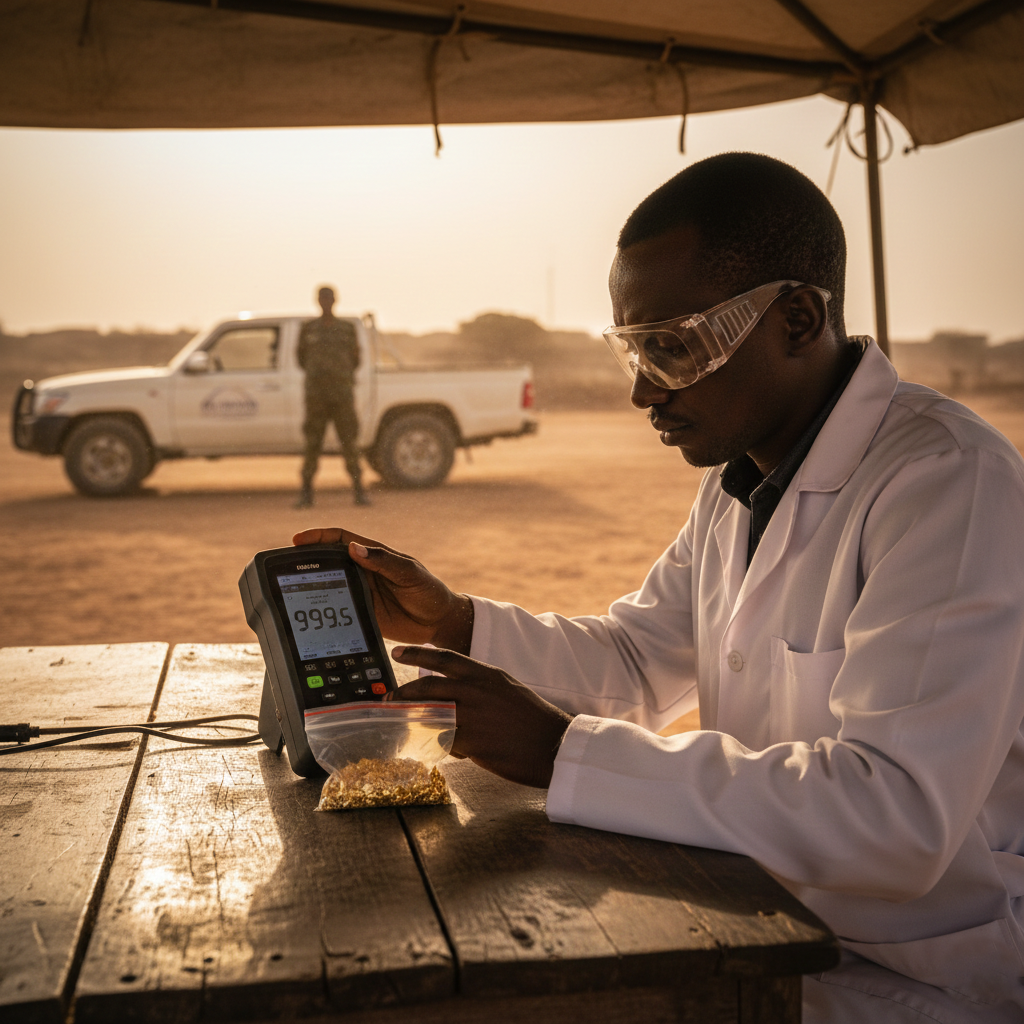
Export certification requires fire assay conducted at government-accredited laboratories. In Ghana, only PMMC-approved facilities in Accra and Kumasi may issue export-valid certificates. In South Africa, SABS-registered laboratories perform fire assay with precision to four decimal places. Portable XRF analyzers provide only preliminary screening; they cannot substitute for accredited fire assay in export documentation.
The Certification Sequence
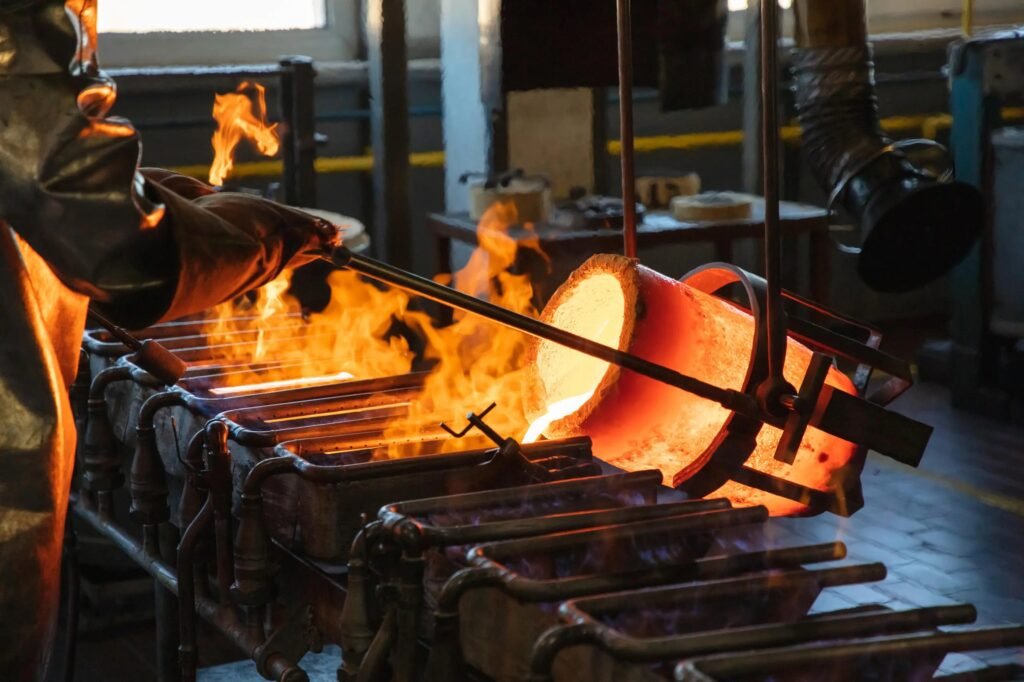
After acquisition from licensed miners, material is sealed in tamper-evident containers and transported directly to accredited laboratories. Technicians conduct fire assay using cupellation and parting methods to determine exact fineness. The resulting certificate documents:
- Precise weight in troy ounces
- Fineness percentage (e.g., 92.45 percent)
- Unique batch identifier matching seal numbers
- Laboratory accreditation number and authorized signature
Government Verification
National authorities physically inspect material against assay certificates before issuing export permits. Ghana’s PMMC, South Africa’s SADPMR, and South Sudan’s Ministry of Mining each conduct side-by-side verification—comparing physical bars or granules to documented weight and purity. Discrepancies halt the process immediately. This dual checkpoint ensures certificates match reality.

Regional Laboratory Frameworks
Ghana maintains a mature network of PMMC-approved facilities near major producing regions. South Africa’s SABS system provides standardized certification across mining provinces. South Sudan increasingly utilizes mobile assay units operated by accredited technicians or partners with Dubai-linked laboratories to generate internationally recognized certificates. Exporters must verify current accreditation status before submission.
Why Certification Integrity Matters
Refineries in Dubai, Shanghai, and Zurich reject shipments with unaccredited certificates or mismatched assay results. LBMA responsible sourcing standards require verifiable testing from recognized laboratories. Professional exporters treat certification not as paperwork but as the linchpin of legal export—coordinating directly with accredited facilities and sharing certificates with buyers before payment.
Since 2015, AFRICA GOLD has maintained direct relationships with accredited laboratories across Ghana, South Africa, and South Sudan from its South African headquarters, with coordination support from the United Kingdom. The company transports material directly to approved facilities, receives certified results before payment requests, and provides buyers full documentation prior to shipment.

Source only gold certified by nationally accredited laboratories with verifiable chain of custody. AFRICA GOLD ensures every consignment undergoes proper fire assay testing and government verification before export.
africa-gold.com
sales@africa-gold.com