
How Gold Was Discovered in South Africa – From Ancient Traces to the Witwatersrand Rush
Gold in South Africa was not “discovered” in a single moment but revealed through centuries of observation, colonial exploration, and geological breakthroughs—culminating in one of the most transformative events in African economic history: the Witwatersrand Gold Rush of 1886.
1. Early and Indigenous Knowledge
Long before European arrival, indigenous communities in southern Africa were aware of gold:
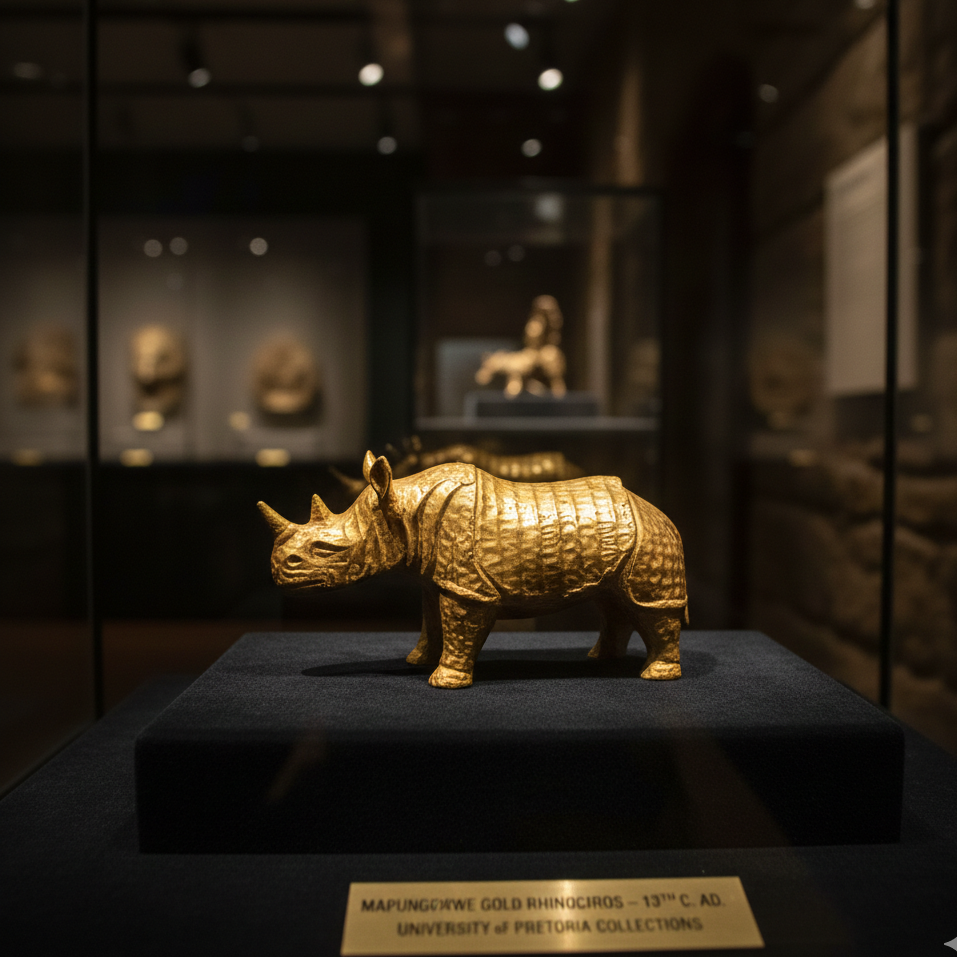
- Archaeological evidence shows gold artifacts from the Mapungubwe Kingdom (10th–13th century CE) in present-day Limpopo Province.
- These societies likely sourced gold from alluvial deposits or surface outcrops, though large-scale mining did not occur.
However, there is no evidence of systematic gold extraction in pre-colonial South Africa—unlike in ancient Nubia or West Africa.
2. Colonial-Era Exploration (1850s–1880s)
The first recorded modern discovery came in 1852, when prospector J.H. Davis found gold near Barberton in Mpumalanga. Though he reported it to authorities, he was expelled under suspicion of theft—delaying formal recognition.
In the 1870s–1880s, British and Australian prospectors intensified searches, leading to:
- The Barberton Gold Rush (1884)
- Small finds in the Lydenburg and Pilgrim’s Rest areas
But these were modest compared to what lay beneath the Highveld.
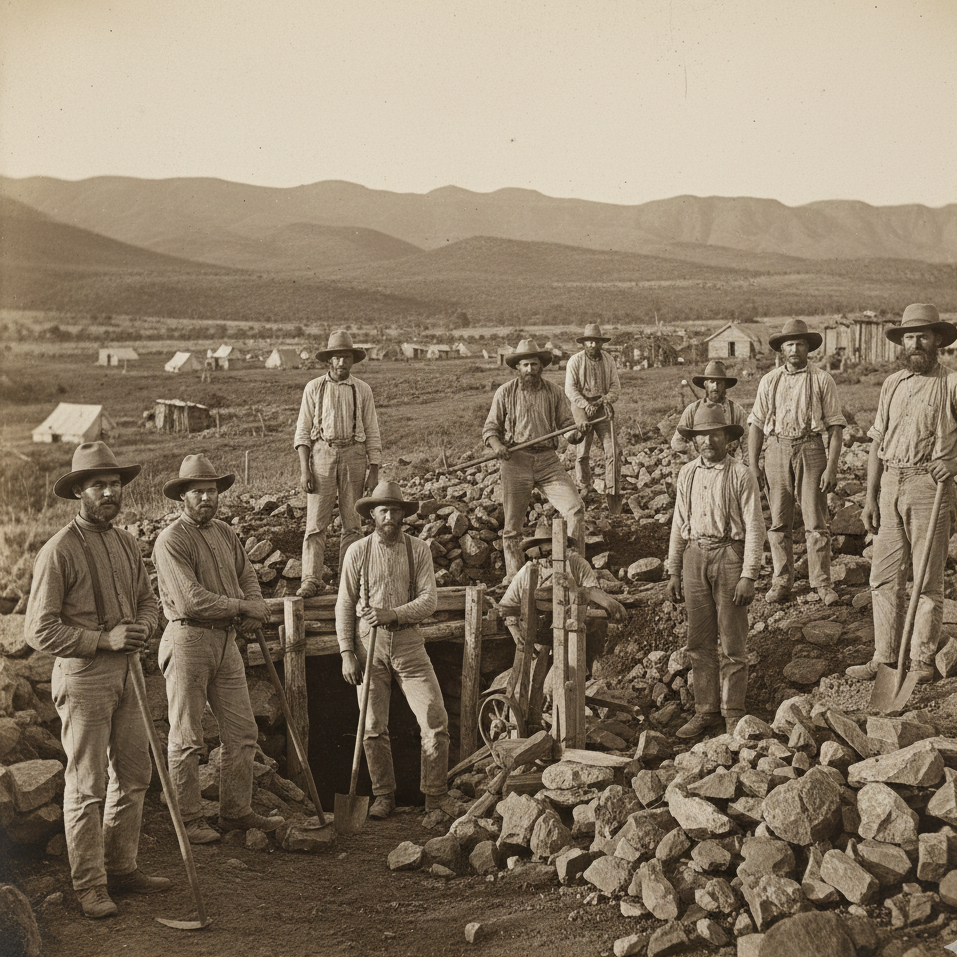
Historical photo of early miners in Barberton, 1880s
3. The Witwatersrand Discovery (1886)
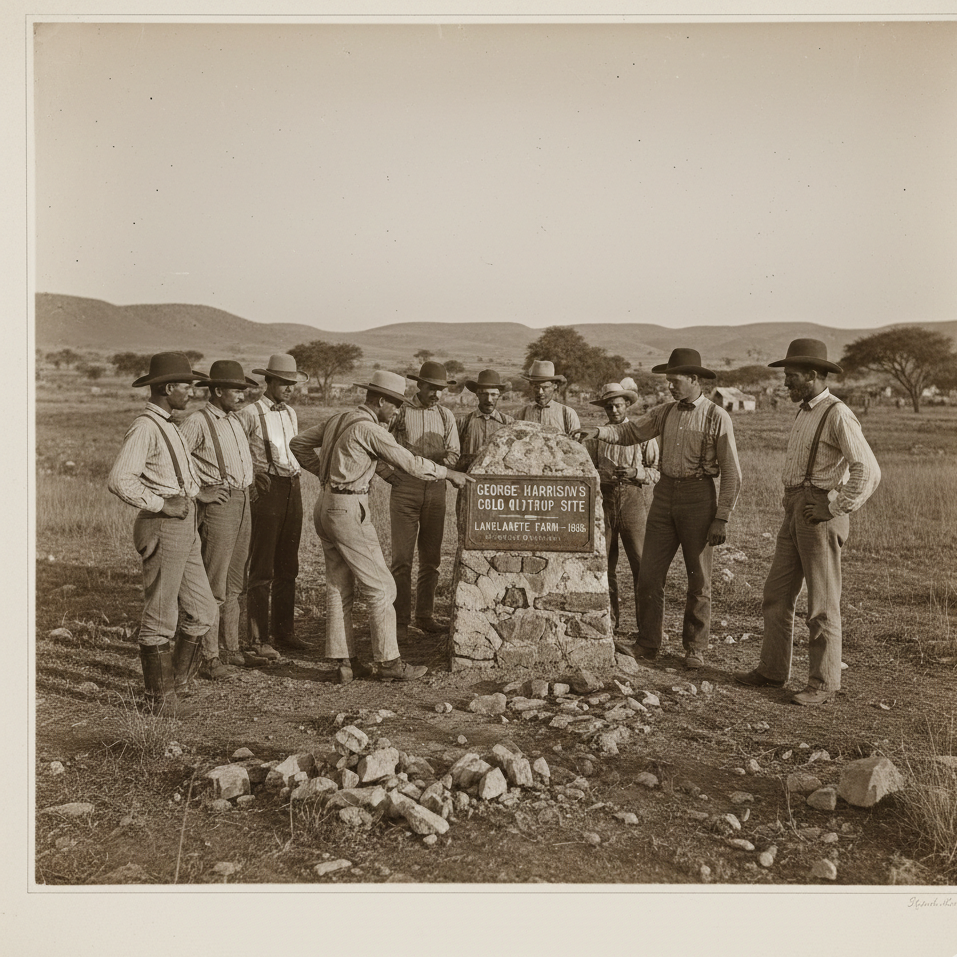
The defining moment came on March 4, 1886, when George Harrison, an English prospector, stumbled upon a gold-rich outcrop on the farm Langlaagte, near present-day Johannesburg.
- Harrison was reportedly building a house when he noticed yellow rock—later confirmed as gold-bearing conglomerate.
- He filed a claim, triggering a massive influx of prospectors.
- Within months, the settlement of Johannesburg was founded.
This discovery unlocked the Witwatersrand Basin—a 3-billion-year-old geological formation containing the richest gold deposit ever found.
4. Geological Significance
Unlike surface veins elsewhere, Witwatersrand gold occurs in ancient riverbed conglomerates (reefs) buried deep underground. This required:
- Deep-shaft mining (unprecedented at the time)
- Massive capital investment
- Industrial-scale infrastructure
By 1890, South Africa was producing more gold than any other country. By the 20th century, the Witwatersrand had yielded over 40,000 tonnes—nearly half of all gold ever mined globally.
5. Legacy and Modern Context
The 1886 discovery reshaped South Africa’s economy, politics, and demographics—fueling industrialization, urbanization, and colonial conflict (including the Anglo-Boer War).
Today, while production has declined, the Witwatersrand remains active, with mines like Mponeng operating at depths exceeding 4 kilometers.
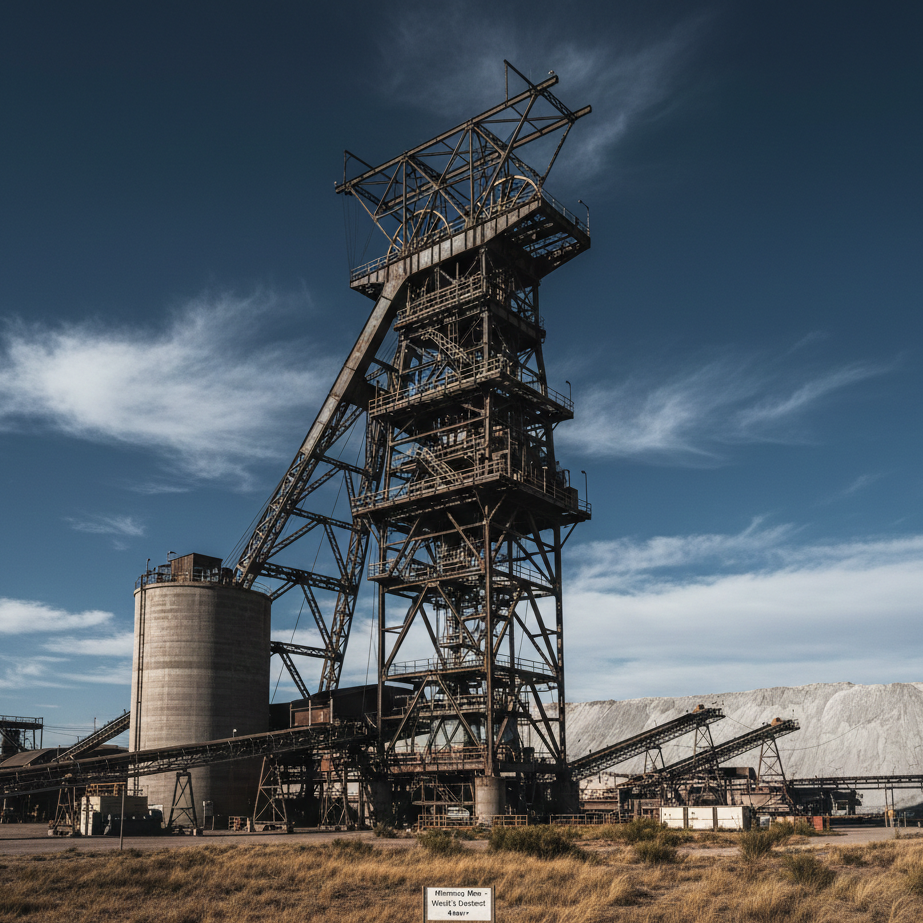
Image: Headframe of Mponeng Gold Mine—the world’s deepest mine
Conclusion
Gold in South Africa was discovered through a mix of chance, persistence, and geological fortune—but it was the 1886 Witwatersrand find that changed history. For modern buyers, this legacy lives on in ethically sourced, high-purity gold from licensed operations. Companies like Africa Gold Reserve ensure this historic resource continues to flow responsibly into global markets