

How Much Gold Reserve Is in Africa? Reserves, Production, and Strategic Outlook
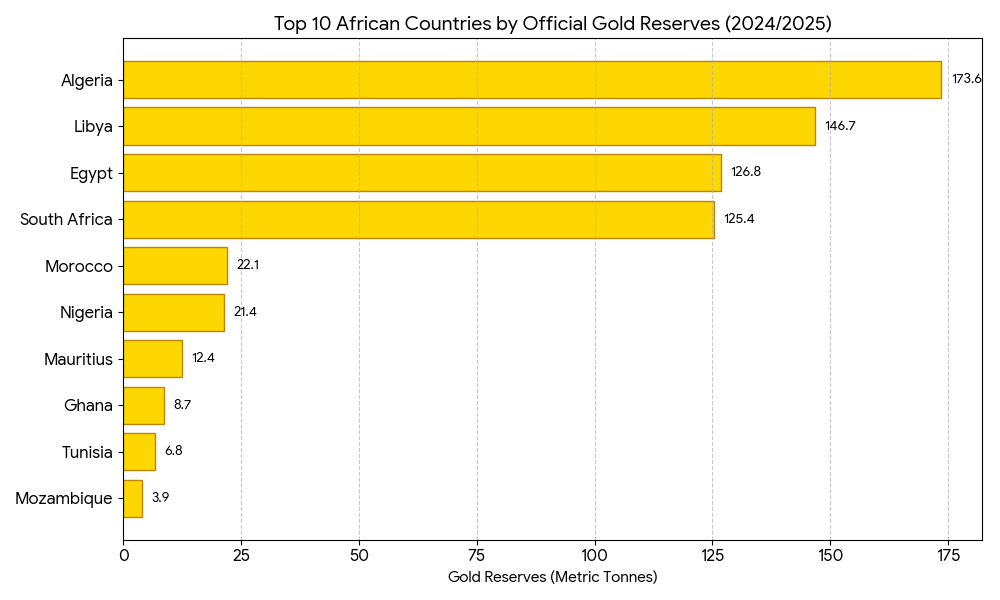
Africa holds a significant portion of the world’s remaining gold reserves, underpinning its role as a top global producer. As of 2026, the continent is estimated to contain over 4,000 tonnes of economically recoverable gold reserves, with the largest concentrations in South Africa, Ghana, Mali, and Burkina Faso.
1. National Gold Reserve Estimates (2026)
| Country | Estimated Gold Reserves (Tonnes) | Key Details |
|---|---|---|
| South Africa | ~2,000+ | Largest in Africa; Witwatersrand Basin remains the world’s richest gold field by historical output |
| Ghana | ~400–450 | Highest current production; Birimian Greenstone Belt hosts high-grade deposits |
| Mali | ~300–350 | Major mines: Loulo, Fekola (Barrick/Endeavour) |
| Burkina Faso | ~250–300 | Rapid exploration growth despite security challenges |
| Tanzania | ~150–200 | Geita, North Mara, Bulyanhulu mines (AngloGold Ashanti, Zijin) |
| DRC | ~100–200* | High potential but underreported due to informal mining |
| Others | ~300+ | Côte d’Ivoire, Zimbabwe, Sudan, South Sudan |
Total Africa: ~4,000+ tonnes of proven and probable reserves
Global total: ~54,000 tonnes (USGS, World Gold Council)
2. Geological Context
Africa’s gold is concentrated in three major belts:
- Witwatersrand Basin (South Africa): Paleoplacer deposit—hosted over 40% of all gold ever mined globally.
- Birimian Greenstone Belt (West Africa): Hosts near-surface, high-grade deposits ideal for modern open-pit mining.
- Nubian Shield (Northeast Africa): Underexplored but geologically prospective (Sudan, Egypt).
These regions continue to attract billions in exploration investment annually.
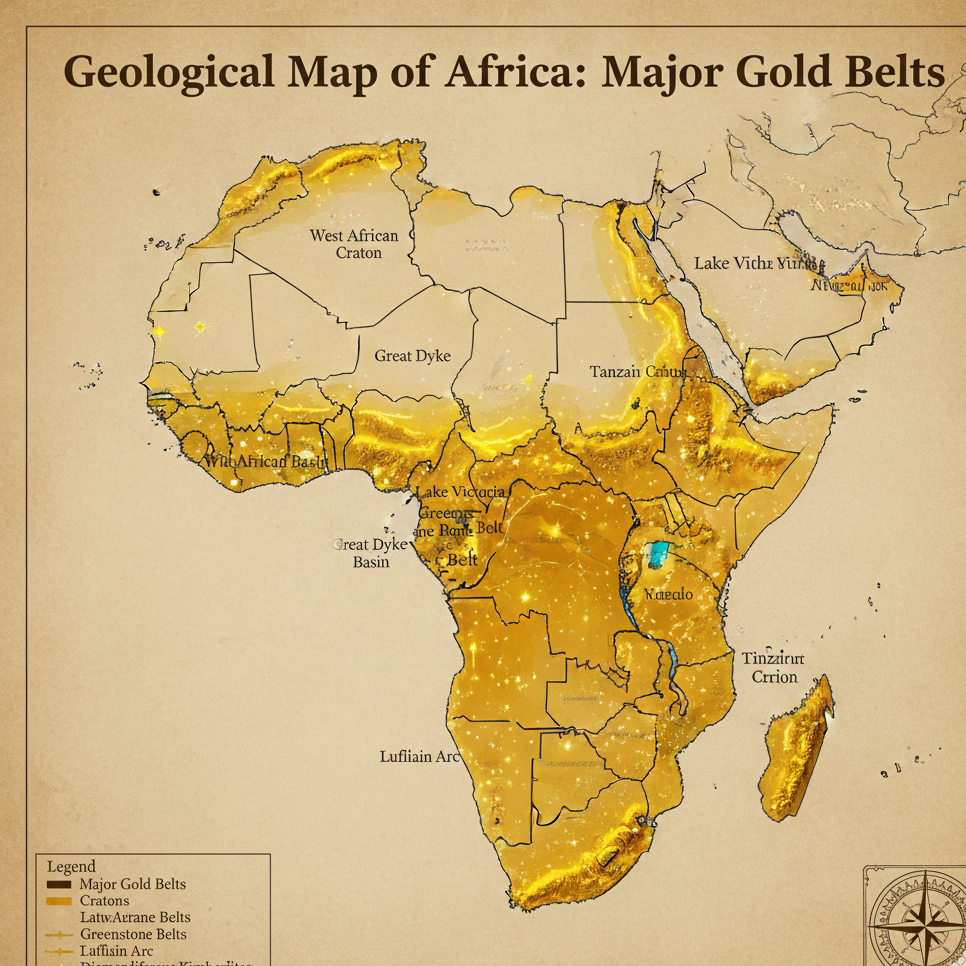
Image: Geological map of Africa’s major gold belts
3. Reserves vs. Resources
- Reserves: Gold that is economically and legally extractable with current technology.
- Resources: Broader estimate including sub-economic or unproven deposits.
Many African countries have large inferred resources that could become reserves with further drilling and infrastructure development—especially in Côte d’Ivoire, Ethiopia, and South Sudan.
4. Challenges to Reserve Realization
- Infrastructure gaps: Limited power, water, and transport in remote areas
- Regulatory uncertainty: Licensing delays or policy shifts in some jurisdictions
- Security risks: Particularly in Sahel region (Mali, Burkina Faso)
- Financing constraints: Junior miners struggle to fund feasibility studies
Despite this, Africa remains a top destination for gold exploration capital.
5. Africa Gold Reserve’s Role
Founded in 2015 and headquartered in South Africa, Africa Gold Reserve does not hold geological reserves—but sources high-purity gold from:
- Licensed mines in Ghana and South Africa
- Registered small-scale miners in South Sudan
- Government-authorized sellers with valid permits
The company ensures all material is ethically verified and aligned with OECD Due Diligence Guidance and LBMA Responsible Gold standards.
Conclusion
Africa holds over 4,000 tonnes of gold reserves—nearly 7–8% of the world’s total—with significant upside potential from underexplored regions. For institutional buyers, the focus is not just on volume, but on verifiable, compliant supply. Partnering with a professional exporter like Africa Gold Reserve ensures secure access to this strategic resource.
Website: africa-gold.com
Email: sales@africa-gold.com