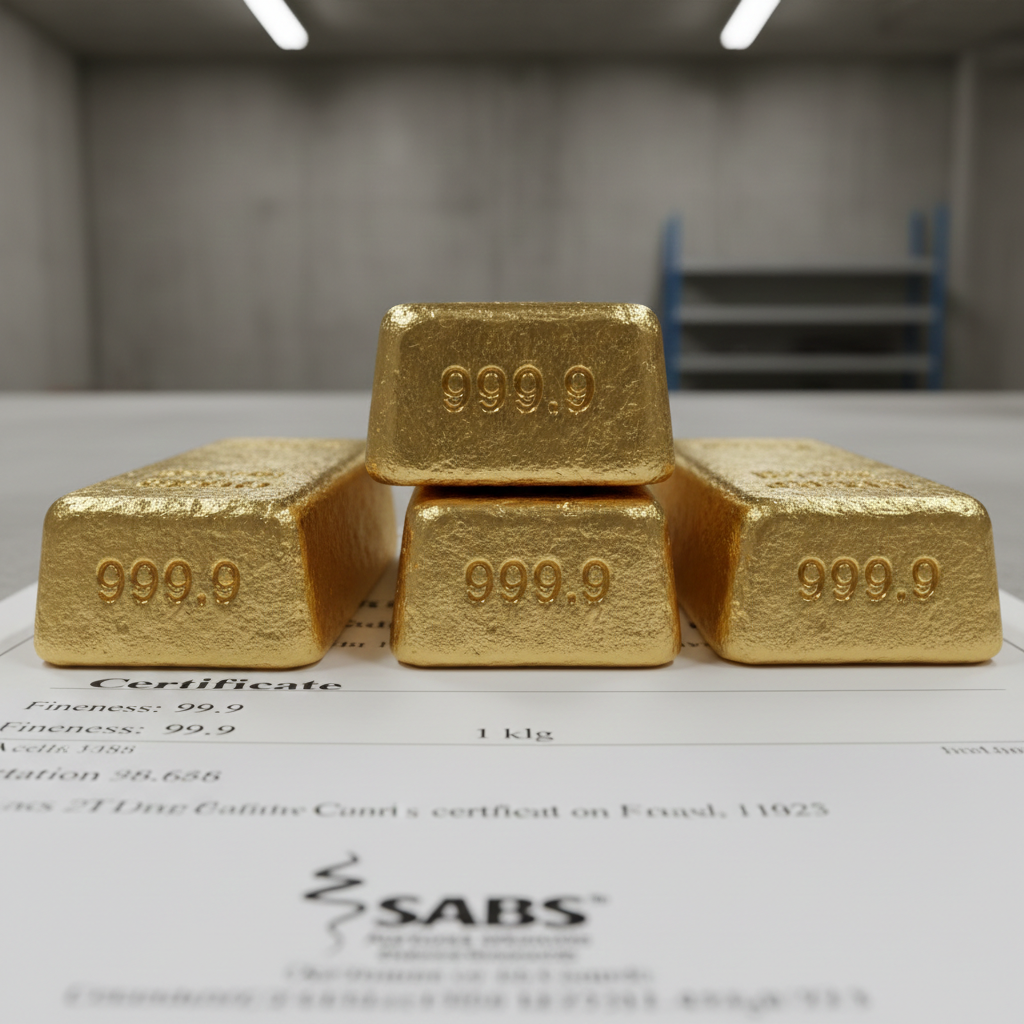


Key Differences Between Raw Gold and Refined Gold
Raw gold and refined gold represent distinct stages in the supply chain with different physical characteristics, pricing mechanisms, and regulatory requirements. Confusing these categories creates transactional risk—particularly for buyers expecting refinery-ready material that still requires processing. Understanding these differences ensures accurate expectations when sourcing African gold.
Raw Gold: The Export-Ready Form
African exporters ship raw gold—also called doré or semi-refined material—in granular, powder, or bar form with typical purity ranging from 85 to 98 percent. This material has undergone initial concentration at source but not final refining. Key characteristics include:
- Visible impurities such as silver, copper, or residual quartz
- Variable coloration from bright yellow to dull brown depending on alloy composition
- Granular texture rather than the smooth surface of refined bars
- Precise fineness documented through fire assay certification
Raw gold meeting export standards carries accredited assay certificates, government permits, and chain of custody documentation—but remains unrefined. It requires final processing at destination refineries to achieve 99.99 percent purity.

Image: Raw gold granules in assay dish showing variable coloration and texture
Refined Gold: The Final Product
Refined gold achieves 99.99 percent (four nines) or 99.999 percent (five nines) purity through electrochemical or chemical processes at specialized refineries. Characteristics include:
- Uniform bright yellow color with mirror-like surface finish
- Standardized bar weights (1 kilogram, 400 troy ounces) with refinery stamps
- LBMA Good Delivery certification for major market acceptance
- Premium pricing reflecting processing costs and purity assurance
Refineries produce this material after receiving raw gold shipments—exporters do not ship refined gold directly from African mines. The refining step occurs at destination facilities in Dubai, Switzerland, China, or the United States.

Image: LBMA Good Delivery gold bar with refinery stamp and uniform surface finish
Pricing Structure Differences
Raw gold prices against the LBMA benchmark with refining allowances deducted—typically 1 to 2 percent based on precise assay results. A consignment assaying 93.45 percent purity receives a larger allowance than 97.82 percent material. These deductions compensate refineries for processing costs.
Refined gold trades at or near full LBMA spot value with minimal deductions—primarily logistics and insurance. The price differential between raw and refined material reflects actual processing costs, not arbitrary markups.

Image: Pricing comparison showing LBMA rate, refining allowance deduction for raw gold, and refined gold value
Export Documentation Requirements
Raw gold requires:
- Fire assay certificates from accredited laboratories (PMMC, SABS)
- Government export permits verifying material against certificates
- Chain of custody documentation from licensed source
- Tamper-evident seal records
Refined gold requires:
- LBMA Good Delivery certification
- Refinery assay certificates at 99.99 percent minimum
- VAT/customs documentation for the refining jurisdiction
Exporters shipping from Africa deal exclusively in raw gold meeting export standards—not refined product. Buyers expecting refined material at origin face fundamental misunderstandings of the supply chain.
Why the Distinction Matters to Buyers
Buyers must align expectations with reality:
- African exporters deliver raw gold with documented purity—not refined bars
- Final refining occurs at destination facilities after import clearance
- Pricing must reflect appropriate refining allowances based on assay results
- Documentation requirements differ fundamentally between raw export and refined import
Misunderstanding these distinctions leads to rejected shipments, pricing disputes, and compliance gaps when buyers expect refined material from source jurisdictions.
Since 2015, AFRICA GOLD has maintained transparent communication about this distinction across operations in Ghana, South Africa, and South Sudan from its South African headquarters, with coordination support from the United Kingdom. The company provides precise assay certificates before payment, clearly states material is raw/unrefined doré requiring final processing, applies refining allowances transparently against LBMA rates, and coordinates with destination refineries to ensure smooth intake—setting accurate expectations from engagement through delivery.
Raw gold and refined gold serve different supply chain functions. Partner with an exporter who communicates this distinction transparently—delivering documented raw material with precise assay certification rather than misrepresenting unrefined doré as finished product.
africa-gold.com
sales@africa-gold.com