

Overall Stock Image Direction:
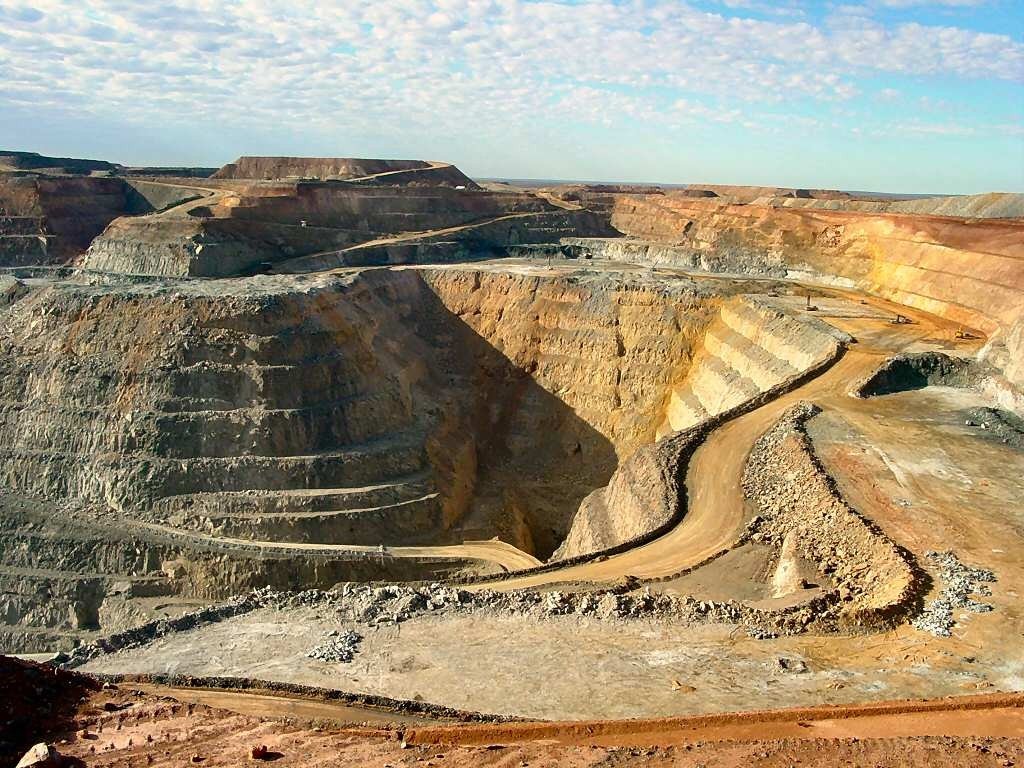
All images must depict authentic African professionals in real operational environments across Ghana. Settings include licensed mine sites in Ashanti, Western North, and Eastern regions, Minerals Commission field offices, accredited assay labs, and secure collection points. Subjects are Ghanaian men and women in appropriate work attire—lab coats, company polos, formal business wear, or field gear—engaged in genuine tasks. Lighting is natural or available institutional lighting only. No staged poses, no non-African subjects, no studio backdrops. Photorealistic commercial/documentary style with medium-format quality, shallow depth of field, and muted professional color grading.
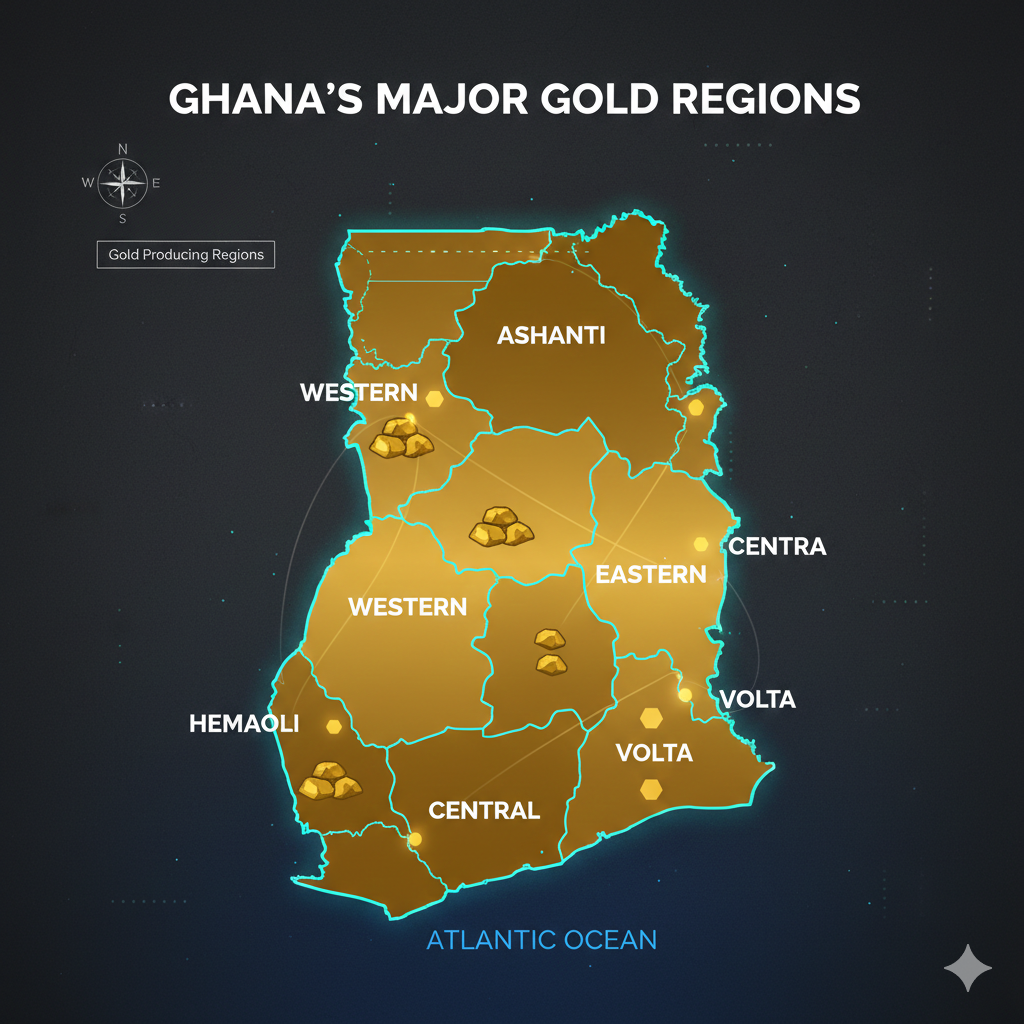
Ghana is Africa’s second-largest gold producer, with output concentrated in three key regions: Ashanti, Western North, and Eastern. Each zone offers distinct geological characteristics, regulatory oversight, and supply dynamics that international buyers must understand to source gold legally and efficiently. This guide details the major producing areas, their licensing frameworks, and what legitimate trade looks like on the ground.
AI Image Prompt:
Photorealistic overhead shot of large paper map of Ghana spread on wooden desk in Accra office. Three regions highlighted with discreet red pin markers: Ashanti (center), Western North (southwest), and Eastern (southeast). Brass map weights hold corners. Natural daylight from window illuminates paper texture and subtle creases. Shot on Canon EOS R5 with 50mm lens at f/5.6 shallow depth of field focusing on Ashanti pin while keeping other regions visible warm daylight white balance no digital overlays authentic strategic planning environment with slight paper curl and finger smudges for realism.
Ashanti Region: The Historic Heartland
The Ashanti Region remains Ghana’s most prolific gold-producing area, home to both large-scale mines like Obuasi and a dense network of licensed small-scale operations. The region benefits from mature infrastructure, strong Minerals Commission presence, and established export corridors. Small-scale miners here must hold valid licenses and operate within designated zones near towns like Konongo and Bekwai. Due to high activity levels, buyers must verify miner credentials carefully—unlicensed operators sometimes attempt to blend into formal channels.

Image: Licensed small-scale mining operation near Obuasi
AI Image Prompt:
Photorealistic documentary photograph of licensed small-scale mining cooperative near Obuasi Ghana. Group of Ghanaian miners in work clothes operate gravity concentration tables under shaded canopy. Equipment shows signs of regular use but proper maintenance. Security fencing marks concession boundary with official Minerals Commission sign visible. Background reveals rolling hills and scattered acacia trees. Shot on Nikon Z8 with 35mm lens at f/8 natural afternoon sunlight creating realistic contrast and shadow depth authentic dust particles in air workers engaged in actual processing activity earthy color palette with golden hour warmth genuine regulated artisanal operation.
Western North Region: High-Grade Output and Growing Formalization
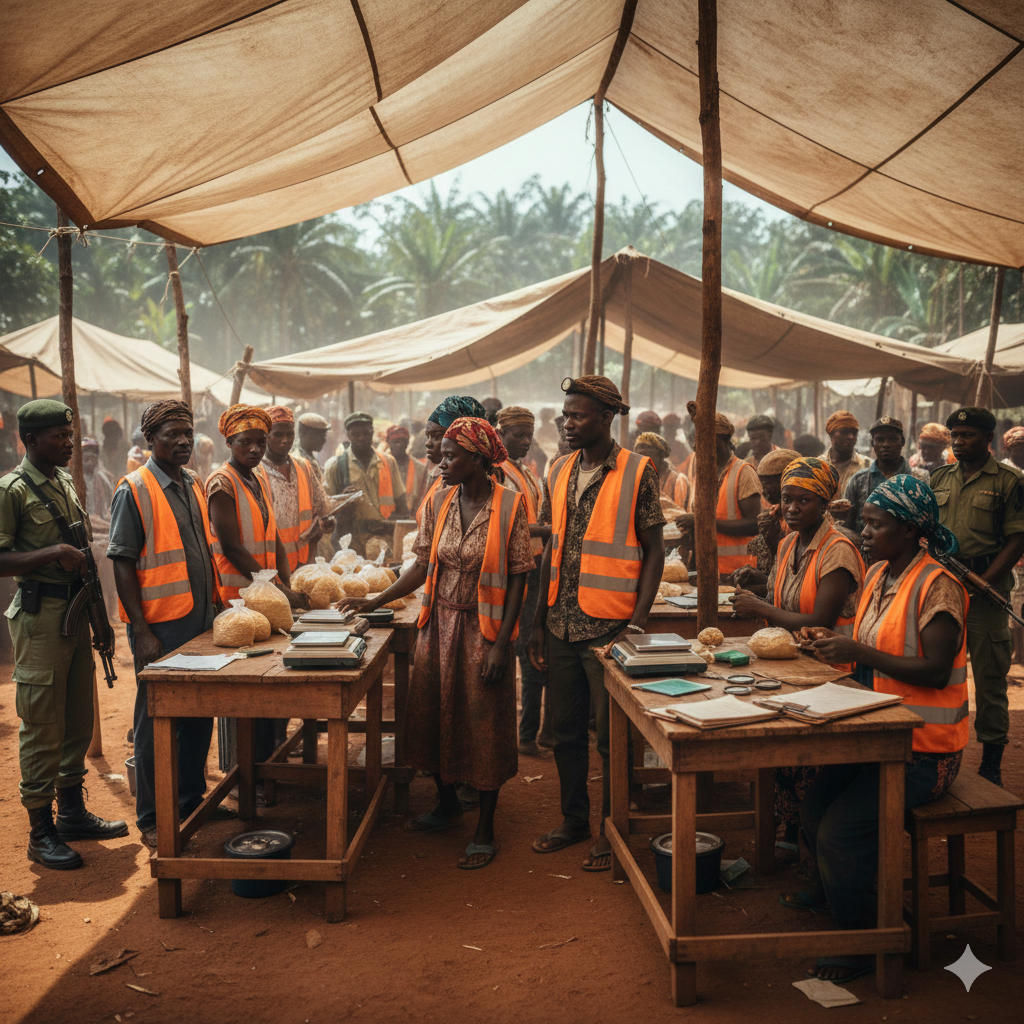
Western North has emerged as a major source of high-grade gold, particularly around Tarkwa and Prestea. The region hosts both industrial mines and a rapidly formalizing artisanal sector. The Minerals Commission has intensified licensing efforts here, requiring all small-scale miners to register and operate within approved zones. Exporters establish secure collection points in towns like Sefwi Wiawso to aggregate material from verified sources. This region’s output is increasingly favored by international buyers due to consistent purity and improving compliance standards.
Eastern Region: Emerging Potential with Strong Oversight
The Eastern Region, centered around Kibi and Akwatia, contributes a smaller but growing share of national output. The Minerals Commission maintains active field offices here to oversee licensing and prevent illegal mining. Small-scale operations are required to register and sell only through licensed aggregators. While volume is lower than in Ashanti or Western North, the region’s compliance culture is strong—making it attractive for buyers seeking transparent supply with minimal risk. Exporters conduct regular site visits to ensure chain of custody integrity.
Common Licensing and Compliance Requirements
Across all three regions, the Minerals Commission enforces uniform rules:
- Miners must hold individual or cooperative licenses
- Operations must occur within approved geographic zones
- Sales must be made only to licensed buyers
- All export-bound material requires PMMC-approved assay testing
Exporters must verify these credentials on site before acquisition. Material without documented origin cannot legally export—regardless of purity or price.
Image: Verifying miner’s license in Western North
AI Image Prompt:
Photorealistic close-up at rural collection point in Sefwi Wiawso. AFRICA GOLD officer holds open Minerals Commission miner’s license next to photo ID while comparing to tablet database. Miner’s weathered hand rests on wooden table beside sample bag. Natural daylight from doorway illuminates paper texture and screen glow. Shot on Sony A7SIII with 85mm lens at f/4 shallow depth of field focusing on license photo while keeping tablet content legible warm daylight white balance slight fingerprint smudges for realism authentic due diligence in action.
Why Regional Knowledge Matters
Each region presents unique logistical and regulatory nuances. Ashanti offers volume but requires vigilance against unlicensed operators. Western North delivers high-grade material with improving compliance. Eastern provides lower volume but higher transparency. Professional exporters like AFRICA GOLD maintain dedicated teams in all three zones—ensuring they adapt sourcing strategies to local realities while maintaining consistent export standards.
AFRICA GOLD’s Regional Presence
Since 2015, AFRICA GOLD has operated collection points in Ashanti, Western North, and Eastern regions. The company verifies every miner’s license on site, conducts preliminary XRF screening, and transports material to PMMC-approved labs for final assay. Their regional integration ensures full chain of custody from mine face to export permit—giving buyers confidence in provenance regardless of origin zone.
Conclusion
Ghana’s gold production is not monolithic—it is shaped by distinct regional dynamics that demand localized expertise. Buyers who understand these differences and partner with exporters who maintain boots on the ground across all major zones gain access to reliable, compliant supply. In Ghana, success comes not from general knowledge but from precise, on-the-ground execution in each producing region.
africa-gold.com
sales@africa-gold.com