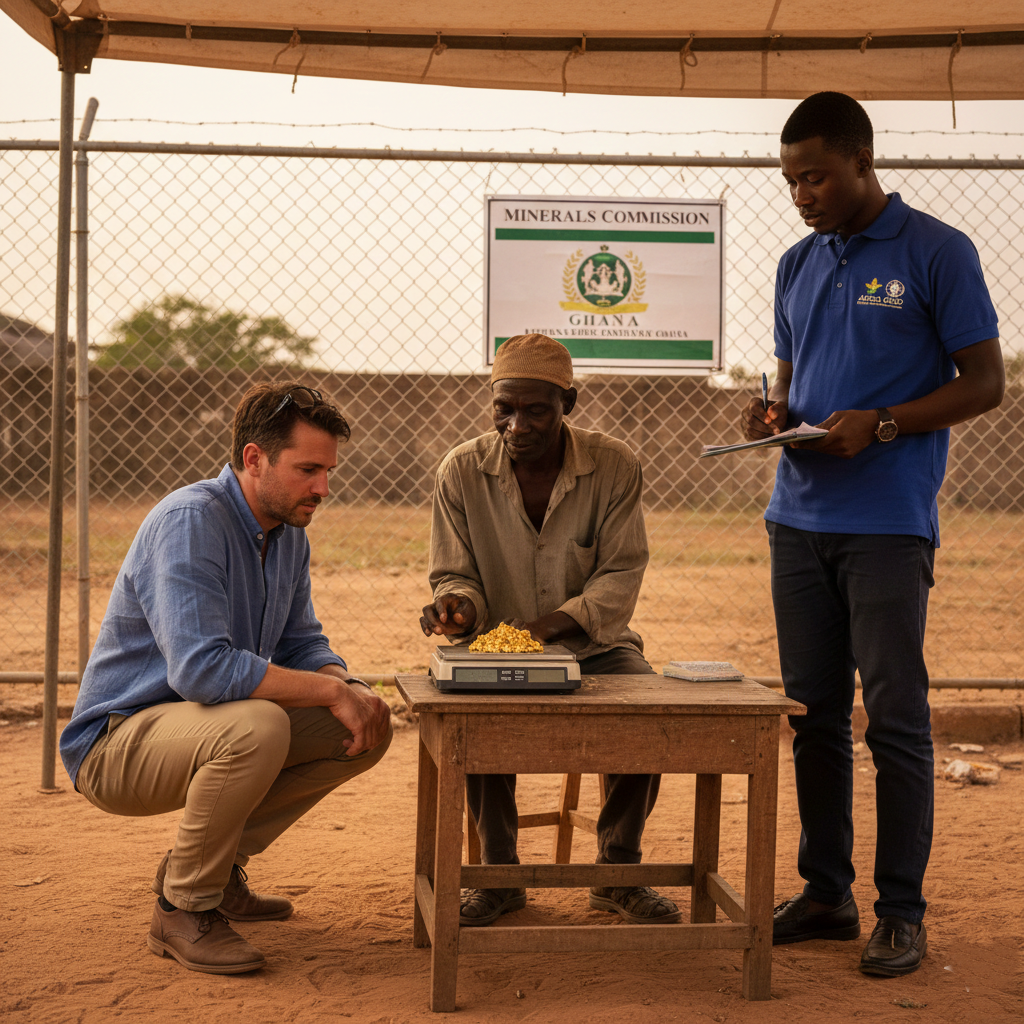


Exporting gold from Africa is a precise, regulated sequence not a single act. It begins long before shipment and ends only when material clears destination customs. Professional exporters manage this workflow end-to-end, ensuring every step aligns with national laws and global standards. For new entrants, understanding this sequence is essential to avoiding delays, rejections, or financial loss. This guide breaks down the process into seven critical phases.
Phase 1: Source Verification and Legal Acquisition
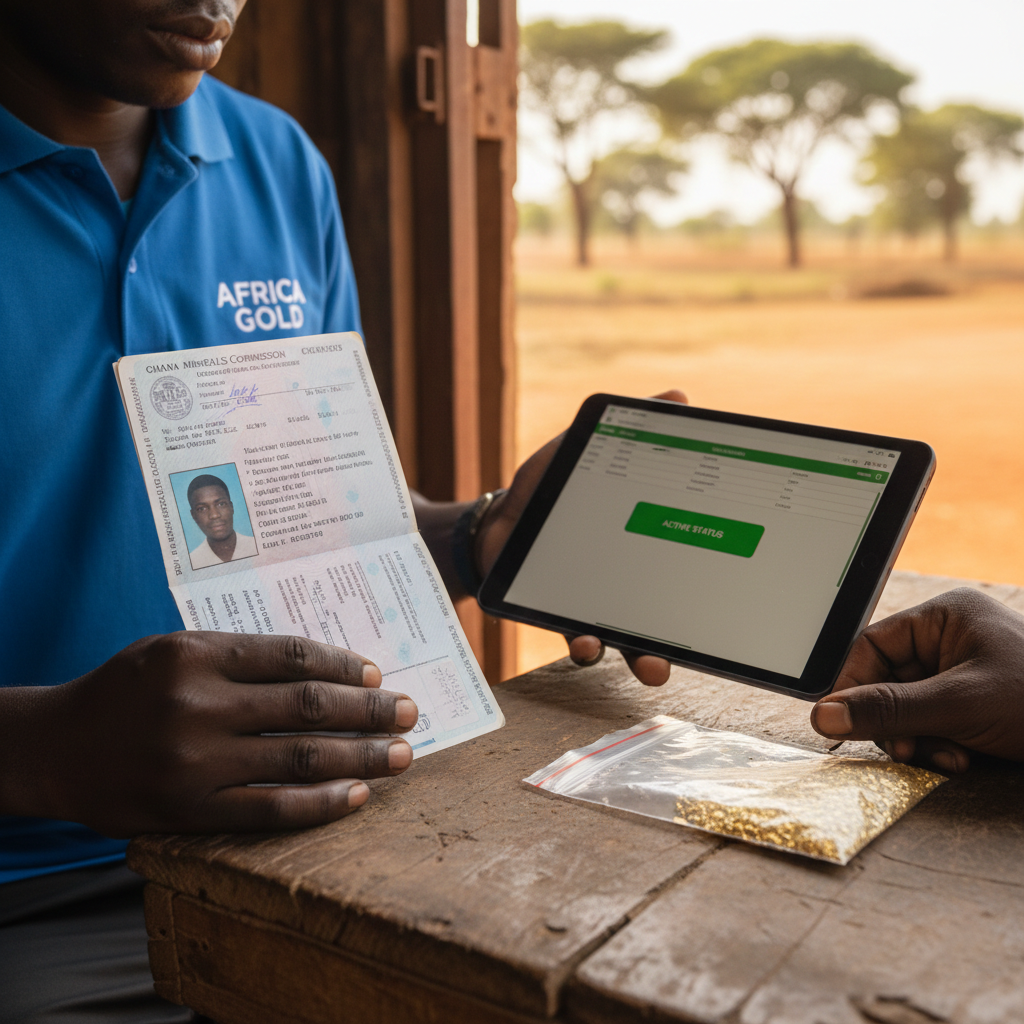
Only licensed producers may sell gold for export. In Ghana, miners must hold Minerals Commission licenses. In South Africa, small-scale operations require registration under the Mine Health and Safety Act. In South Sudan, aggregators need dual ministry permits. Exporters verify these credentials on site checking IDs, GPS coordinates, and registration cards before any transaction. Unlicensed material is rejected immediately. This ensures the chain of custody begins cleanly and legally.
Phase 2: On-Site Weighing and Sealing
Once acquired, gold is immediately weighed on calibrated digital scales and sealed in tamper-evident bags with unique serial numbers. This occurs under direct supervision at the collection point. Photographs of the sealed bag are taken, and details (miner ID, GPS, timestamp) are logged. This initial documentation prevents substitution during transit. No material moves without this first layer of traceability professional exporters treat it as non-negotiable.
Phase 3: Accredited Assay Testing
Sealed samples go to nationally accredited labs. In Ghana, only PMMC-approved facilities may issue export-valid certificates. In South Africa, SABS-registered labs conduct fire assay the definitive purity test. In South Sudan, mobile or Dubai-linked ISO 17025 units are used. The certificate must state weight, fineness, serial number, lab accreditation, and authorized signature. Without it, no export permit can be issued.

Phase 4: Export Permit Application
With assay results, exporters submit full packages to national authorities. In Ghana, the PMMC reviews source legitimacy and tax compliance. In South Africa, SADPMR and SARS jointly approve shipments. In South Sudan, dual ministry sign-offs are required. Authorities cross-check every detail against physical material. Permits are typically issued in 3–7 business days for compliant operators.
Phase 5: Customs Clearance and Airport Handover
Permitted gold moves to airport cargo terminals under secure protocols. Customs officials inspect material against documentation verifying weight, serial numbers, and seals. Only after clearance is the shipment released to airline custody. Insurance is mandatory. Reputable exporters oversee this handover personally.

Phase 6: Secure Air Freight to Destination
Gold moves via direct commercial flights: Accra to New York, Juba to Dubai, Johannesburg to Shanghai. Containers remain sealed throughout transit. Air waybills include detailed descriptions, seal numbers, and consignee details. Exporters provide real-time tracking and seal photographs, enabling buyer verification upon arrival.
Phase 7: Refinery Intake and Final Acceptance
Upon arrival, refineries inspect seals, verify documentation, and conduct intake assays. Only then is material accepted into processing. Shipments with missing or mismatched documents are rejected immediately.
Why Each Phase Matters
Skipping any step risks rejection. Professional exporters like AFRICA GOLD manage all seven phases internally assuming full accountability. This end-to-end control is what international buyers rely on.
Conclusion
Exporting gold from Africa is a disciplined workflow not a shortcut. When each phase is executed professionally, African gold moves confidently from mine to global market without interruption. For buyers, the right exporter isn’t a cost it’s the foundation of reliable supply.
africa-gold.com
sales@africa-gold.com