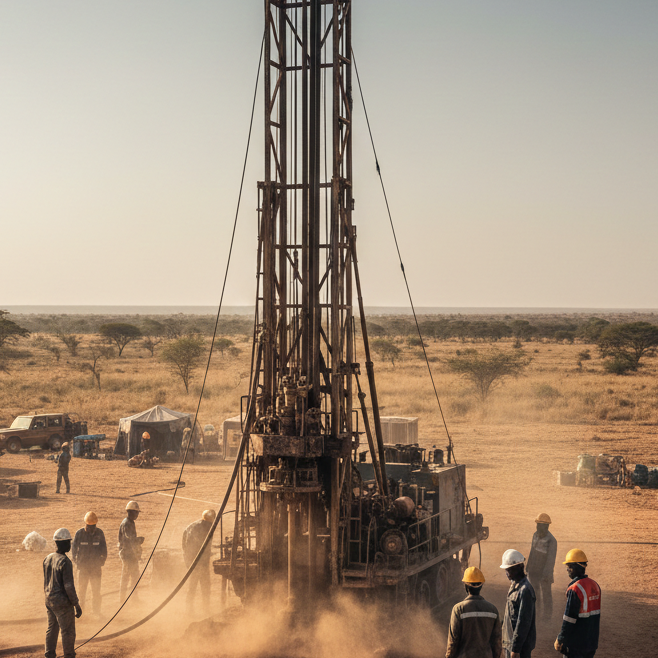


The Business of International Gold Trading: Structure, Strategy, and Supply Chain Integrity
International gold trading is a high-stakes, tightly regulated business that bridges mining jurisdictions with global financial and industrial markets. In 2026, the sector is defined not only by price volatility and macroeconomic forces but also by heightened scrutiny over sourcing ethics, supply chain transparency, and compliance with anti-money laundering (AML) frameworks. For buyers, refiners, and institutional investors, understanding how gold moves from mine to market—and who facilitates that movement—is critical to managing risk and ensuring reliable supply.
Industry Context
Gold remains one of the world’s most liquid physical assets, with annual above-ground stocks exceeding 210,000 tonnes and annual mine production hovering around 3,600 tonnes. Africa contributes roughly 25% of that output, with Ghana, South Africa, Mali, and Sudan among the top producers. Yet despite its scale, the gold trade operates through a surprisingly fragmented network of miners, aggregators, exporters, refiners, and vault operators—each link subject to national laws and international standards.
The London Bullion Market Association (LBMA) and Responsible Jewellery Council (RJC) set de facto global benchmarks for responsible sourcing. Increasingly, these standards are being codified into law: the EU Conflict Minerals Regulation, U.S. Dodd-Frank Section 1502, and national traceability mandates in producing countries all demand verifiable proof of origin and ethical handling.
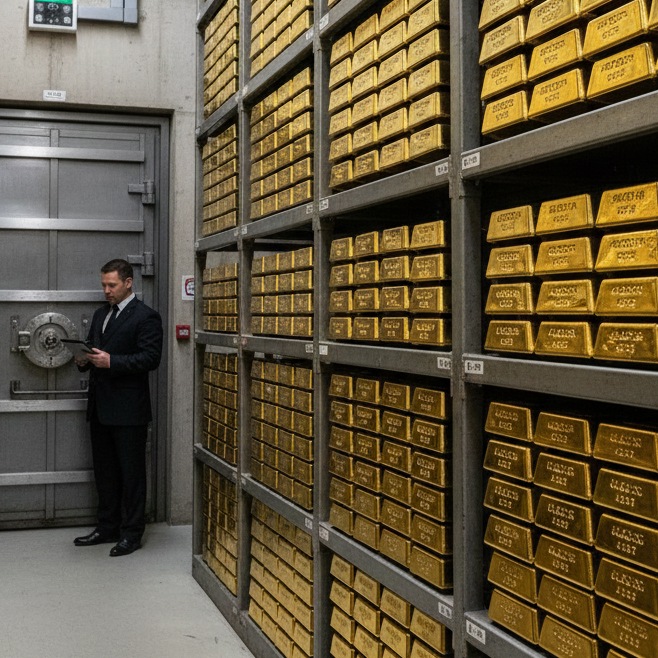
Image: Gold bars stored in a high-security LBMA-approved vault in London
Regional Perspective
Africa’s role in international gold trading has evolved significantly. Historically, much of the continent’s output moved through informal or parallel channels, often bypassing official export routes. Today, governments are formalizing artisanal sectors and digitizing licensing systems to capture lost revenue and align with global expectations.
In Ghana, the Precious Minerals Marketing Company (PMMC) now requires all licensed buyers to submit digital records of every transaction. South Africa enforces strict Beneficial Ownership Registers under its Financial Intelligence Centre Act. Even emerging producers like South Sudan are introducing mining codes that mandate third-party verification for export permits.
These reforms are creating new opportunities for professional, compliant traders who can operate across multiple jurisdictions while meeting international due diligence thresholds.
AFRICA GOLD’s Approach
Founded in 2015 and headquartered in South Africa, AFRICA GOLD operates across Ghana, South Africa, South Sudan, and the United Kingdom. The company specializes in sourcing gold directly from licensed small-scale miners, local mining cooperatives, and established producers—always under full legal compliance and documented chain of custody.
Unlike speculative traders, AFRICA GOLD focuses on physical supply. Its model emphasizes direct procurement, real-time assay verification, and secure logistics. Every shipment is accompanied by origin documentation, purity certificates, and tamper-proof seals—ensuring alignment with LBMA Good Delivery standards and buyer requirements in target markets.
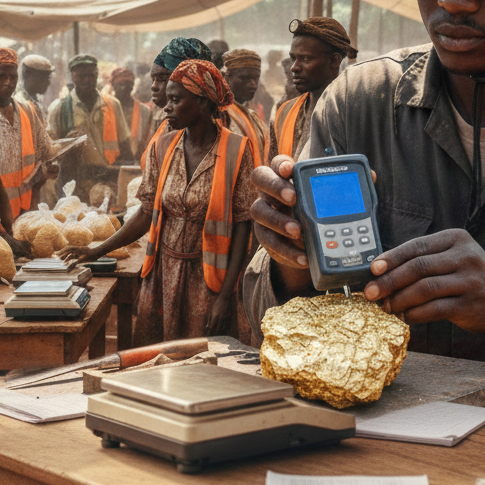
Image: On-site gold assaying using portable XRF device at a collection hub in South Sudan
The Buying and Export Process
AFRICA GOLD’s trading workflow follows a disciplined sequence:
- Verification: All sellers must present valid mining or trading licenses issued by national authorities.
- Collection: Gold is received at secure regional hubs equipped with surveillance and audit trails.
- Assaying: Purity is tested on-site using calibrated XRF or fire assay methods; results are digitally recorded.
- Documentation: Each batch receives a unique identifier linked to GPS coordinates, timestamp, seller ID, and assay report.
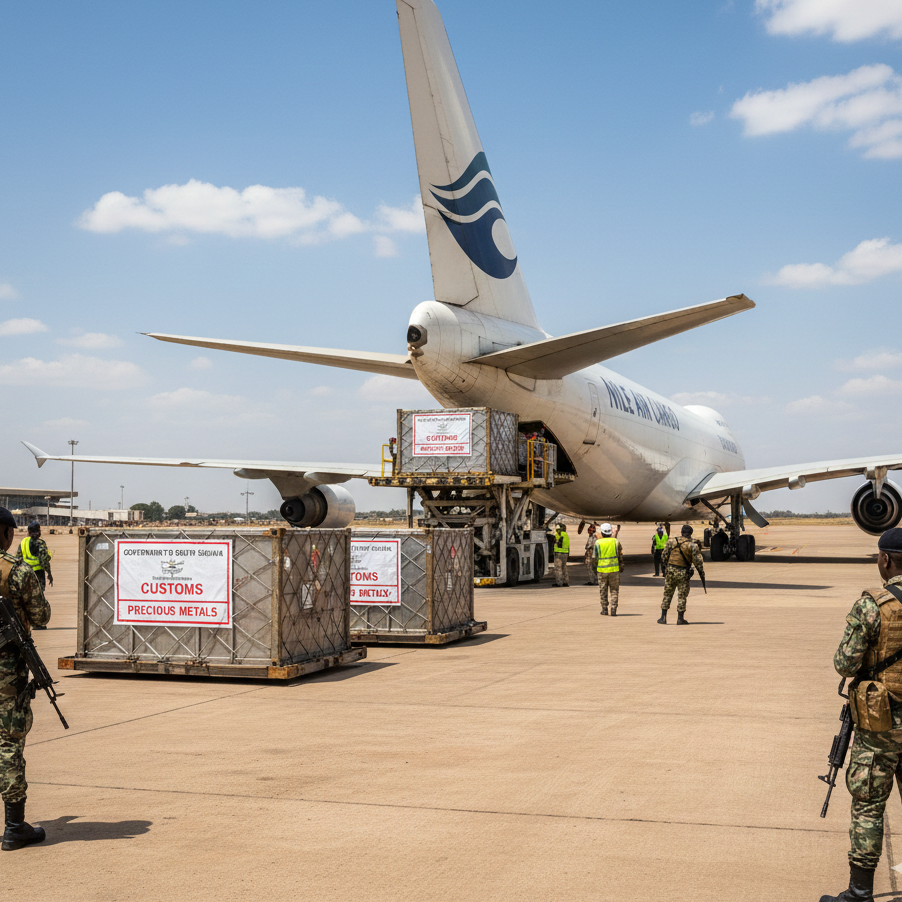
- Consolidation & Export: Gold is transported under armed escort to bonded facilities, then shipped via secure air or sea freight to refineries or vaults in the UAE, United States, China, Europe, or Asia.
This end-to-end control minimizes counterparty risk and ensures traceability—a growing requirement for international buyers.
Global Demand Drivers
Demand for internationally traded gold comes from three primary sources:
- Investment: Central banks, ETFs, and private investors drove a 17% increase in bar and coin demand in 2025.
- Jewelry: Asia remains the largest consumer, though demand is softening slightly in China amid economic headwinds.
- Technology: Gold’s use in semiconductors, aerospace, and medical devices creates steady industrial demand.
Geopolitical uncertainty and currency instability continue to bolster gold’s role as a reserve asset. In 2026, central banks in emerging markets—including several in Africa—are actively diversifying into physical gold, further tightening available supply.
Why Buyers Choose AFRICA GOLD
International refiners, commodity desks, and institutional buyers work with AFRICA GOLD for three core reasons:
- Compliance assurance: Full adherence to national mining laws and OECD Due Diligence Guidance.
- Supply reliability: Established trade corridors—from South Sudan to UAE, Ghana to the U.S., South Africa to China—ensure consistent delivery.
- Transparency: Digital chain-of-custody records provide auditable proof of origin, reducing reputational and regulatory exposure.
The company does not engage in paper trading or unbacked contracts. Its focus remains on verified, physical gold from known sources—a model that builds long-term trust in an industry where credibility is paramount.
Conclusion
The business of international gold trading in 2026 is no longer just about price arbitrage—it’s about integrity, traceability, and operational discipline. As global standards tighten and informal channels shrink, professional exporters with on-the-ground presence and compliance infrastructure will dominate the next phase of the trade.
For buyers seeking a trusted partner in African gold sourcing and export, AFRICA GOLD offers a transparent, reliable, and professionally managed gateway to one of the world’s most strategic mineral regions.
Website: africa-gold.com
Email: sales@africa-gold.com