
Governments across Africa are not bystanders in gold export they are active architects of formalization, compliance, and revenue integrity. Far from imposing bureaucracy, national agencies like Ghana’s Minerals Commission, South Africa’s SADPMR, and South Sudan’s dual ministries are building structured pathways that transform artisanal activity into legal, traceable supply chains. Their role is threefold: licensing, oversight, and verification. For international buyers, understanding this framework reveals why compliant African gold is increasingly bankable.
Licensing: Creating Legal Entry Points
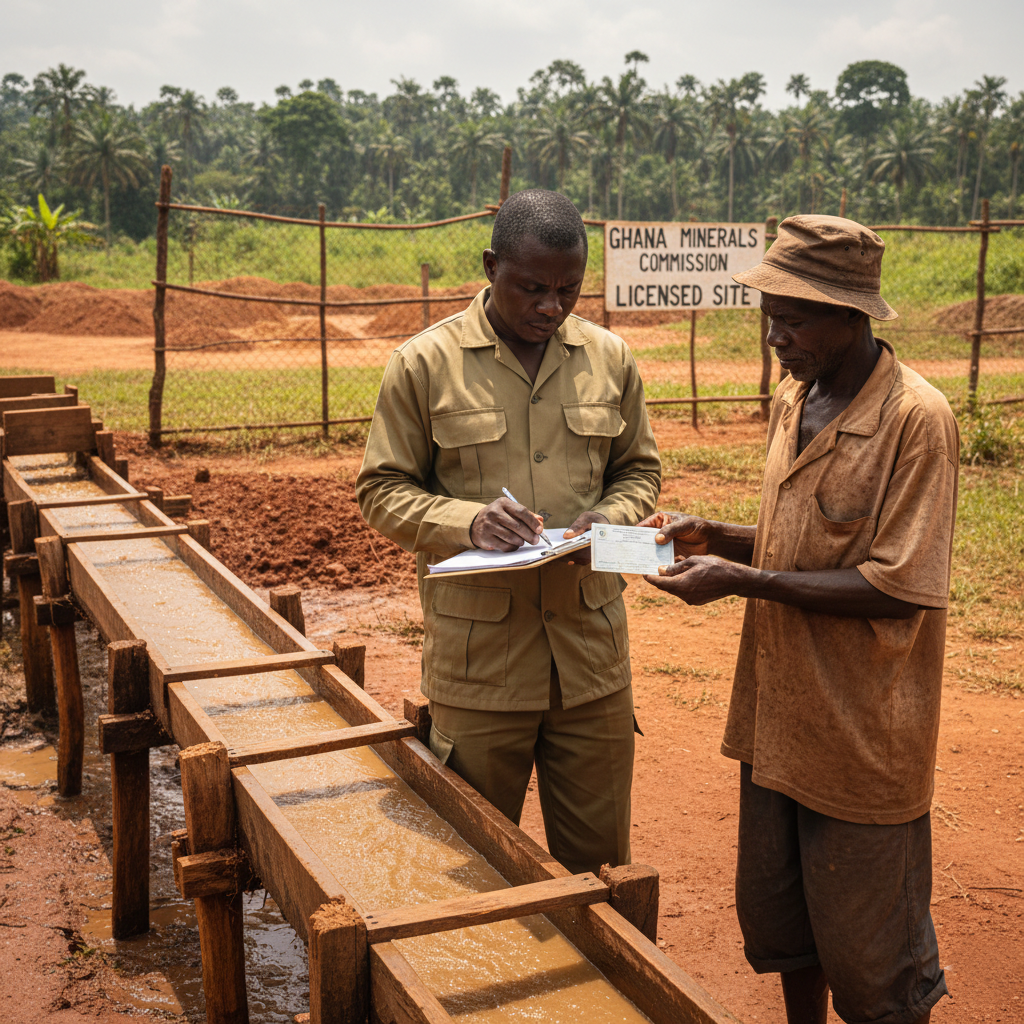
Governments issue licenses to bring miners into the formal economy. In Ghana, the Minerals Commission grants individual and cooperative licenses tied to specific zones. In South Africa, the Mine Health and Safety Act requires registration for all small-scale operations. In South Sudan, county-level mining offices now issue permits under national oversight. These licenses are not mere paperwork they enable tax collection, safety enforcement, and chain-of-custody initiation. Unlicensed operators are excluded from export channels entirely.

Oversight: Ensuring Compliance at Every Stage
National agencies don’t just issue permits they enforce them. Inspectors visit collection points, assay labs, and export terminals to verify:
- Miner licenses match actual operators
- Assay certificates come from accredited labs
- Export permits reference valid source documentation
In Ghana, PMMC officers audit shipments before airport release. In South Africa, SADPMR and SARS jointly clear exports. In South Sudan, dual ministry teams review applications side-by-side. This multi-layered oversight deters fraud and builds global trust.
Verification: The Final Government Seal
The export permit is the government’s ultimate validation. It confirms that material is legally sourced, properly tested, and tax-compliant. Without it, customs will not release cargo. Crucially, permits are not issued remotely they require physical verification of documents and often material. This human checkpoint ensures that digital claims match physical reality.
Why Government Involvement Builds Global Trust
Refineries and customs agencies worldwide recognize these frameworks because they are human-verified, paper-backed, and legally binding. Unlike self-declared “ethical” claims, government permits carry sovereign authority. When Ghana’s PMMC or South Africa’s SADPMR stamps a document, it becomes globally credible. This institutional weight is why professional exporters invest in compliance and why buyers should demand it.
Conclusion
African governments are not obstacles to gold trade they are enablers of legitimacy. By licensing, overseeing, and verifying, they create the very conditions that make African gold acceptable to global markets. Buyers who respect this role and partner with exporters who operate within it gain access to supply that is not only abundant but legally unimpeachable. In today’s world, government-backed compliance isn’t red tape it’s the gold standard.
africa-gold.com
sales@africa-gold.com