



Refineries are not just endpoints in the gold supply chain they are gatekeepers, validators, and value enhancers. Every gram of African gold must pass through their rigorous intake protocols before entering global markets. Their standards shape how exporters operate, what documentation is required, and which shipments succeed or fail. Understanding the refinery’s role reveals why compliance, purity, and provenance are non-negotiable in African gold trade.
Refineries as Compliance Enforcers
Modern refineries operate under strict international frameworks like the LBMA’s Responsible Gold Guidance and OECD Due Diligence. These require documented chain of custody from mine to intake. As a result, refineries reject any shipment lacking:
- Valid national export permits (PMMC, SADPMR, or dual ministry)
- Accredited assay certificates with lab accreditation numbers
- Proof of legal origin (miner licenses, GPS coordinates)
- Official air waybills from certified carriers
This enforcement ensures that only legally sourced, responsibly handled gold enters the global financial system. In practice, it means African exporters must align every step of their workflow with refinery expectations long before the gold leaves the continent.
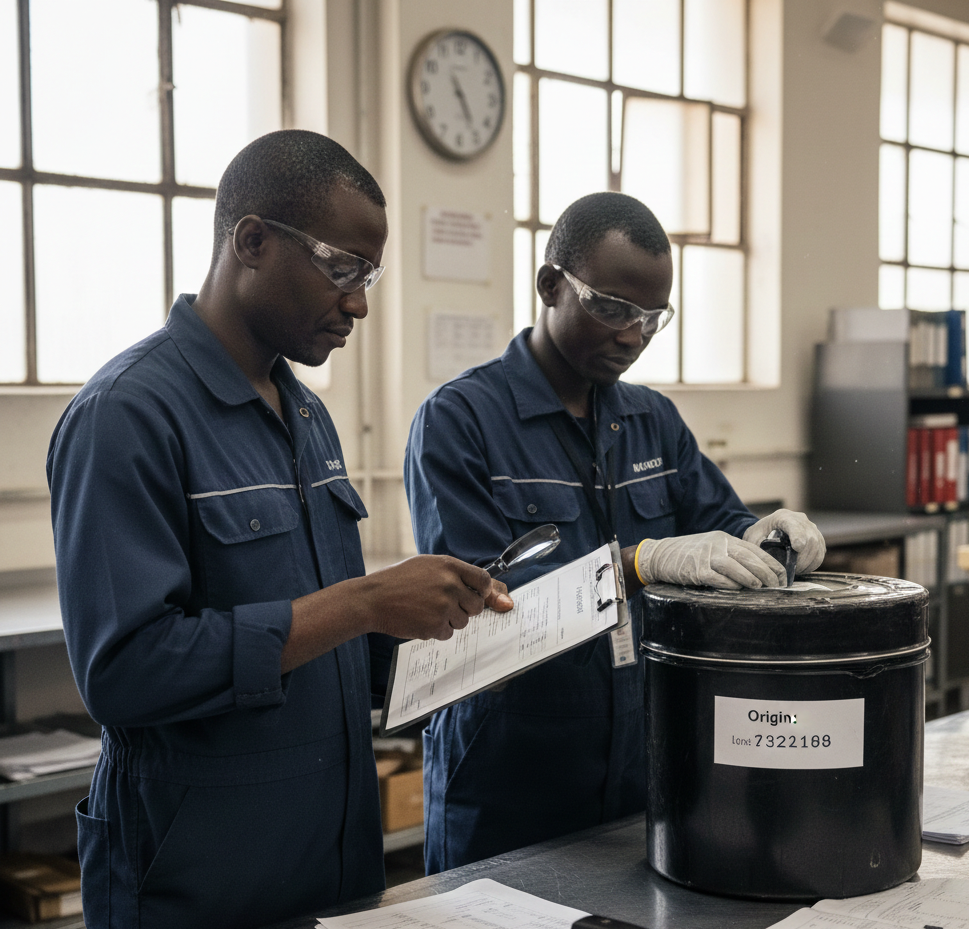
Purity Verification: The Final Scientific Check
Even with accredited assay reports, refineries conduct their own intake assays. Using fire assay or ICP-MS (Inductively Coupled Plasma Mass Spectrometry), they verify fineness to 0.01% accuracy. If results deviate significantly from the original certificate, the shipment is quarantined for investigation. This final check protects the refinery’s reputation and ensures consistency in their output. For African exporters, it means cutting corners on testing is never an option—accuracy must be absolute.
Value Enhancement Through Standardization
Raw gold from mines varies in shape, weight, and purity. Refineries transform it into standardized bars (typically 1 kg or 400 oz) with precise fineness (999.9 or 999.5). This standardization enables global trading, vault storage, and central bank acceptance. The refinery doesn’t just purify—it creates liquidity. African gold that meets intake standards becomes instantly tradable worldwide; material that fails remains stranded as raw metal.
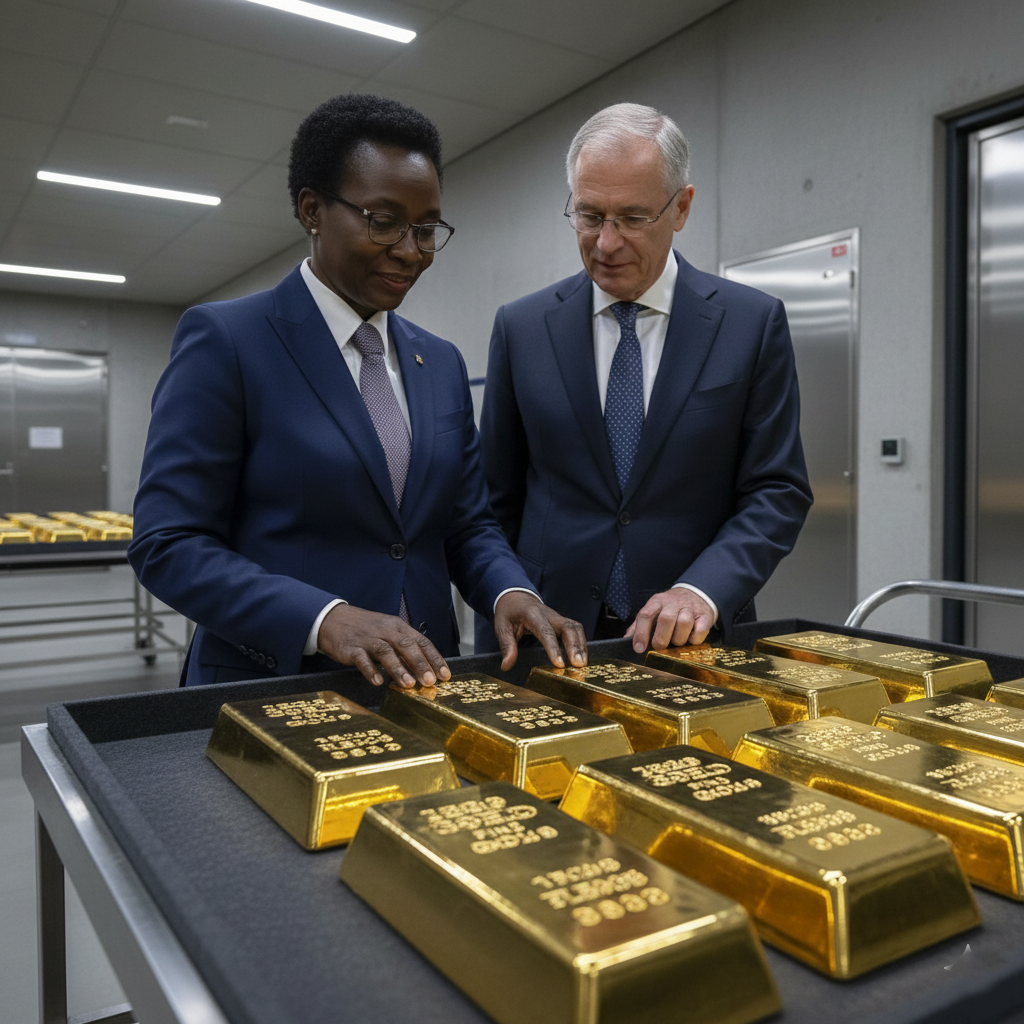
How Refineries Shape African Export Practices
Because refineries set the rules, professional African exporters adapt to them. AFRICA GOLD, for example:
- Uses only PMMC-approved labs in Ghana to match LBMA standards
- Structures documentation to mirror refinery intake checklists
- Aligns trade routes with refinery locations (e.g., Juba to Dubai)
- Provides real-time tracking so refineries can anticipate arrivals
This proactive alignment minimizes rejections and builds long-term partnerships. Refineries reward reliability with faster intake and preferential terms.
Conclusion
Refineries are the silent architects of African gold’s global journey. They enforce ethics, guarantee quality, and create marketability. For exporters, meeting their standards is not optional—it is the price of entry. For buyers, refinery acceptance is the ultimate seal of trust. When African gold passes through these gates, it ceases to be a local commodity and becomes a global asset.
africa-gold.com
sales@africa-gold.com