

The Role of Refineries in the Gold Trade
Refineries serve as the critical gatekeepers between raw gold production and global financial markets. They transform doré material into LBMA-certified bars while enforcing documentation standards that determine whether shipments gain market access. Understanding this role explains why chain of custody integrity matters—and why refineries reject shipments with documentation gaps regardless of purity.
The Refining Function
Refineries receive raw gold typically ranging from 85 to 98 percent purity and process it to 99.99 percent (four nines) or 99.999 percent (five nines) through electrochemical or chemical methods. This transformation enables material to enter formal financial channels—central bank reserves, exchange-traded funds, and jewelry manufacturing. Without refining, gold remains a raw commodity without standardized market access.

Documentation Gatekeeping
Refineries enforce binary acceptance criteria before material enters processing:
- Valid miner licenses linked to GPS coordinates
- Tamper-evident seal records matching physical containers
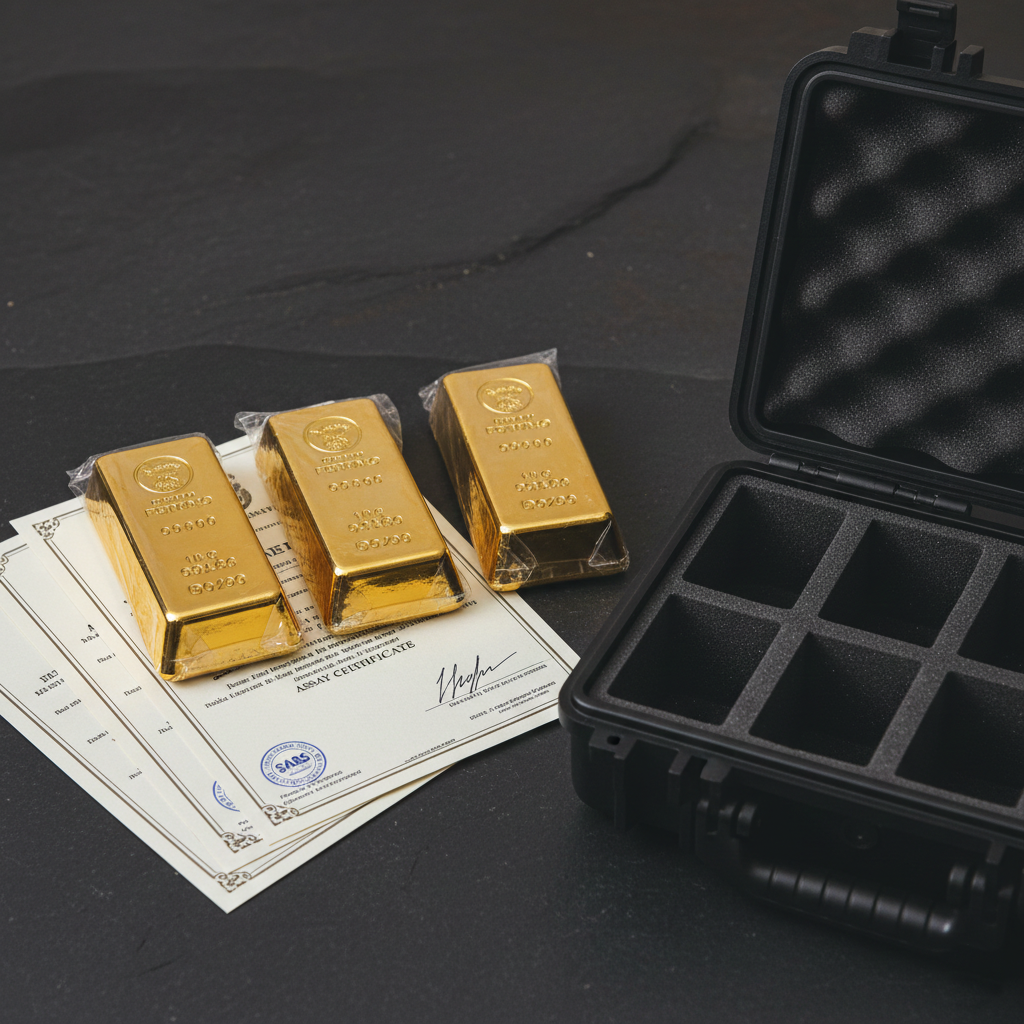
- Fire assay certificates from accredited laboratories (PMMC, SABS)
- Government export permits physically verified against material
- Chain of custody continuity from source to delivery point
Shipments missing any element face quarantine or return—regardless of assay results. This gatekeeping function enforces OECD due diligence standards and LBMA Responsible Gold Guidance across the supply chain.

Rejection Protocols and Consequences
When refineries reject shipments, consequences cascade to buyers:
- Storage fees accrue daily while material remains in quarantine
- Return logistics require new export permits from destination country
- Insurance coverage may exclude rejection scenarios
- Reputational damage affects future transaction terms
These costs incentivize upstream compliance. Professional exporters absorb verification costs at source to prevent downstream rejection—treating documentation as infrastructure rather than optional overhead.
Regional Refinery Acceptance Standards
Refinery requirements vary by destination market:
- UAE refineries: Enforce UAE Central Bank guidelines requiring PMMC/SADPMR certification and conflict-free verification
- Chinese refineries: Mandate SAFE registration and SABS-equivalent assay certification
- European refineries: Apply EU Conflict Minerals Regulation requiring full OECD-aligned due diligence documentation
- U.S. refineries: Enforce Dodd-Frank Act Section 1502 conflict minerals disclosure
Exporters must align origin documentation with destination requirements before shipment—retrofitting documentation after arrival proves impossible.

Why Refinery Relationships Matter
Established exporters maintain acceptance relationships with multiple refineries across regions. These relationships enable:
- Pre-shipment documentation review to prevent rejection
- Priority intake scheduling during high-volume periods
- Clarification of evolving regulatory requirements
- Problem resolution when minor documentation discrepancies occur
New exporters without refinery relationships face stricter scrutiny and higher rejection risk—particularly for first shipments.
Since 2015, AFRICA GOLD has maintained operational presence across Ghana, South Africa, and South Sudan from its South African headquarters, with coordination support from the United Kingdom. The company structures every consignment to meet refinery acceptance criteria: verifying miner licenses on site, coordinating accredited assays directly, securing permits before payment requests, and maintaining unbroken chain of custody through delivery. This discipline has sustained acceptance relationships with refineries across the UAE, United States, China, and Europe without documentation-related rejections.

Refineries transform gold’s physical form and enforce its commercial legitimacy. Partner with an exporter who understands refinery gatekeeping requirements and structures shipments for first-pass acceptance—not one who treats documentation as negotiable.
africa-gold.com
sales@africa-gold.com