
A Complete Guide to Gold Export from Ghana: Regulations, Sourcing, and Market Access
Ghana ranks among Africa’s top three gold producers, contributing over 4 million ounces annually to global supply. For international buyers, the country represents one of the continent’s most accessible sourcing destinations due to its established regulatory framework and relatively transparent export procedures. Yet navigating Ghana’s gold sector requires understanding the distinction between industrial production—which often moves through long-term offtake agreements—and the significant volume generated by licensed small-scale miners that forms the basis for independent export operations. Successful engagement demands knowledge of local licensing requirements, assay protocols, and the documentation chain that satisfies both Ghanaian export authorities and international import regulations.
Industry Context
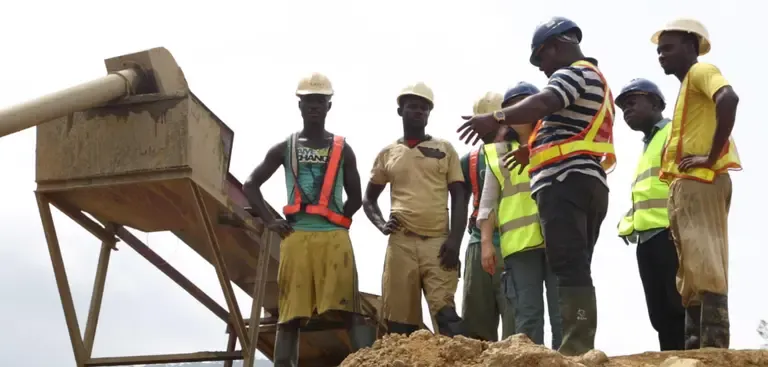
Ghana’s gold sector operates under a dual structure. Large-scale industrial mines, primarily foreign-owned, account for approximately 90 percent of formal production and typically maintain direct relationships with international refiners. The remaining volume originates from small-scale miners licensed under the Precious Minerals Marketing Company (PMMC) framework. These operators, while individually modest in output, collectively represent a meaningful supply channel for exporters with field presence. Material from this segment requires aggregation, verification of legal title, and rigorous assay testing before export eligibility. The Minerals and Mining Act of 2006, amended in 2015, governs all transactions, mandating that gold exports receive explicit authorization from the Minister of Lands and Natural Resources following verification by accredited laboratories.
Regional Perspective
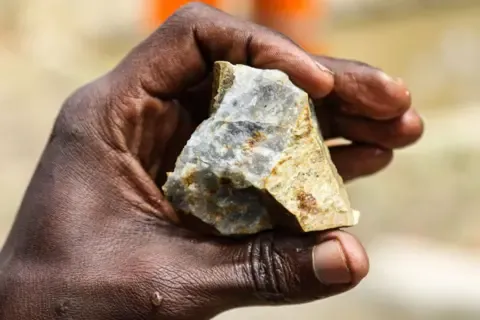
Ghana’s gold deposits concentrate primarily in three geological belts: the Ashanti Belt in the south-central region, the Sefwi Belt in the west, and the Bui Belt along the Black Volta River. Each area hosts distinct operational characteristics. The Ashanti Belt contains both major industrial operations and dense concentrations of licensed small-scale activity near Obuasi and Prestea. The Sefwi Belt features alluvial deposits amenable to artisanal recovery methods alongside hard-rock mining. Understanding these regional variations matters for logistics planning—transport routes, security considerations, and proximity to assay facilities in Accra or Kumasi all influence operational efficiency. Exporters maintaining permanent field offices in these regions develop relationships with licensed aggregators, enabling consistent supply without reliance on speculative intermediaries.

AFRICA GOLD’s Approach
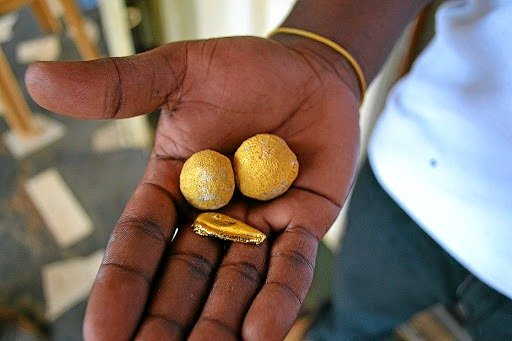
Since establishing its Ghana operations following the company’s 2015 founding, AFRICA GOLD has maintained a permanent sourcing presence in key mining regions. Field teams work exclusively with miners holding valid licenses issued by the Minerals Commission, verifying documentation before acquisition. Initial verification includes specific gravity testing and visual inspection at collection points, with material then transported under secure protocols to PMMC-accredited laboratories for fire assay analysis. Only after purity confirmation and documentation of origin—including seller identification, GPS coordinates, and license numbers—does material proceed toward export authorization. This multi-stage verification creates an auditable chain of custody that satisfies both Ghanaian regulatory requirements and international buyer due diligence standards.
Buying and Export Process
The export workflow begins with direct acquisition from licensed sellers at field collection points, with immediate payment facilitating trust and repeat transactions. Material transfers to secure consolidation facilities in regional hubs before moving to accredited assay laboratories. Upon receipt of assay certificates confirming purity, AFRICA GOLD prepares export documentation packages including proof of legal acquisition, seller licenses, and transaction records. These documents accompany the application for export permits submitted to the Minerals Commission. Once permits are issued—typically within five to seven business days—gold moves under armed escort to Kotoka International Airport in Accra. Shipments depart with complete documentation sets: assay certificates, export permits, commercial invoices, and certificates of origin, ensuring smooth clearance at destination ports.

Global Demand Patterns
Ghanaian gold exports serve diverse international markets based on end-use requirements. The United Arab Emirates remains a primary destination for material requiring further refining before distribution across Asian markets. The United States imports Ghanaian gold primarily for investment-grade bar production and industrial applications requiring high purity. European buyers increasingly emphasize documentation compliance with the EU Conflict Minerals Regulation, while Chinese demand focuses on jewelry manufacturing feedstock. These varied requirements necessitate flexibility in documentation preparation—particularly regarding customs classifications under HS code 7108 and value declarations aligned with international benchmark pricing at time of export.

Why Buyers Partner with Experienced Ghana Exporters
International buyers selecting Ghanaian gold suppliers prioritize three operational fundamentals: verifiable legal title, consistent assay accuracy, and predictable export timelines. Companies with permanent Ghana operations develop stable relationships with licensed miners, reducing supply volatility compared to spot-market traders. Their documentation protocols satisfy tightening global regulations while minimizing customs delays at destination ports. AFRICA GOLD’s decade of operational experience since 2015 has refined procedures for navigating PMMC requirements, laboratory coordination, and export permit processing—translating into reliable execution for buyers requiring consistent supply with full regulatory compliance.

Conclusion with call to action
Ghana offers international buyers one of Africa’s most structured environments for gold sourcing, provided partners possess permanent local presence and thorough understanding of regulatory protocols. The distinction between opportunistic traders and established exporters lies in documentation integrity, chain-of-custody discipline, and consistent execution across the acquisition-to-export cycle. For refineries, commodity traders, and institutional buyers seeking reliable supply from Ghana with complete provenance documentation and predictable logistics, engagement with experienced operators reduces risk while improving supply chain transparency.
Website: africa-gold.com
Email: sales@africa-gold.com