
Introduction
Assay testing is the scientific backbone of legitimate gold trade in Africa. It transforms raw material into a verified, bankable commodity by confirming purity, weight, and composition. Without accredited assay results, gold cannot legally export from African jurisdictions or gain acceptance at international refineries. For buyers, understanding how assay testing works—and what to require from suppliers—is critical to ensuring value, compliance, and smooth transactions.

Why Assay Testing Matters
Gold’s value is determined by its fineness—typically expressed as parts per thousand (e.g., 999.9). Visual inspection or weight alone cannot confirm purity. Impurities like silver, copper, or lead may be present even in high-grade material. Assay testing eliminates guesswork by providing an exact chemical analysis. In Ghana, South Africa, and South Sudan, national regulations require assay certification before export permits are issued. Refineries in Dubai, Shanghai, and New York will reject shipments without valid, accredited reports. Testing isn’t optional—it’s the gatekeeper to global markets.
AI Image Prompt:
Photorealistic medium shot of handheld XRF analyzer screen showing real-time gold purity reading of 999.5. Device rests on gold bar surface in well-lit field collection point. Technician’s gloved hand holds device steady. Background shows blurred rural landscape with security vehicle. Shot on Canon EOS R5 with 50mm lens at f/5.6, natural daylight illumination with soft reflections on device screen, authentic digital readout with visible decimal precision, no CGI interface—real instrument display with slight fingerprint smudge on screen edge, practical field verification environment.
Fire Assay vs. XRF: Methods Compared
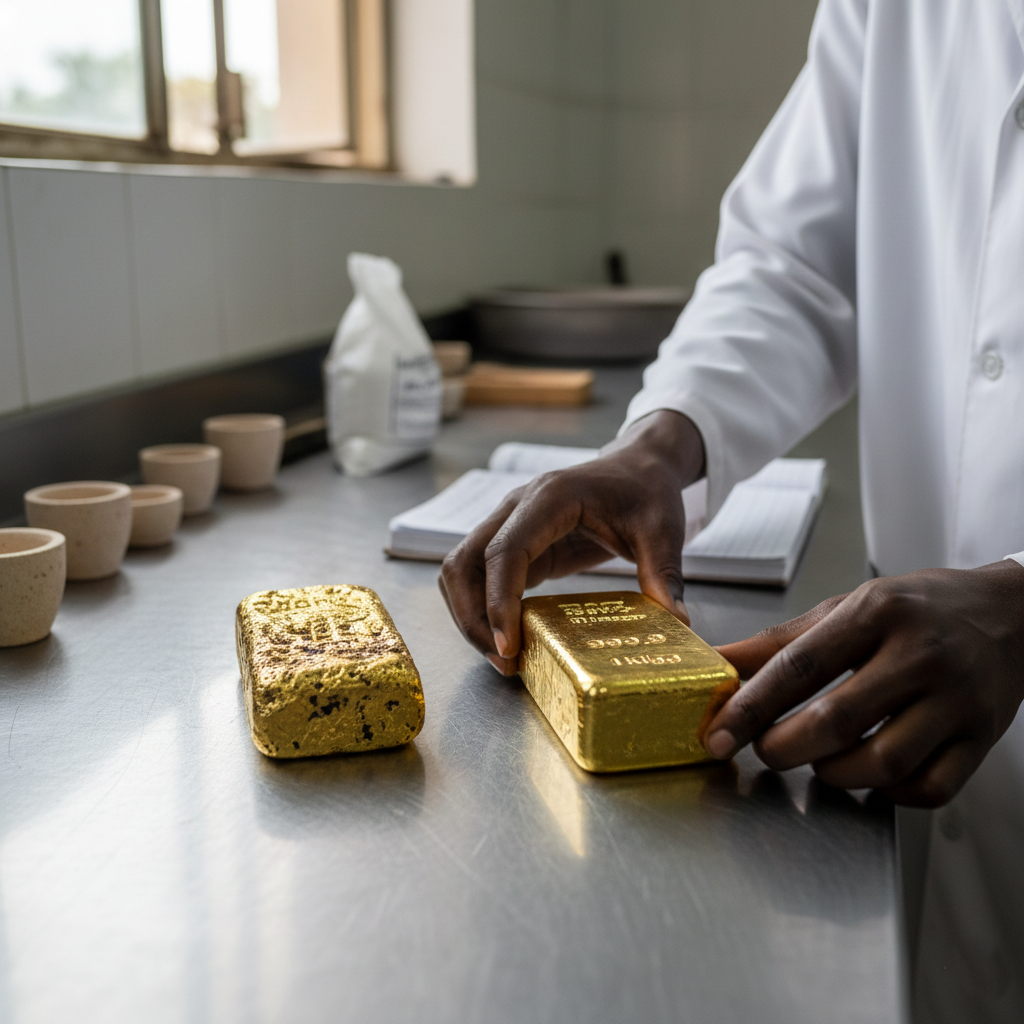
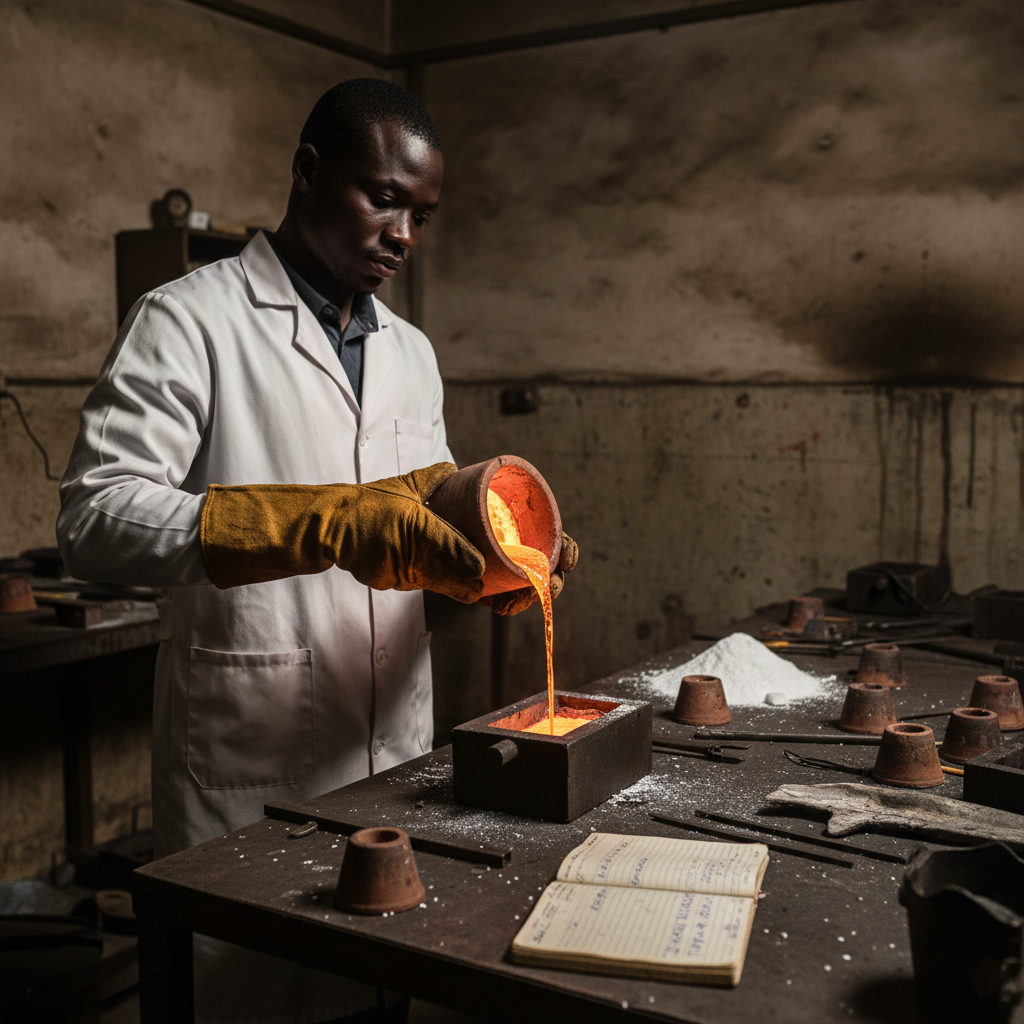
Two primary methods dominate African gold testing: fire assay and X-ray fluorescence (XRF). Fire assay is the most accurate, especially for high-purity gold, involving melting samples with fluxes to separate base metals. It is required for final export certification in Ghana and South Africa. XRF is non-destructive and faster, ideal for preliminary screening at mine sites or collection points. However, XRF can be less accurate on uneven or impure surfaces. Reputable exporters use XRF for initial checks but rely on fire assay from accredited labs for official documentation.
Accreditation and Laboratory Standards
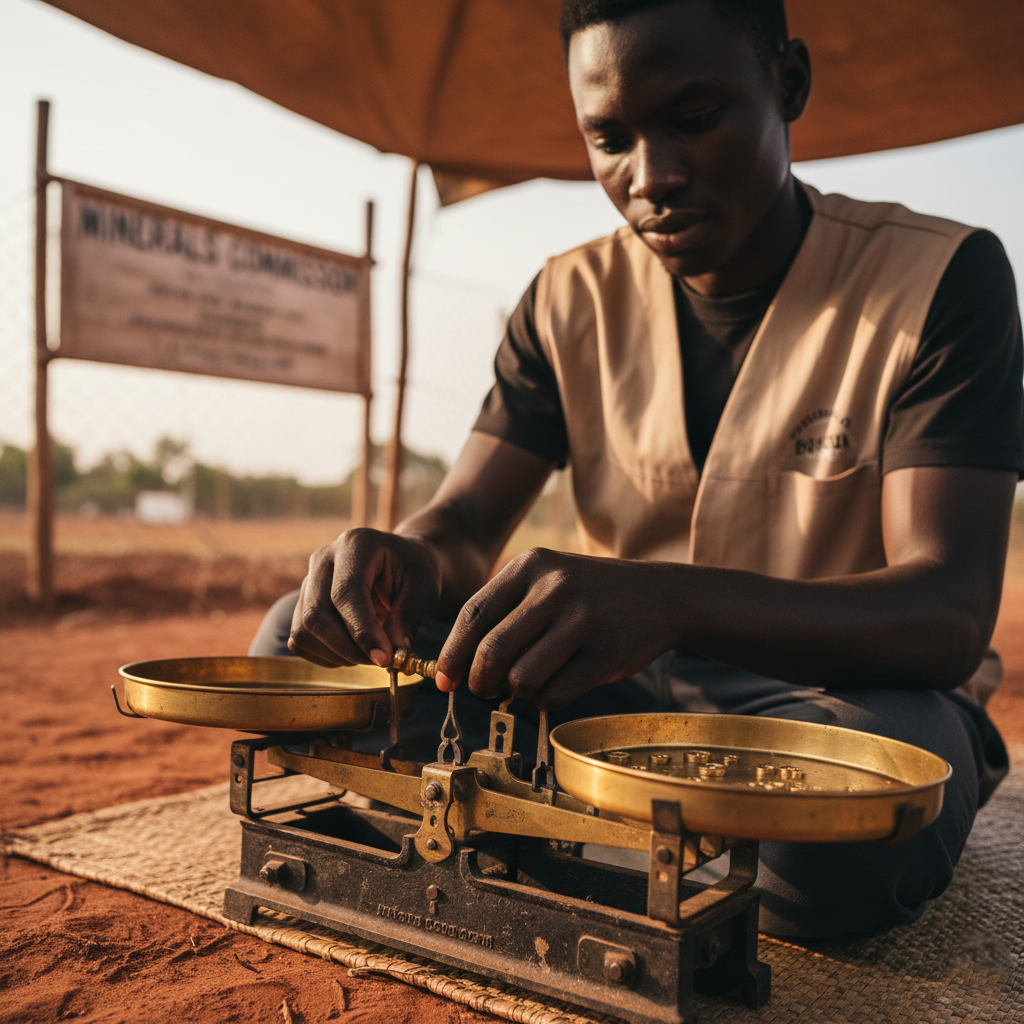
Not all labs are equal. International buyers must ensure assay reports come from laboratories accredited under ISO/IEC 17025 or recognized by national mining authorities. In Ghana, only Minerals Commission-approved labs may issue export-valid certificates. South Africa requires registration with the South African Bureau of Standards. South Sudan increasingly accepts Dubai-based or mobile units with international accreditation. Certificates from uncertified testers—even if technically accurate—will be rejected by customs and refineries. Always verify the lab’s accreditation number on the report.
What a Valid Assay Certificate Includes
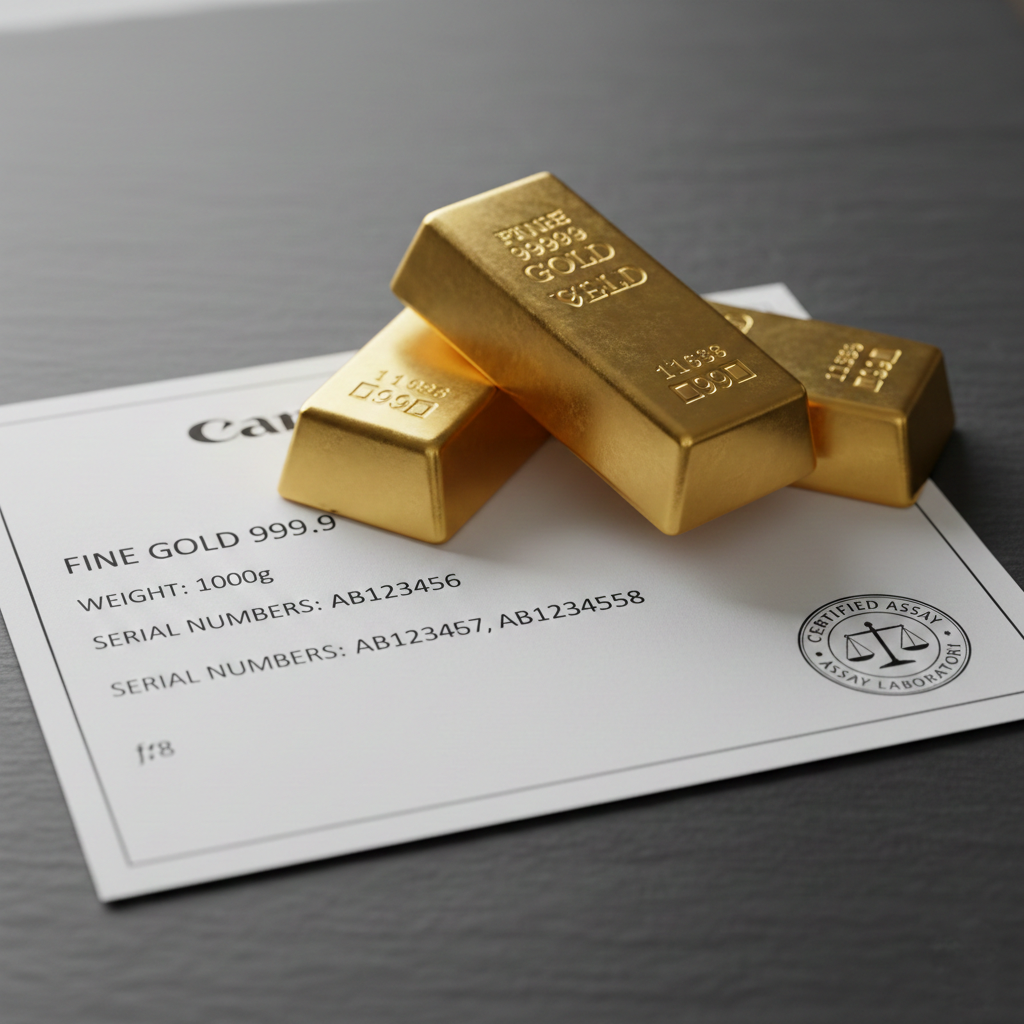
A compliant assay certificate must state: exact weight in grams, fineness (e.g., 999.9), unique serial number matching the physical bar, date of test, full laboratory name and address, accreditation number, and authorized signature or stamp. Digital copies are useful for pre-shipment review, but original stamped documents must accompany the cargo. Refineries cross-check every detail—mismatched weights or missing accreditation numbers trigger immediate rejection. Never accept generic or template-style certificates.
AFRICA GOLD’s Assay Protocol
Since 2015, AFRICA GOLD has mandated fire assay testing at nationally accredited laboratories for all export-bound material. Initial XRF screening occurs at collection points, but final certification always comes from approved labs in each jurisdiction. Certificates are reviewed against destination refinery requirements before export permit applications are submitted. This dual-layer approach ensures zero assay-related rejections across trade routes to the UAE, USA, China, and Europe.
Conclusion
Assay testing turns African gold from raw metal into a globally tradable asset. It provides the scientific proof that underpins value, legality, and market access. Buyers must insist on accredited, detailed, and verifiable assay reports—not approximations or internal estimates. When testing, documentation, and accreditation align, African gold moves confidently through customs and into the world’s most demanding refineries.
africa-gold.com
sales@africa-gold.com