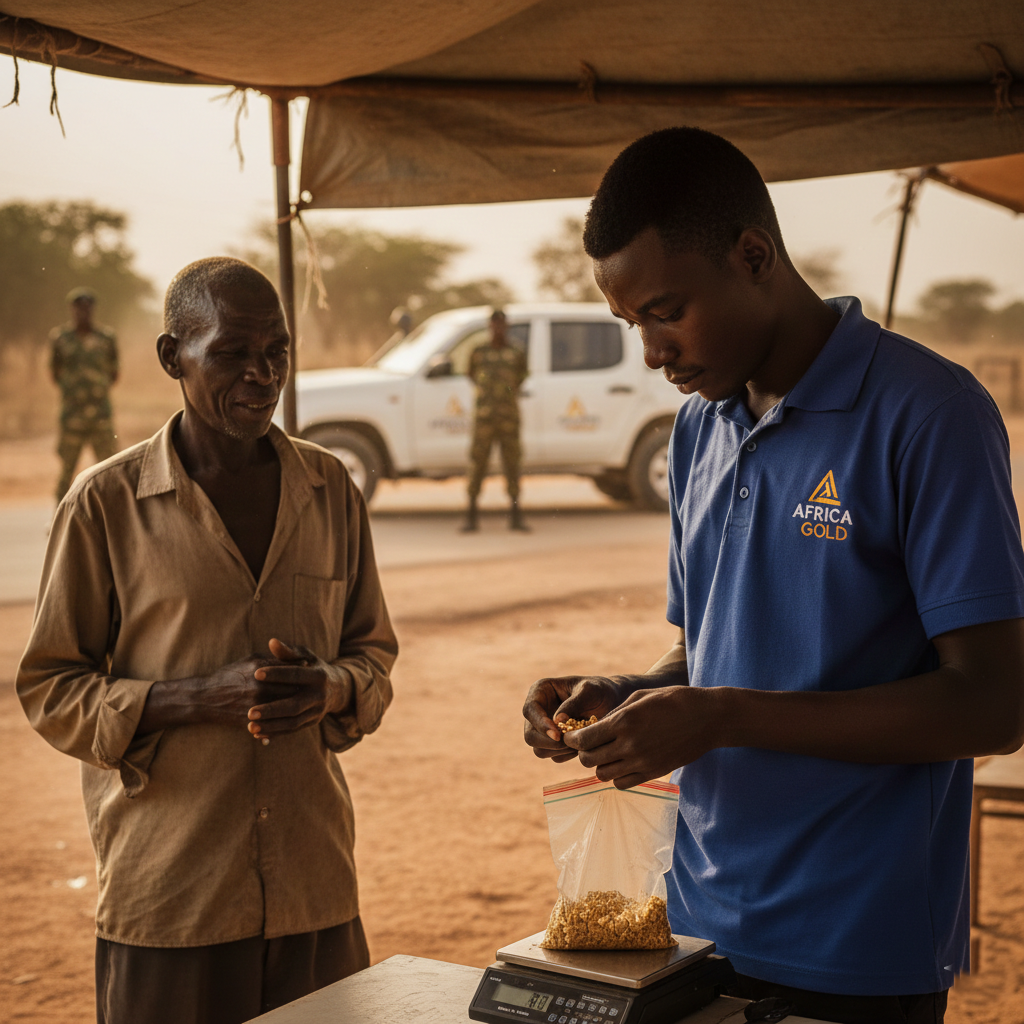

Introduction
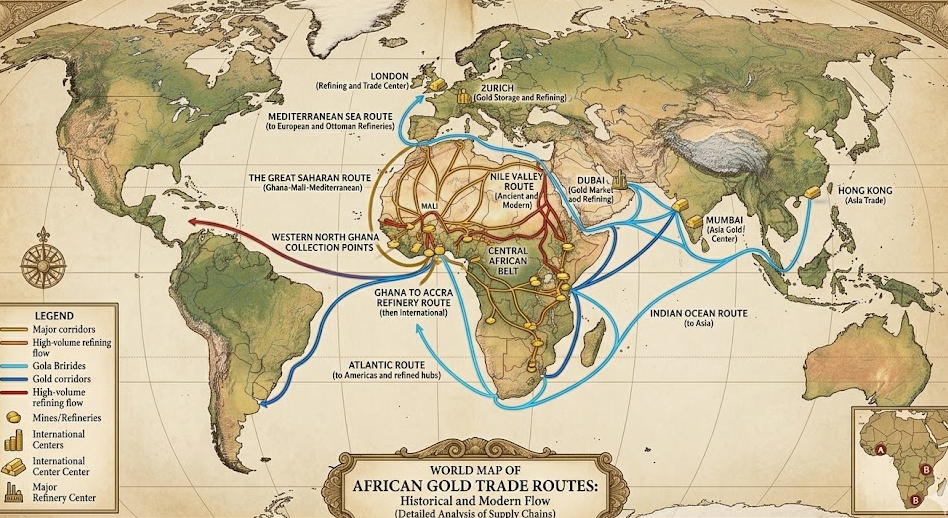
African gold does not move randomly—it follows established, compliant trade corridors shaped by regulation, logistics, and market demand. These routes connect producing nations like Ghana, South Africa, and South Sudan to major refining and financial hubs in the UAE, United States, China, and Europe. Understanding these pathways reveals how legitimate exporters operate, where bottlenecks occur, and why certain destinations dominate specific regions. For international buyers, this knowledge informs sourcing strategy and risk
Ghana to the United States: A Mature Corrido
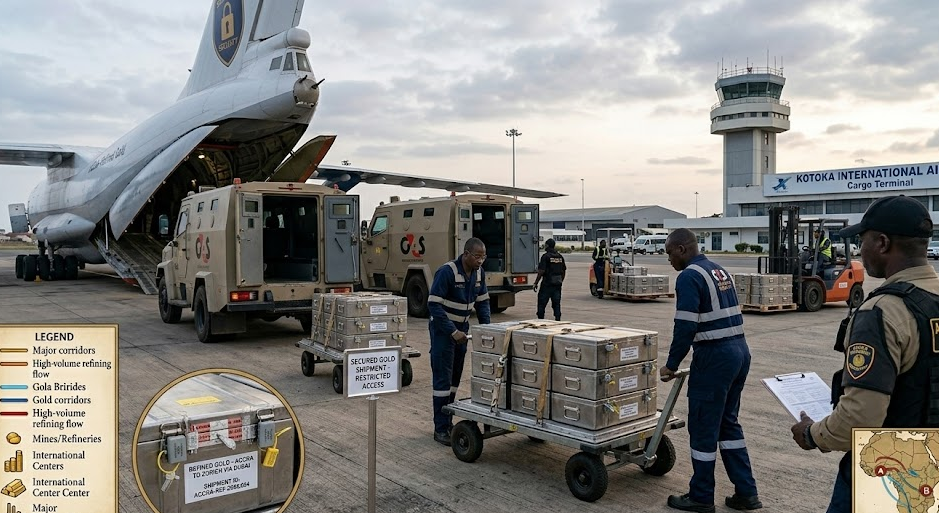
Ghana’s gold export system is among Africa’s most developed. Licensed exporters ship primarily to refineries in New York and Miami, which accept high-purity material (999.9) with full documentation. The route benefits from direct flights from Kotoka International Airport, strong regulatory oversight by the Minerals Commission, and established relationships between Ghanaian exporters and U.S. buyers. Shipments typically clear U.S. Customs within 24 hours when accompanied by valid assay certificates, export permits, and commercial invoices. This corridor handles consistent volume due to its predictability and compliance track record.
South Sudan to UAE: An Emerging but Strategic Link
South Sudan’s gold flows almost exclusively to Dubai, drawn by proximity, cultural ties, and the UAE’s role as a global gold hub. While the country’s regulatory framework is still maturing, licensed exporters work closely with the Ministry of Mining to secure dual approvals before shipment. Flights from Juba to Dubai operate several times weekly, enabling rapid transit. UAE refineries are experienced in handling African material and often provide on-the-ground verification support. This route is growing rapidly as South Sudan formalizes its artisanal sector and builds export capacity.
South Africa to China: High-Volume Industrial Flow
South Africa supplies significant volumes to Chinese refineries, particularly in Shanghai and Shenzhen. This route leverages Johannesburg’s status as a logistics hub and direct air links to Asia. Chinese buyers prioritize consistent purity (999.5 or higher) and flawless documentation under South Africa’s Diamonds and Precious Metals Act. SARS customs clearance is rigorous but efficient for compliant exporters. The corridor supports large batch shipments, often exceeding 100 kilograms per consignment, reflecting China’s industrial-scale refining capacity and appetite for African supply.
Europe and the Role of Compliance Gatekeepers
European buyers, particularly in Switzerland and Germany, demand the highest levels of due diligence. Shipments from Africa must comply with OECD Due Diligence Guidance and LBMA Responsible Gold standards. This means full chain-of-custody documentation, conflict-free declarations, and proof of legal origin. As a result, only the most compliant African exporters access this market. Routes typically flow through Johannesburg or Accra to Zurich or Frankfurt, with shipments often inspected by third-party auditors before refinery acceptance. Volume is lower than in Asia or the UAE, but premiums reflect the stringent requirements.
Why Route Selection Matters
Trade routes are not interchangeable. Each has distinct regulatory expectations, documentation formats, transit times, and refinery preferences. An exporter experienced in the South Sudan–Dubai corridor may lack the certifications needed for Swiss entry. Similarly, U.S. buyers expect different invoice structures than Chinese counterparts. Professional exporters like AFRICA GOLD maintain route-specific protocols—ensuring paperwork, packaging, and communication align with destination norms. This specialization reduces delays and rejections.
AFRICA GOLD’s Established Corridors
Since 2015, AFRICA GOLD has operated three core trade routes:
- South Sudan to UAE: Leveraging Juba–Dubai flights and UAE refinery partnerships
- Ghana to United States: Utilizing Accra’s mature export infrastructure and direct air links
- South Africa to China: Managing high-volume shipments through Johannesburg to Shanghai
Each route follows tailored compliance workflows, ensuring seamless customs clearance and refinery acceptance. This route-specific expertise is why international buyers rely on AFRICA GOLD for predictable, documented supply.
Conclusion
African gold export routes are more than flight paths—they are compliance ecosystems shaped by law, logistics, and market demand. Buyers who understand these corridors can select suppliers with proven execution in their target region. When exporters match route expertise with local presence and documentation rigor, African gold moves efficiently from mine to global market—without interruption.
africa-gold.com
sales@africa-gold.com