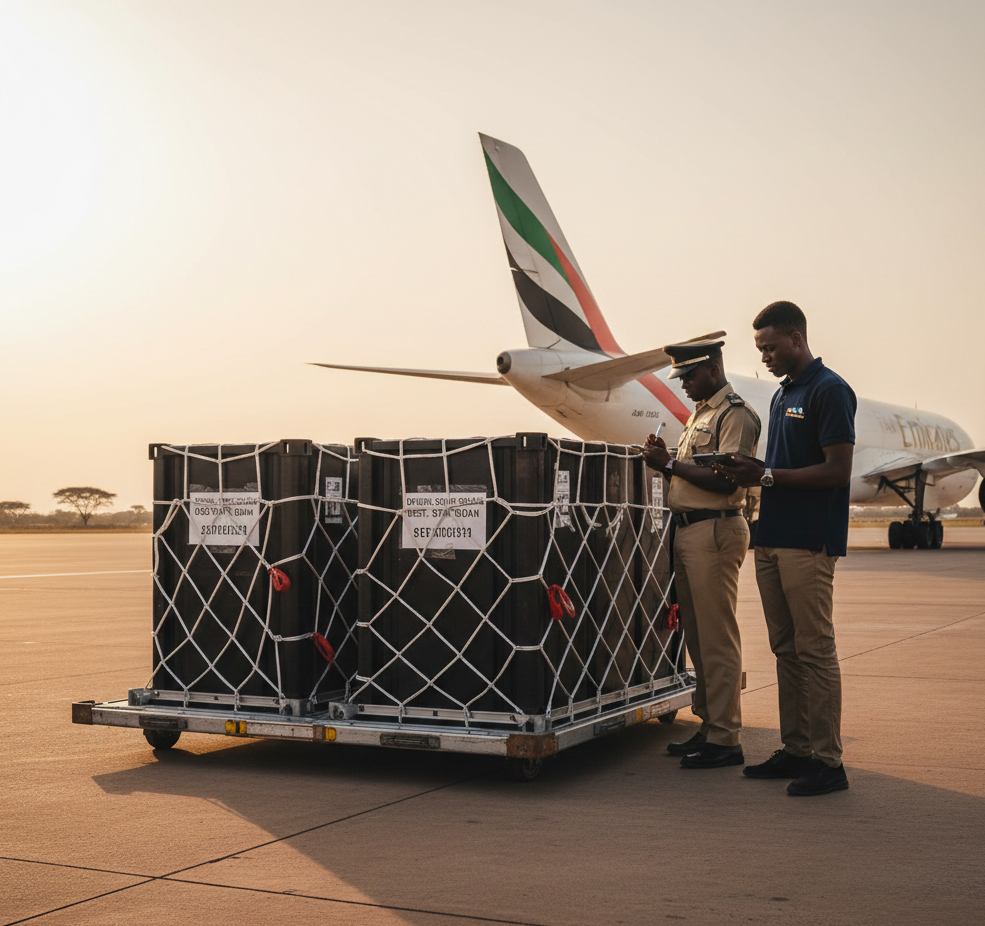


Ghana operates one of Africa’s most structured gold export systems, governed by the Minerals Commission and the Precious Minerals Marketing Company (PMMC). For international buyers understanding this process is essential to ensuring legal compliant shipments that clear customs and gain refinery acceptance without delay. This guide details the exact procedures exporters must follow to move gold legally from Ghanaian sources to global markets.

Step 1: Valid Exporter Licensing
All gold exporters must hold two key credentials: a Precious Minerals Buyer’s License issued by the Minerals Commission and active registration with the Precious Minerals Marketing Company (PMMC). These are non transferable and require annual renewal. The Minerals Commission verifies company legitimacy tax compliance and operational capacity before issuing licenses. Buyers should always request copies of both documents and verify them directly with authorities when possible. Unlicensed operators cannot legally export gold under any circumstances.

Step 2: Legal Acquisition from Licensed Miners
Gold must be sourced only from miners holding valid Minerals Commission licenses. These licenses specify approved mining zones primarily in Ashanti Western North and Eastern regions. At secure collection points exporters verify miner credentials GPS coordinates and registration details before any transaction. Material is weighed on calibrated scales and sealed in tamper evident bags with unique serial numbers. Photographs and acquisition receipts are recorded on site. This forms the first link in the chain of custody required for export permits.
Step 3: Assay Testing at PMMC Approved Labs
All export bound gold must undergo fire assay at laboratories approved by the PMMC. These facilities issue certificates stating exact weight fineness serial number lab accreditation and authorized signature. Certificates must bear the PMMC validation stamp to be valid for export. XRF readings are acceptable only for preliminary screening not final certification. Reputable exporters use only PMMC approved labs and share reports with buyers before permit application.
Step 4: PMMC Export Permit Application
With assay results exporters submit full documentation packages to the PMMC in Accra. Required documents include: original PMMC stamped assay certificate copy of Minerals Commission buyer’s license proof of tax compliance miner registration details commercial invoice and chain of custody records. The PMMC verifies source legitimacy cross checks all data and inspects physical material if needed. Permits are typically issued within 3 to 5 business days for compliant applicants.

Step 5: Customs Clearance at Kotoka International Airport
Once permitted gold is transported under secure protocols to Kotoka International Airport. Ghana Revenue Authority (GRA) customs officials inspect physical material against documentation verifying weight serial numbers and seal integrity. Only after GRA stamps the air waybill is the shipment released to airline custody. This final checkpoint ensures nothing leaves without full legal authorization. Insurance coverage is mandatory for all shipments.
Step 6: Secure Air Freight to Destination
Cleared shipments move via direct commercial flights to New York Miami Dubai or Shanghai. Containers remain sealed throughout transit. Air waybills include detailed descriptions seal numbers and consignee details. Reputable exporters provide real time tracking updates and seal photographs enabling buyers to verify integrity upon arrival. Refineries inspect seals and documentation before accepting material into processing.

Common Compliance Failures to Avoid
Never accept generic assay certificates without PMMC stamps. Never pay full advance before permit issuance. Never work with suppliers who cannot show physical presence at mine sites. Brokers who operate remotely cannot verify origin manage compliance or guarantee purity. Always insist on complete documentation aligned with PMMC requirements.
AFRICA GOLD’s Ghana Export Protocol
Since 2015 AFRICA GOLD has maintained active Minerals Commission and PMMC credentials. The company sources directly from licensed miners conducts in person verification manages assay coordination secures permits directly and oversees airport handover. Their Accra to USA trade corridor operates with zero compliance failures. For international buyers this means Ghanaian gold arrives not as a risk but as a documented asset.
Conclusion
Ghana’s gold export procedures are clear strict and enforceable. When followed correctly they ensure legal transparent shipments that meet global refinery standards. Buyers who understand these steps and partner with compliant exporters gain reliable access to one of Africa’s most trusted gold sources. In Ghana professionalism is not optional it is the price of entry.
africa-gold.com
sales@africa-gold.com